








Estimated reading time: 43 minutes
Your Monday morning coffee briefing from TFG:
New HSBC solution allows businesses to access working capital without needing trade documentation
- A few technological announcements came out this week. Firstly, HSBC has unveiled a solution which circumvents the need for trade documentation when customers try to draw down loans. The solution, known as TradeCash, should allow near-instantaneous working capital access.
Visa announces new innovations across agentic commerce and digital assets, collaborates with OpenAI
- As well as HSBC, Visa has announced a number of initiatives driven by artificial intelligence (AI). Notably, a collaboration with OpenAI aims to modernise agentic commerce. Visa has also declared it will be developing tokenisation and stablecoin initiatives.
European Parliament approves trade deal cutting tariffs on certain US exports
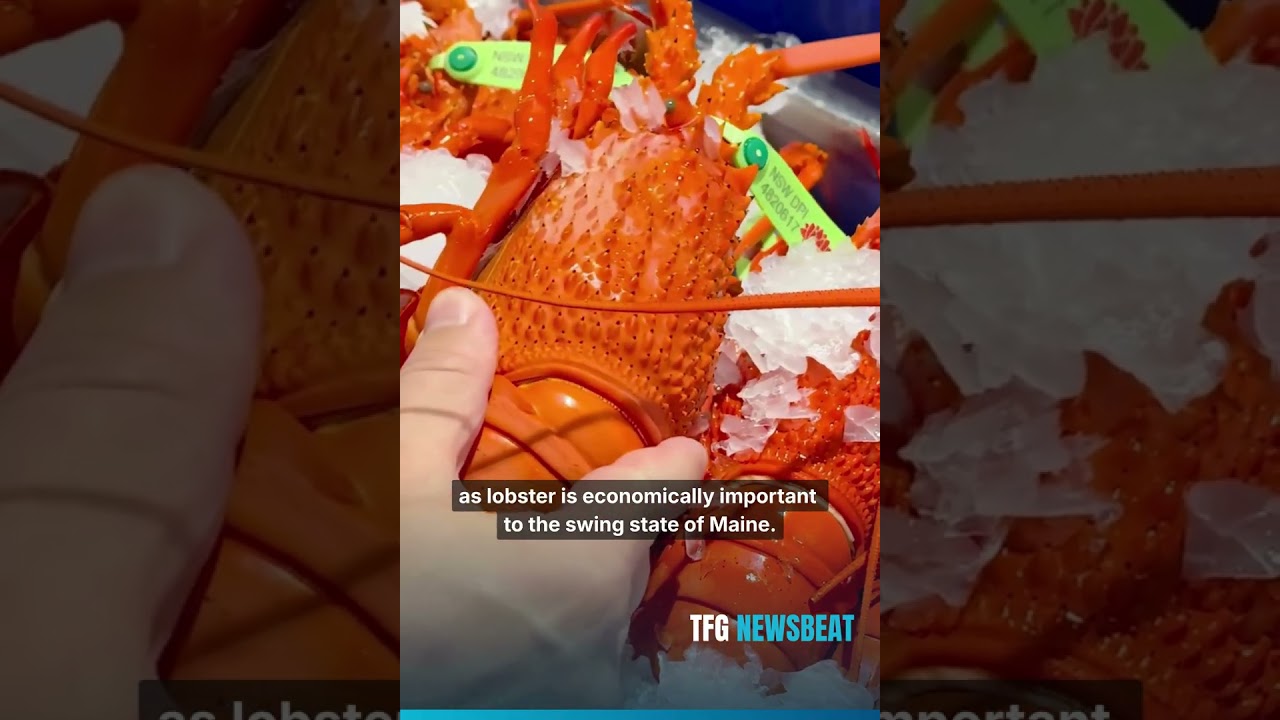
- The European Parliament approved a trade deal with the US, eliminating tariffs on American industrial goods and select agricultural products, valid until 2029. Interestingly, the European Union (EU) has been granted tariff-free access for US lobster imports. This is a politically significant move ahead of November’s midterm elections, as lobster is economically important to the swing state of Maine.
PODCAST |The sustainability paradox of West African cocoa
- We’ve just released a podcast on the nature of cocoa production and trade in west Africa. The conversation with Tedd George, CEO of Kleos Advisory, explores the true meaning of sustainability, both in environmental and labour terms.
Canada’s real-time payments transition means operational resilience is becoming a competitive advantage
- Finally, Canada is shifting to real-time payments via the real-time rail (RTR). Instant, irrevocable transactions eliminate the buffers which banks traditionally relied on, granting them time to detect and fix issues. As the RTR moves towards its phased launch, financial institutions should focus on demonstrating that their payments are reliable and fraud-proof.
TFG Weekly Trade Briefing, 15 June 2026
- Inner Mongolia, China’s top coal-producing region, plans to build China’s largest coal-to-oil, gas, and chemicals base. Reported initially by Reuters, this is intended to reduce dependency on energy imports, which are highly volatile at the moment. However, coal conversion is extremely energy-intensive.
- On Monday, 8 June, Total Graphite announced that it has revised the feasibility study for its graphite project in Mozambique, ensuring the supply is suitable for a processing facility in the US. The US is 100% import-reliant when it comes to graphite. The change is to support growing demand from the superpower’s lithium-ion battery sector.
- The European Bank for Reconstruction and Development (EBRD) has extended a $20 million trade line to the Bank of Africa-Benin under its trade facilitation programme, EBRD announced on Thursday, 11 June. This aims to boost Benin’s trade operations and support the growth of its private sector.
- Japan’s three biggest banks, MUFG, SMBC, and Mizuho, will jointly issue a yen-backed stablecoin this financial year. The banks announced the initiative on Wednesday, 10 June, noting that the goal is to conduct commercial transactions using the stablecoin before the fiscal year ends in March 2027.
- India and Nepal have launched a peer-to-peer (P2P) cross-border remittance service through a link between India’s Unified Payments Interface (UPI) and Nepal’s National Payments Interface (NPI). The mechanism, revealed on Thursday, 11 June, aims to cut friction and foreign exchange (FX) volatility from commerce between the two countries.
TFG Weekly Trade Briefing, 08 June 2026
- Former financier Lex Greensill has been banned from directing a UK company for nine years. On Thursday, 4 June, the UK government’s Insolvency Service revealed that Greensill agreed to the disqualification, ending the need for court action. The 49-year-old founded Greensill Capital, a factoring company that collapsed in 2021, after it was found to be lending for ‘prospective’ transactions that may never happen.
- On Wednesday, 3 June, Ghana and the UK signed a £215 million growth partnership. The agreement involves a £110 million project to build the first dry-docking and repair facility in the Gulf of Guinea – a West African waterway that is increasingly important for global trade, especially for oil flows.
- A report released by the House of Lords on Wednesday, 3 June, urged the UK to loosen its stablecoin regulation and be more flexible. Otherwise, the UK “risks lagging behind global counterparts,” warned the report. The US’ GENIUS Act passed almost a year ago, boosting the use of dollar-backed stablecoins.
- Mizuho has adopted enterprise resource planning (ERP) specialist SAP’s multi-bank connectivity solution, the Japanese bank announced on Tuesday, 2 June. The system links corporates with multiple banks through the SWIFT network. Mizuho’s move is a first among Japanese banks.
- The UK’s National Wealth Fund is committing £200 million to support Associated British Ports’ infrastructure programme, it announced on 3 June. The funding is part of a £300 million package backed by banks including Bank of America, NatWest, and Lloyds, aimed at boosting trade, supply chains, and jobs.
TFG Weekly Trade Briefing, 01 June 2026
- The Chinese Ministry of Transport has found that numerous container shipping lines are improperly filing their freight rates. Essentially, shipping lines which want to charge certain ocean freight rates for cargo moving through China must file those rates with the government. Major companies, including MSC, CMA CGM, and Hapag-Lloyd, haven’t been doing this properly.
- A directive issued on Friday, 22 May, suspended mining in the Democratic Republic of Congo’s (DRC) eastern province. This is due to the illicit mining of valuable minerals such as gold, cassiterite, and coltan. It’s suspected that profits are supporting violent rebel groups, including the M23.
- A related story took place in Mozambique earlier this month, where the government declared the immediate shutdown of illegal mining sites, after mercury contamination was detected. Mercury is often used in artisanal gold washing. It’s also highly toxic, resulting in environmental pollution which poisons drinking water.
- Last week, the UK finalised a major free trade agreement (FTA) with six Gulf states, marking a first between a G7 state and the Gulf Cooperation Council (GCC). The deal is expected to boost the UK economy by £3.7 billion annually. However, it’s attracted criticism for a lack of provisions around labour rights, particularly given that concerns on Gulf labour practices persist.
- Seven central banks and 40 commercial banks have completed a successful trial of Project Agorá. This is according to a report published by the Bank for International Settlements (BIS) on Wednesday. The prototype demonstrated that tokenised
TFG Weekly Trade Briefing, 18 May 2026
- The Turkish Foreign Ministry announced they are lifting restrictions on direct trade with Armenia, after 33 years. Previously, goods shipped from Türkiye couldn’t list Armenia as their final destination, and vice versa, requiring third countries to be listed and creating additional costs. With the lifting of this ban, both countries are also pursuing the reopening of their border.
- Indian energy firm Godawari has signed a deal with China’s Eve Energy to supply batteries starting at 8GWh and potentially scaling to 60GWh within five years. The deal is part of India’s ambition to expand its renewable energy storage capacity to support its energy transition.
- Egypt and Belarus have signed a strategic cooperation protocol to boost bilateral trade and industrial cooperation. It is expected to allow Belarus to benefit from Egypt’s wide network of free trade agreements, gaining access to Middle Eastern and North African markets. Focus areas include heavy machinery production, food security, pharmaceuticals, and customs digitalisation.
- The European Union (EU) has published draft rules clarifying how companies can offset their obligations under the carbon borders adjustment mechanism, or CBAM. As per the new draft, traders could use domestic carbon prices or international carbon credits to offset CBAM requirements. This could ease burdens on non-EU suppliers.
- Commodity trader Glencore has adopted FIS’ Supply Chain Finance Platform to induct its oil and gas trade receivables securitisation programme. The $2.5 billion securitisation facility will use the fintech platform’s infrastructure, reporting capability, and operational support.
TFG Weekly Trade Briefing, 11 May 2026
- On Sunday, 3 May, the Asian Development Bank (ADB) launched a financing facility designed to move Asia Pacific (APAC) countries beyond just mining critical minerals, and into processing and manufacturing. The Japanese and UK governments are providing $20 million and $1.6 million in support. Korea’s Eximbank and the Korean Trade Insurance Corporation (K-SURE) are the facility’s first financing partners.
- The global factoring turnover exceeded $4 trillion dollars in 2025, according to data published by FCI on Tuesday, 5 May. This reflects a 3.7% yearly increase, driven largely by the Americas where factoring grew by 20%. We heard from Betül Kurtuluş of FCI, who explained the regional variation and what this means for narrowing the small and medium-sized enterprise (SME) trade finance gap.
- UK meat imports reached $5 billion dollars in 2025, revealed recent HM Revenue and Customs data obtained by supermarket chain Co-op. This reflects a 15% year-on-year increase, alarming officials as the UK’s food security remains a cause for concern.
- On Thursday, 7 May, Kaleidofin, a Mumbai and Nairobi-based fintech, completed Kenya’s first securitised, private-sector local currency funding deal for smallholder farmers. This new approach aims to help farmers who struggle to get loans from traditional banks. It covers nearly 24,000 farmers.
- The National Bank of Greece has joined Komgo’s global trade finance network, looking to expand into international markets. Greece has a trade deficit of around $33.6 billion and is behind its peers in trade digitalisation.
TFG Weekly Trade Briefing, 4 May 2026
- On Friday, 1 May, the EU-Mercosur Interim Trade Agreement (ITA) came into provisional enforcement. The deal, signed on 17 January, eliminates tariffs on over 90% of bilateral trade, establishing a free trade zone of over 700 million people. But this has scared certain EU members, who worry that cheap Mercosur goods will threaten domestic farmers. Poland has stated it’ll file a complaint to the EU’s top court.
- On Tuesday, 28 April, the UAE announced that it has quit the Organisation of Petroleum Exporting Countries, or OPEC, and OPEC+ oil cartels. The UAE was OPEC’s third-largest oil producer, so its departure is quite a shock, but is a long-time coming, as frustrations have been slowly brewing. Crude flows across the Strait of Hormuz remain at a gridlock.
- India is adding to its ever-growing list of global free trade agreements. On Monday, 27 April, India and New Zealand signed a free trade agreement that is likely to come into effect later this year. The deal will remove or significantly reduce tariffs on most of New Zealand’s exports to India, while Indian exports to New Zealand will be duty-free.
- Addressing the trade finance gap in Africa, Standard Chartered and the International Finance Corporation (IFC) have launched a $300 million risk-sharing facility. Together, they seek to expand trade and supply chain finance across Africa. We spoke to Nicolas Langlois, Global Head of Trade Finance Distribution at Standard Chartered, who explained about the bank’s emerging market strategy.
- Finally, Tether just led a $14 million funding round for Argentine fintech belo, helping digital wallets and cryptocurrencies expand across Latin America. Stablecoins pegged to the US dollar have been gaining popularity in emerging markets since the clarity provided by the US GENIUS Act.
TFG Weekly Trade Briefing, 27 April 2026
- Alfred Hitchcock’s 1959 North by Northwest, at its core, is a film about a man hurtling towards destinations he hadn’t chosen, staying upright as geopolitical forces threw him off balance. The metaphors of thrill, but also of opportunity in uncertainty, lent themselves to the first regional supplement of 2026: the South and South-East Asian edition. The ongoing energy crisis, tariff turmoil, the western departure from China, and monumental national elections, from Nepal to Thailand, put these regions on our radar. It cemented, for us, the need for a South and South-East Asian magazine: a collection of (mostly) developing economies, yet crucial ones to cross-border trade.
- The process for reimbursing billions of dollars in invalidated tariffs began on Monday, 20 April, following the US Supreme Court’s ruling that struck down duties imposed under the International Emergency Economic Powers Act (IEEPA), invalidating an estimated $163 billion in tariff revenue. This pushed US Customs and Border Protection (CBP) to develop a refund process for affected importers. Cailin Birch from the Economist Intelligence Unit told Trade Finance Global: “I would expect it to be a very complicated process. I know a lot of companies are going to challenge this and put in their requests for reimbursement, but I would expect that to be a very lengthy, multilateral effort.”
- On Tuesday, 21 April, open source solutions provider Red Hat released the results of its survey on how organisations are approaching sovereign artificial intelligence (AI). The survey, which covers 500 IT decision makers across the UK, France, Germany, Italy, and the Netherlands, found that AI sovereignty has become a priority for IT departments. According to the survey, 67% of UK participants have an AI ‘exit strategy’ if their primary AI provider were to restrict access, but 43% said switching providers would have a moderate to significant impact on their business continuity.
- South Africa is boosting its fuel imports from the US, as disruption in the Strait of Hormuz strains the country’s energy supply. In the past month, at least four US tankers unloaded around 165,000 tonnes of refined fuels this month in South Africa’s Durban port, about twice the amount of total US crude oil and fuel imports South Africa received back in January. This comes in the lead up to South Africa, alongside 52 other African countries, gaining zero-duty access to the Chinese market, set to take effect on 1 May.
- By 2035, European states will spend $316 billion annually on defence equipment, marking an over 500% increase from 2014 levels, according to projections by the International Trade and Forfeiting Association (ITFA). A ramp-up of the proposed scale is unprecedented, and Europe requires a rapid and radical transformation of infrastructure, inventory, and technology. The second episode of ITFA’s webinar series on Funding European Security discussed the role of trade, supply chain finance (SCF), and innovative financing solutions in scaling Europe’s defence capacity.
TFG Weekly Trade Briefing, 20 April 2026
- John Ormerod, the 75-year-old British accountant whose tanker transactions on behalf of Lukoil became a defining case in Russia sanctions enforcement, was charged on Wednesday, 15 April, with two criminal offences by the UK National Crime Agency (NCA). This comes just six weeks after the UK government removed him from the UK sanctions list. The charges, as authorised by the Crown Prosecution Service, allege that, in May 2025, Ormerod dealt with the transfer of £200,000 in contravention of regulation 11 of the Russia (Sanctions) Regulations 2019.
- J.P. Morgan Payments has gone live with the Working Capital Accelerator, a digital platform that centralises its trade and working capital solutions, including dynamic discounting, supply chain finance (SCF) and receivables financing. “Integrating dynamic discounting, supply chain finance, and receivables financing into a single platform delivers mutual value by providing unified visibility and real-time insights,” Heather Crowley, Global Head of Trade & Working Capital Product at J.P. Morgan Payments, told Trade Finance Global (TFG).
- On Wednesday, 15 April, Angolan financial institution Banco Yetu revealed that it has selected Surecomp’s corporate engagement platform RIVO™ to aid Angola’s expected trade growth. With over 2.5 billion barrels of oil reserves, Angola is among Africa’s largest oil producers. Its potential to emerge as a global oil supplier is amplified by the ongoing energy crisis driven by the disruption in the Strait of Hormuz. Trade Finance Global (TFG) heard from Surecomp’s João Teles. “Angola has turned a corner and is now set to be one of Africa’s strongest trade hubs,” said Teles.
- South-East Asian economies ended 2025 with accelerating growth, with Vietnam’s economy expanding by more than 8% in Q4. Regional exports and industrial production remained resilient in the face of tariffs and the normalisation of commodity prices. However, beyond persistent geopolitical developments, the region has also been grappling with its own sources of economic turbulence. Trade Finance Global (TFG) spoke with Barış Kalay and Aziz Parvez from Bank of America to discern banks’ corporate strategy in this fast-growing region.
- Banks are investing in automation and new payment infrastructure, but the perspective of the corporate end user is often missing from the equation. During this year’s BAFT Europe Forum, a panel titled ‘The Voice of The Ultimate End User – The Global Corporates’, brought forth the voices of corporates. “The big takeaway for me is that, as banks, we’re not always thinking about the end user, the end customer when we are developing solutions,” moderator Joanne Fraser, Managing Director and Head of Transaction Banking at Standard Chartered, told Trade Finance Global (TFG).
- The trade finance gap continues to sit at a persistent $2.5 trillion. Yet, according to the latest Asian Development Bank (ADB) survey on the gap, in 2023, the gap represented around 10.6% of global trade flows, whereas in 2025, this was lowered to 10%. In other words, in spite of trade’s unmet demand for financing, global trade flows increased. Trade Finance Global (TFG) spoke to ADB. “Relative measures should be front and centre because they show whether global trade finance is keeping pace with growth in global trade,” said Ankita Pandey from ADB.
TFG Weekly Trade Briefing, 13 April 2026
- Transaction banking: A view from the top
- Brand perception, regional cooperation, and training new talent: What’s facing Pakistani banks?
- The world needs the South-East Asian green transition, but is it willing to facilitate it?
- India’s new trade strategy: Free trade agreements built on economic momentum
- Afreximbank announces $10 billion crisis response for African and Caribbean economies, amidst Gulf disruption
- The plant-based solution to Asia’s food security problem
- Hong Kong grants first stablecoin licences to HSBC and Standard Chartered-backed Anchorpoint Financial
- How Indonesia’s digital frontier brings in women and MSMEs on the margin
- Trafigura signs offtake agreement and debt financing with Bogoso-Prestea mine in Ghana, reopening after controversial shutdown
Transaction banking: A view from the top
Global banks have been under significant pressure to modernise trade finance. At the 2026 BAFT Europe Forum, held in London, one of the closing panels, ‘Transaction Banking Global Leaders – A View from the Top’, focused on the evolution of the transaction banking industry and its preparedness for the future. Read more →
Brand perception, regional cooperation, and training new talent: What’s facing Pakistani banks?
In 2025, Pakistan was ranked the world’s second-best emerging economy for financial stability by Bloomberg. Trade Finance Global (TFG) heard from Sanam Khan from Bank AL Habib in Pakistan, on how a bank’s personal brand and talent development contribute to the expansion of local banks’ international reach. Read more →
The world needs the South-East Asian green transition, but is it willing to facilitate it?
South-East Asia’s rapid economic growth has proliferated its pollution and exhausted its natural resources, making suppliers from the region incompatible with the growing demand from Western buyers for climate-friendly infrastructure. Now, South-East Asia needs an estimated $210 billion in annual investment to support its green transition. Read more →
India’s new trade strategy: Free trade agreements built on economic momentum
India’s recent free trade agreements (FTAs) show a clear shift in the country’s trading strategy. It’s focusing on partners with which it has existing economic ties; ones with economies in alignment with India’s strengths in manufacturing, pharmaceuticals, services, and energy processing. Read more →
Afreximbank announces $10 billion crisis response for African and Caribbean economies, amidst Gulf disruption
On Tuesday, 7 April, the African Export-Import Bank (Afreximbank) announced a $10 billion Gulf Crisis Response Programme (GCRP), aiming to protect African and Caribbean economies from the ongoing disruption stemming from the conflict in the Middle East. Read more →
The plant-based solution to Asia’s food security problem
The world’s population is projected to reach 9.7 billion by 2050, which requires approximately an 80% expansion of global agricultural production. This is the only way through which the United Nations’ (UN) zero hunger goal can be achieved. Read more →
Hong Kong grants first stablecoin licences to HSBC and Standard Chartered-backed Anchorpoint Financial
Hong Kong has awarded its first regulated stablecoin issuer licences, with the Hong Kong Monetary Authority (HKMA) granting approval to Anchorpoint Financial Limited and HSBC to issue stablecoins in Hong Kong. The licences took effect on Friday, 10 April. Read more →
How Indonesia’s digital frontier brings in women and MSMEs on the margin
Indonesia’s digital economy is expanding at remarkable speed, with millions of businesses moving online. Digital trade and e-commerce are being positioned as major drivers of inclusive progress, with efforts focused on supporting micro, small and medium sized enterprises (MSMEs), specifically led by women and/or marginalised communities. Read more →
Trafigura signs offtake agreement and debt financing with Bogoso-Prestea mine in Ghana, reopening after controversial shutdown
On Thursday, 9 April, commodities trader Trafigura signed a deal, committing to purchase 700,000 ounces of gold doré from the historic Bogoso-Prestea Gold Mine in Ghana. Trafigura will also provide $65 million in debt financing, supporting the mine in restarting its operations following its shutdown in 2024. Read more →