



















- Corporates want banks to prioritise end-user needs by focusing on simplification, standardisation, and closer collaboration rather than purely on efficiency and innovation.
- Automation can streamline compliance and trade finance processes, but inconsistent know your customer (KYC) systems and fragmented regulations remain major challenges for global corporates.
- Businesses, particularly those operating in high-risk regions, need banks to provide better funding support, seamless system integration and more reliable, standardised processes.
Trade finance events tend to centre on the trials and tribulations of banks, analysing how developments in the industry – be it because of digitalisation or geopolitical mayhem – impact those on the financing side of international trade.
Corporates are viewed through the eyes of banks, a sight blurred by clouds of rigid regulation and tight liquidity. Banks are investing in automation and new payment infrastructure, but the perspective of the corporate end user is often missing from the equation.
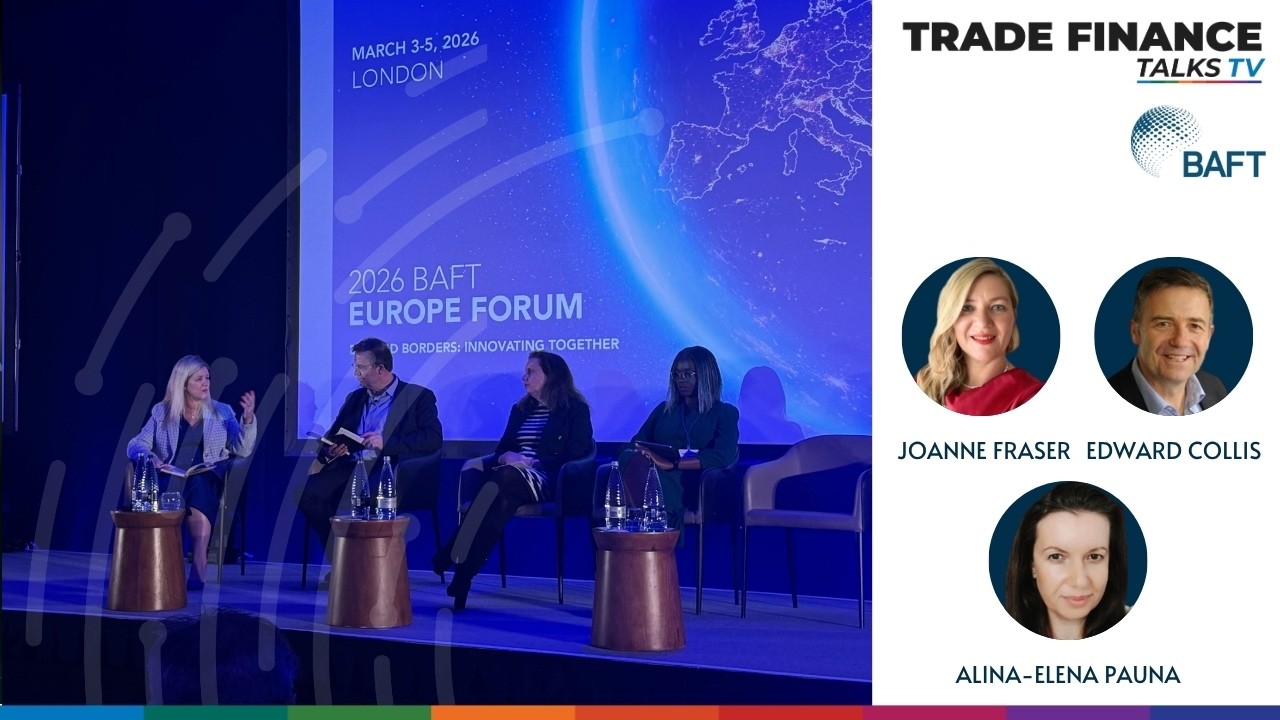
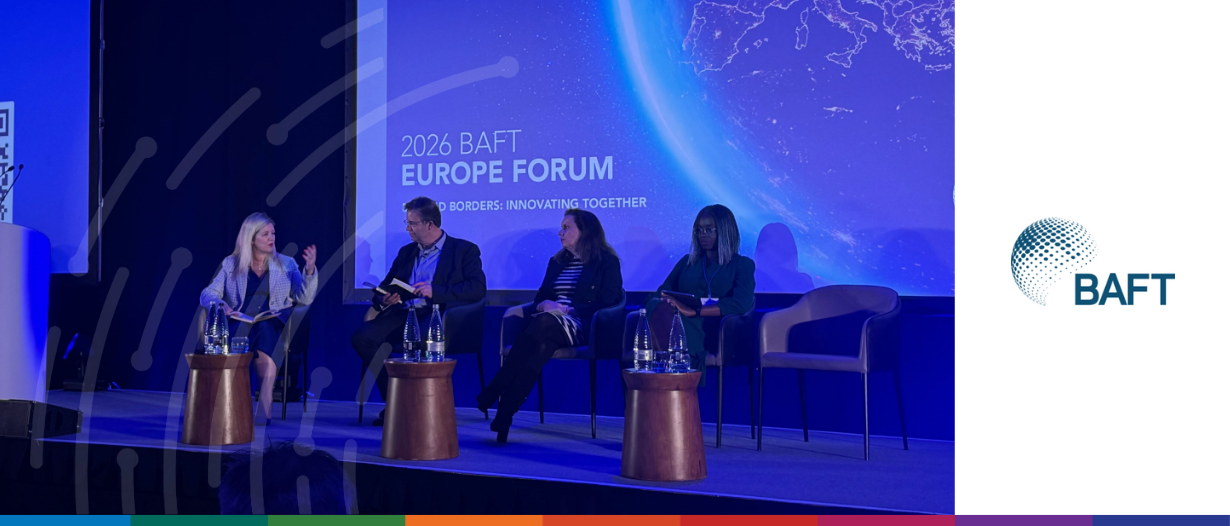
During this year’s BAFT Europe Forum, hosted in London, a panel titled ‘The Voice of The Ultimate End User – The Global Corporates’, brought together representatives from across the corporate and non-profit spectrum – all the way from the charity end with Save the Children to global energy company Shell and consumer goods company British American Tobacco.
The session, moderated by Joanne Fraser, Managing Director and Head of Transaction Banking at Standard Chartered, included a bank voice, not as a speaker, but as a mediator. They addressed what it is that corporations need from banks, amid this increasingly fragmented and automated global trade landscape.
Trade Finance Global (TFG) caught up with the panellists after the session.
“The big takeaway for me is that, as banks, we’re not always thinking about the end user, the end customer when we are developing solutions,” Fraser told TFG. “And that is something that we need to absolutely be doing when we are making changes, respecting how much effort it might involve on their side.”
Automation and standardisation for high-risk countries
For banks, switching to paperless systems can improve efficiency and cut operational costs significantly. Automation represents a major leap, enabling an 85% decrease in processing times and up to a 40% reduction in operating costs. But for corporates, digitisation isn’t just a bandwagon to jump on.
Non-governmental organisations (NGOs) like Save the Children carry out the majority of their operations in countries with high-risk profiles, making the standardisation of compliance processes their first priority regarding automation.
Countries with high risk profiles face additional scrutiny when it comes to compliance checks. According to the Asian Development Bank (ADB), in 2025, the second most common cause of rejection of trade finance requests was that they came from “an unacceptable country or counterparty risk profile.”
Multinational actors already have to deal with documentation originating from different countries, adhering to varied regulatory frameworks, and even involving multiple languages. This makes manual approaches cumbersome and prone to good old human error. However, when this is combined with the added pressure of working within territories deemed high-risk and thereby financially unappetising, the issue is amplified.
Under the UK’s anti-money laundering (AML) regime, any business relationship with a company or individual within a country considered to be high-risk is subject to enhanced due diligence (EDD). It is a stricter approach that demands more robust background checks, consideration of the political positioning of subjects, and ongoing monitoring.
AI technologies – particularly those that uphold natural language processing (NLP) and machine learning (ML) – can play a crucial role in easing compliance verification processes by standardising varied document formats and languages, and allowing for consistency.
“We spend a lot of time trying to make sure we’ve got good, straight-through processes,” said Edward Collis, Treasurer at Save the Children.
When asked what his single biggest ask from banks is for the year ahead, “Please work with us in funding our highest risk locations,” Collis told TFG. “Allow us to help those children who so desperately need our help.”
Compliance and fragmentation
For NGOs and corporates operating in such countries, it’s imperative to ensure compliance checks are carried out in accordance with global standards and aren’t subjugated to further perusal driven by unfamiliar processes.
“Our current focus is on the implementation of a brand new enterprise resource planning (ERP) and all the interfaces and all the interaction backgrounds with our specialised treasury systems and the impact of that with our banking partners,” added Collis.
In essence, this is about implementing a new system that can connect and work with Save the Children’s specialised treasury systems, as well as their banking partners, particularly how payments and financial data move between the organisation and the banks they work with.
“Then on the other side, quite a material part of our operations is our high-risk funding rates, which are non-standard,” said Collis. Noting that they work closely with a fintech to ensure their compliance framework is effective, Collis amplified the significance of technology for standardisation.
While banks carry out stringent compliance checks and technology is expected to ease that process, NGOs, in order to secure financing, have to ensure that their systems and technology are able to interplay with those of banks.
For many global corporations, digitisation is already deeply embedded, and the expectation is that banks integrate seamlessly with their digital treasury infrastructure. Many multinational corporations view know your customer (KYC) as a key bottleneck impacting their relations with banks.
Know your customer, not just as due diligence
According to Alina-Elena Pauna, Treasury Operations Manager at British American Tobacco, a central objective of the company is to collect as much information as possible for KYC requirements and to improve both forecasting data and cash-flow forecasting.
KYC regulations require banks to verify the identity of their customers prior to providing financing, aiming to ensure that the financing doesn’t facilitate criminal activity. Non-compliant banks can be subject to significant financial and legal penalties.
In her one-on-one with TFG, “In a world that is constantly evolving around technology and where technology is one of the key drivers, we would be looking for our bank partners to maximise the use of it in all of the available areas,” said Pauna, emphasising its importance for real-time updates on liquidity and KYC requirements.
Traditional KYC systems are notorious for being slow and prone to error, triggering false-positive alerts that ultimately waste everyone’s time. With automation, this process becomes much smoother.
However, banks are yet to reach uniformity in their KYC portals. The panel highlighted the time-consuming nature of having to deal with multiple KYC portals:
“We live or die as to the speed with which we can fund these high-risk humanitarian programmes,” said Collis. “If we hit funding delays because of this, that’s a real humanitarian impact.”
Adding to the frustration, Bunmi Adeyemi-Wilson, Head of Global Cash Management at Shell, called for greater standardisation of KYC questions across banks. “If one European bank is checking and saying, ‘I’m fine’, then another bank should be able to access those credentials.”
The importance of co-creation
Yet standardisation, especially when it’s exerted top-down from banks to corporates, comes with hurdles of its own.
Reflecting on the transition to ISO 20022, designed to introduce a payment system upheld by all banks globally, “From the bank side, I’d say it’s been alright,” said Collis. “What’s causing us a bit of a challenge is the time frame,” he added, emphasising how the issue is ensuring that the corporate systems are compatible with ISO 20022.
While ISO 20022 is celebrated for modernising and standardising real-time payments, for Adeyemi Wilson, there is a catch. Real-time payments as a corporate isn’t as exciting as it is for individuals receiving money for groceries from their flatmates.
For corporates, even if real-time payments are accessible, they cannot be conducted without real-time liquidity and the tools needed to ensure they feel safe and secure within the payment.
Adeyemi-Wilson emphasised that while banks are pouring liquidity into innovation within certain areas, these areas may not necessarily align with their corporates clients.
Collis amplified this sentiment, reflecting on how, although there is forward movement, there isn’t always “sufficient focus on the interaction with the client side of things.”
—
The corporate wishlist can ultimately be boiled down to three: simplification, standardisation, and symbiosis.
In contrast to banks’ prioritisation of efficiency, for many corporates, visibility and reliability are more important than speed. “We are clients, but we can also help you with understanding the needs and helping you develop the right tools,” said Adeyemi-Wilson.
For banks to make progress that benefits the different ends of the corporate spectrum, they need to approach innovation with an end goal that benefits the end user. Rather than jumping on techy trends or flashy frameworks, they perhaps need to slow down and speak to their clients.