









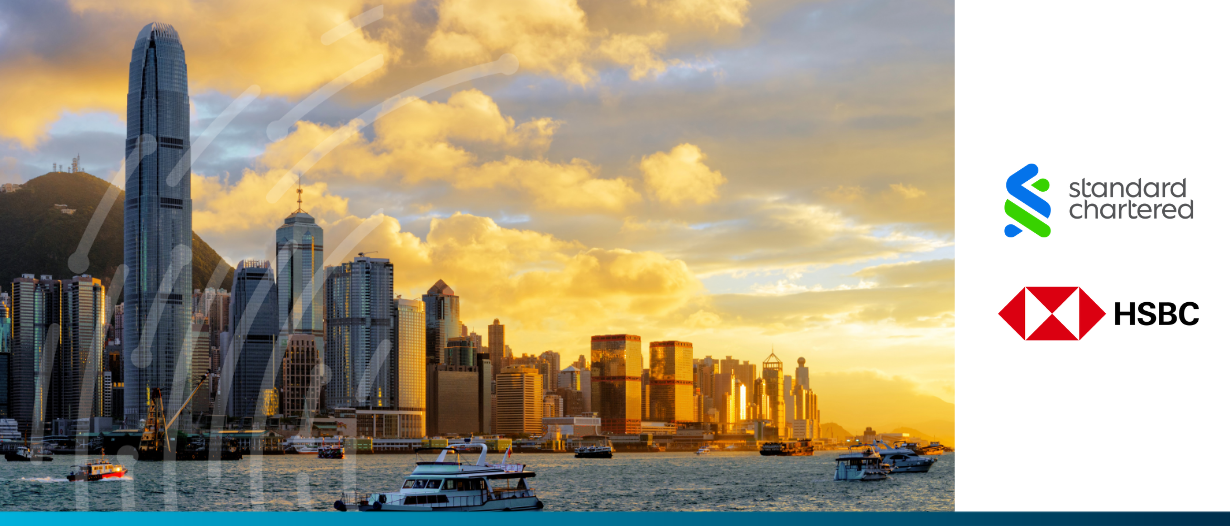



- Hong Kong Monetary Authority has issued its first stablecoin licences to HSBC and Anchorpoint Financial Limited.
- Anchorpoint plans to launch a Hong Kong dollar–pegged stablecoin (HKDAP) in 2026 to support cross-border payments and tokenised asset settlement, while HSBC will distribute its own token directly via its banking apps.
- The new regime mandates full reserve backing, strict AML compliance, and transaction oversight.
Hong Kong has awarded its first regulated stablecoin issuer licences, with the Hong Kong Monetary Authority (HKMA) granting approval to Anchorpoint Financial Limited and HSBC to issue stablecoins in Hong Kong. The licences took effect today, 10 April.
Anchorpoint Financial is a joint venture established by Standard Chartered Bank (Hong Kong), telecoms group HKT, and digital assets firm Animoca Brands. The three partners had been exploring stablecoin technology since 2023 and formally entered the HKMA’s sandbox programme the following year.
Anchorpoint intends to issue a Hong Kong dollar-backed stablecoin under the name HKDAP (HKD At Par) with a phased rollout targeted for the second quarter of 2026. Its stated priorities include facilitating cross-border payments and the settlement of tokenised real-world assets, areas it sees as particularly significant across Hong Kong and the wider Asian region.
“The issuance of HKDAP by Anchorpoint provides a powerful regulated medium of exchange that will further the rewiring of our financial markets and help promote the next generation of international trade,” said Bill Winters, Group Chief Executive, Standard Chartered.
HSBC’s participation attracted attention, given that the bank, unlike Standard Chartered, had not taken part in the HKMA’s sandbox process, having focused its digital asset work on tokenised deposit projects. Nevertheless, it emerged as one of only two institutions to receive a licence from the initial pool of 36 applicants.
HSBC and Standard Chartered are two of only three commercial banks authorised to print Hong Kong dollar banknotes: a decision dating back to the nineteenth century, when private banks began issuing currency in the absence of a central colonial bank.
The announcement marks the first approvals under the city’s stablecoin regime, which requires issuers of fiat-referenced stablecoins to obtain an HKMA licence and comply with rules governing reserve backing, redemption, governance, and anti-money laundering (AML) controls.
Under the new framework, licensed issuers must hold reserves equivalent to the full value of stablecoins in circulation, kept in high-quality liquid assets and ring-fenced from their own corporate funds. Transfers are subject to identity verification requirements, and transactions above HK$8,000 fall under the territory’s travel rule obligations.
HKMA Chief Executive Eddie Yue said the granting of the licences represented “an important milestone for the development of digital assets in Hong Kong”, adding that the regulatory regime was designed to allow issuers to apply innovative technologies while ensuring user protection and effective risk management.
The HKMA said it would maintain a public register of licensed stablecoin issuers and urged the public to verify any stablecoin offerings through official channels.
Anchorpoint said it would work with selected businesses as distributors to provide public access to its stablecoin; HSBC, meanwhile, announced that its own token would be available directly to consumers via its PayMe and HSBC HK Mobile Banking apps.