













- The US Supreme Court ruled IEEPA tariffs unlawful, forcing refunds of an estimated $163 billion.
- US Customs and Border Protection has launched a phased system to process claims, but delays are expected.
- The loss of tariff revenue may drive new trade actions, while uncertainty persists for businesses.
The process for reimbursing billions of dollars in invalidated tariffs begins today, 20 April, following the US Supreme Court’s ruling that struck down duties imposed under the International Emergency Economic Powers Act (IEEPA).
A little over a year ago, on what was deemed ‘Liberation Day’, US President Donald Trump introduced a baseline of 10% tariffs on all US imports, as well as ‘reciprocal tariffs’, ranging from 11% to 50% for countries that had a trade surplus with the US.
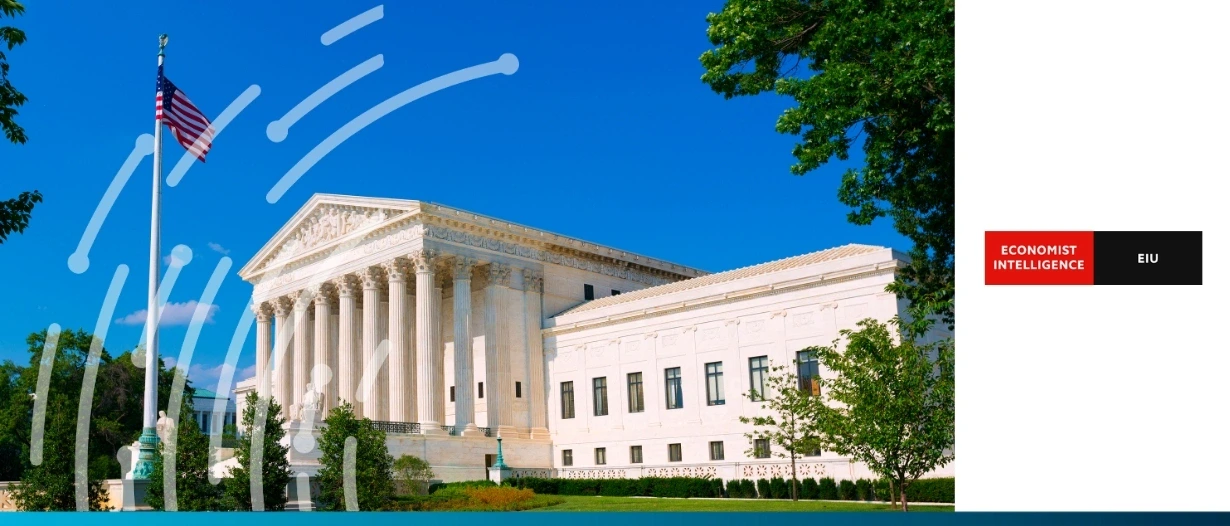
On 20 February 2026, the Supreme Court ruled the use of tariffs under IEEPA unlawful, as the statute doesn’t authorise tariff use; the power to tax lies with the US Congress, not the president.
The ruling invalidated an estimated $163 billion in tariff revenue, pushing US Customs and Border Protection (CBP) to develop a refund process for affected importers. Trade Finance Global (TFG) heard from Cailin Birch, Global Economist at the Economist Intelligence Unit, on what this process will look like in practice.
“The administration would have preferred to keep the cycle-based tariffs in place,” said Birch. “I would expect it to be a very complicated process. I know a lot of companies are going to challenge this and put in their requests for reimbursement, but I would expect that to be a very lengthy, multilateral effort.”
The CBP launched the Consolidated Administration and Processing of Entries (CAPE) system today, designed to manage refund claims electronically and in bulk.
Only IEEPA-based tariffs qualify for refunds, while other tariffs, such as those imposed under Section 302 and Section 232, remain in place.
Refunds will only be issued to the importer of record or the licensed customs broker who filed the entries, and companies that indirectly bore tariffs must seek reimbursement through contractual agreements. In this case, firms must review supplier deals and identify tariff-sharing arrangements.
The reimbursement process
In order to receive reimbursement, companies must determine eligibility and file claims through the CBP’s Automated Commercial Environment (ACE), the government’s digital import/ export system. CAPE requires companies to prepare in advance by setting up ACE accounts and linking their bank information.
In practice, importers first submit their refund claims (a CAPE declaration) through the ACE portal; the CBP then takes over and eliminates the import’s IEEPA Harmonized Tariff Schedule classification, thereby redetermining duties.
Finally, the CBP consolidates all refunds and pays them out electronically.
However, this process is neither quick nor straightforward.
Following the acceptance of a claim, the CBP anticipates refunds to be issued within 60 to 90 days, unless there is a “compliance concern that requires further CBP review.”
The CBP outlines the potential alerts that may come up, such as for an entry being liquidated over 80 days ago, or the entry being flagged for reconciliation or injunction.
CAPE is also being deployed in phases, and today just marks Phase 1 of the process. Phase 1 only applies to certain unliquidated entries and entries that liquidate within 80 days prior to making a CAPE declaration. Unfortunately, this means many firms will have to wait for the next phases.
“There’s been a lot of foot-dragging to even see this process started, so I’m not convinced it’s going to be a straightforward process. It might take multiple years, and we might see a lot of it being written off,” said Birch.
The impact on the US government
The elimination of IEEPA tariffs represents a significant loss of government revenue, prompting policymakers to seek alternative sources. Birch explained, “The loss of IEEPA is seismic for the US government as they’re thinking about their revenue projections.”
Section 301 investigations, launched on 12 March, are expected to play a role in restoring tariff revenue. They sanction foreign trade practices that violate trade agreements, designating violations such as forced labour as a trade barrier actionable under US law.
This is anticipated to bring sanctions onto China, as well as many countries in South-East Asia. The outcome of these investigations is likely to shape future tariff rates and trade relations.
The US trade environment remains highly fluid. Birch highlighted how this uncertainty impacts businesses, stating, “It’s certainly not beneficial – that lack of clarity around what the tariff levels are going to be and what your right to claim is or not.”
But ultimately, the US “is still an enormous market with lots of resilience in consumer spending,” she said. “The uncertainty picture will not benefit the investment environment, but the US still has enormous strength. So will this seriously pull it down in the investors’ views? Perhaps not. It’s just one of several factors to bear in mind.”