















- UK meat imports hit £5bn in 2025, up 15%, heightening food security concerns.
- Reliance on imports and fertiliser disruptions leave supply exposed to shocks and price swings.
- Experts urge stronger domestic resilience, including support for farming co-operatives.
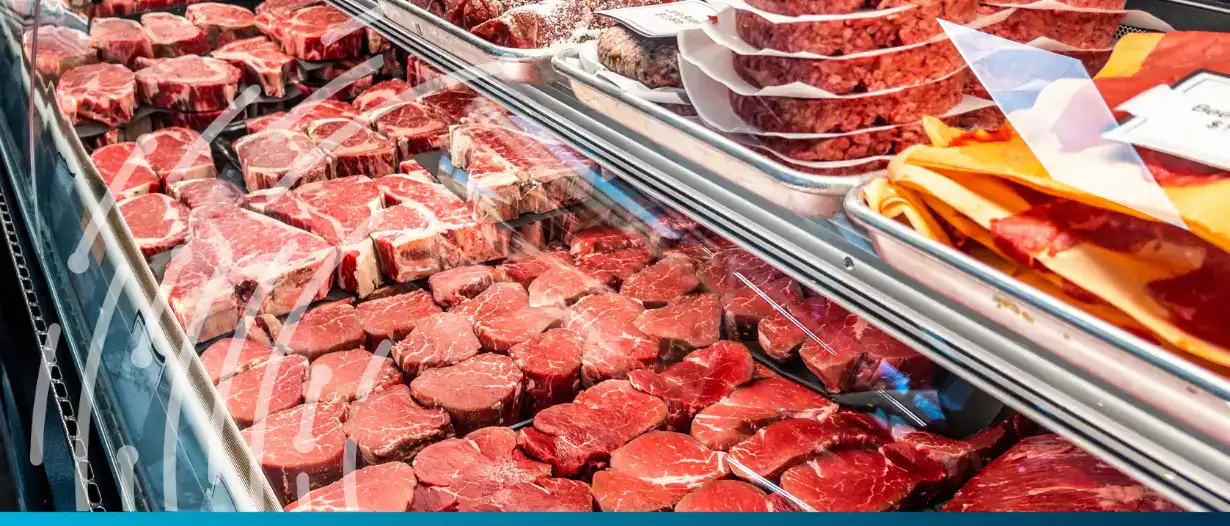
In 2025, UK meat imports surged to £5 billion, revealed HM Revenue & Customs (HMRC) data acquired recently by UK supermarket chain Co-op. This comes as officials warn about the UK’s food security, and fertiliser supply chain shocks continue to reverberate from the Gulf.
The UK imports around 40% of its food and relies on domestic production for roughly 60%, according to a government report from 2024. The production-to-supply ratio – the value of raw food production divided by the value of raw food for human consumption – had been at a steady increase, going from 60% in 2022 to 65% in 2024.
However, the recent growth in meat imports reflects a 15% year-on-year increase. Poultry was the most imported protein, with almost £2 billion in imports mostly from Poland and the Netherlands. Trade Finance Global (TFG) heard from Jordan Kear-Nash, Principal Consultant at Proxima, on the risks surrounding overreliance on external supply chains, particularly for meat.
“Meat imports are exposed to disease outbreaks, cold‑chain disruption, and regulatory changes,” explained Kear-Nash. “Even with diversified origins, a major health incident or certification issue in any exporting region can affect availability and pricing. These shocks tend to move quickly through global protein markets, creating short‑term pressure for import‑reliant buyers.”
The UK is also partially reliant on imports for nitrogen and phosphorus – two of the three primary macronutrients used in fertilisers. The effective closure of the Strait of Hormuz has halted an estimated 33% of fertiliser supply chains, with prices surging by 80% and hindering agricultural production globally.
“Disruption to overseas supply chains typically leads to higher prices, tighter availability and reduced choice,” said Kear-Nash, on the broader implications of external shocks to food supply chains.
“Retailers work to maintain continuity, but short‑term shocks can still create volatility in the market. Consumers may see changes in product range and more frequent price adjustments until supply stabilises.”
Risks of environmental degradation
The infamous levels of rain have made UK domestic plant production highly vulnerable to extreme weather events, meaning the country imports around 45% of its vegetables from the European Union (EU). The majority of its fruit – 84% of which is imported – comes from outside of the EU. Moreover, nearly 50% of the packaged products crowding UK grocery stores contain imported palm oil.
In early 2026, before the war in the Middle East broke out, an official British national security assessment outlined how global ecosystem degradation is likely to continue past 2050, serving as a threat to the UK’s food security.
The report highlighted the global decline in arable land, the collapse of fisheries, changes in weather patterns, and carbon emissions, emphasising how the UK must increase resilience across its supply chains in order to safeguard its food systems.
The Congo and Amazon rainforests, the Himalayas, and South-East Asia’s coral reefs and mangroves were identified as crucial for the UK’s food and water supply.
However, the report also emphasises that in spite of the growing dangers of overreliance, the UK does not have sufficient land to feed its population and farm livestock.
“The UK is exposed to a range of external shocks across global supply chains, including extreme weather events, regional instability, energy market swings and transport disruption,” explained Kear-Nash. “When key products are sourced from overseas, issues in producing regions or along shipping routes can quickly influence cost and availability.”
Farming co-operatives
In response to the surge in meat imports, Co-op also advised against overreliance on external food supply chains, urging increased government support for agricultural co-operatives.
Farming co-operatives are farmer-owned and controlled businesses where members pool resources as a means to access better markets. The supermarket chain is supporting the new Co-operative Party proposals, aiming to scale co-operatives across the UK.
There are an estimated 526 agricultural co-operatives in the UK. According to Co-op, their expansion could support farmers in sharing costs and distributing risk, while spreading rural skills and partnering through supply chains.
“The issue of supply chain resilience is upon us now and there is a clear and demonstrable benefit to the co-operative business model in agriculture,” said Paul Gerrard, Director of Public Affairs at Co-op.