










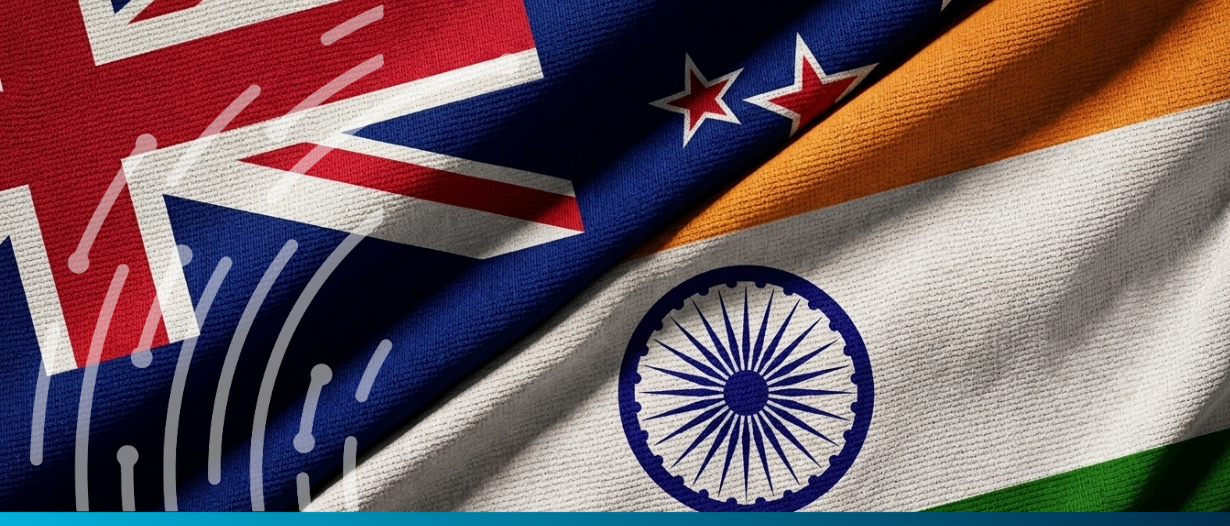

- India and New Zealand have signed a “once-in-a-generation” FTA, with 95% of New Zealand exports to India seeing tariffs cut or removed, and all Indian exports to New Zealand becoming duty-free.
- Key New Zealand sectors gain immediate or phased tariff relief.
- The deal is expected to boost Indian exports and support up to $20 billion investment into India.
Today, 27 April, India and New Zealand have signed a free trade agreement (FTA), which is likely to come into force later this year. 95% of New Zealand’s exports to India will have tariffs either removed entirely or sharply reduced, and 100% of India’s exports to New Zealand will be duty-free.
A third of the tariff lines on New Zealand exports to India will be immediately eliminated, covering wood (over 95% of forestry and timber exports will be able to enter India duty-free immediately) and animal products, including sheep meat, wool, and leather raw hides. The next series will be subject to phased elimination of tariffs.
Tariff lines kept in exclusion for Indian imports exist to protect sensitive Indian sectors, primarily encompassing dairy, certain agricultural products, and gems and jewellery. Dairy is New Zealand’s biggest export earner.
That said, tariffs on certain dairy-based preparations (like infant formula) and products like peptones and albumins will be phased out over the coming years.
For tariffs on Indian exports to New Zealand, the FTA is expected to be particularly supportive for Indian exports in textiles, leather, pharmaceuticals, and automobile goods. The agreement will also facilitate $20 billion of investment into India, India’s Commerce Minister Piyush Goyal stated.
Trade between the two countries is relatively modest, but growing. For instance, India’s agricultural exports to New Zealand in 2023-24 were $95.62 million; this figure rose to $108.21 million in 2024-25. The FTA supports New Zealand’s ambitions of doubling its export value over the next decade.
New Zealand Prime Minister Christopher Luxon referred to the agreement as a reflection of “growing ambition on both sides”.
Interestingly, the FTA includes a chapter on cultural trade, which is a first among multinational trade agreements.