



-
Thailand has implemented a four-year strategic plan to grow its exports and establish itself as the premier “hub of halal excellence” within the ASEAN region.
-
The Thai government is leveraging its position as a major food exporter to become a “food security hub” for the Organisation of Islamic Cooperation (OIC).
-
Beyond tangible goods, Thailand is actively expanding its “Muslim-friendly tourism” sector through digital apps and strategic partnerships to attract a larger share of the global travel market.
The global halal economy, estimated at $40 trillion, is among the fastest-growing sectors of the international economy. The sector’s compound annual growth rate (CAGR) of 5.3% is underpinned by a rapidly growing global Muslim population, which exceeds 2 billion today.
As the region with the largest Muslim population globally – more than 240 million people – South-East Asia is the leading player in the global halal industry.
Malaysia, a Muslim-majority nation, is the world’s largest exporter of halal goods, with particular market domination across Islamic finance, halal food, pharmaceutical, and media sectors. A robust investor ecosystem, including venture capital and private equity, and comprehensive standards, strengthens Malaysia’s halal economy.
But Thailand, a predominantly Buddhist nation, has begun vying to dominate halal exports from South-East Asia. In 2024, through the National Halal Industry Committee, Thailand’s government unveiled a four-year plan to grow exports by more than 1% and become the ‘hub of halal excellence’ within the Association of Southeast Asian Nations (ASEAN).
The Thai Minister of Commerce told the Secretary General of the Islamic Chamber of Commerce and Development (ICCD), in December 2025, that Thailand attached great importance to promoting economic cooperation with almost 60 Muslim nations, and was ready to serve as a “food security hub” for the Organisation of Islamic Cooperation (OIC).
‘Meat’ your maker
Halal is an Arabic word meaning ‘according to religious law’. Products from food and pharmaceuticals to law and finance must be categorised as ‘allowed’ or ‘lawful’ within Islam to be acceptable among Muslim populations.
The global halal meat market is the fastest-growing halal sector within the halal economy, outpacing fashion, media, and tourism, with a 8.92% CAGR. Worth $2.71 trillion in 2024, the market is projected to reach $5.91 trillion by 2033.
Brazil dominates halal food exports to OIC countries, with $26.5 billion in 2023, followed by India ($21.9 billion), Russia ($19.5 billion), and the US ($13.2 billion). And there are newcomers. Australia, in particular, is looking to establish itself as the global leader in halal meat by specialising in high-end halal products.
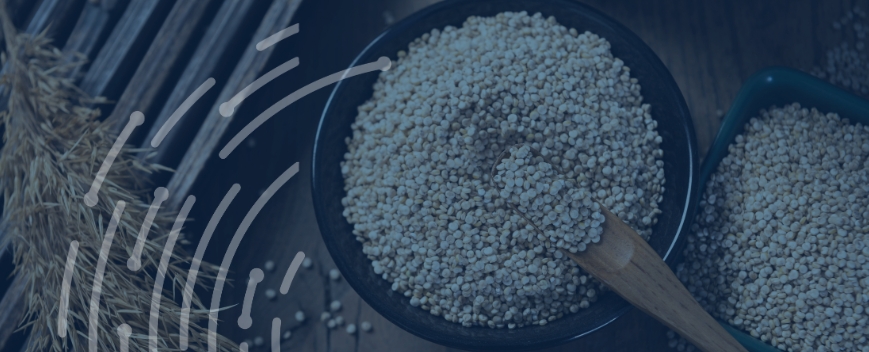
Currently, Thailand is the fifth-largest producer of halal food globally and the 11th-largest halal produce exporter, according to the Thai Commerce Ministry. Thai exports of halal food (such as rice, fresh and processed fruits, sugar, and canned seafood) were worth 335 billion baht ($10.27 billion) in 2024. That takes the value of the halal sector to 3% of Thailand’s national exports.
At the moment, the majority of Thailand’s halal food exports remain regional, with over 60% exported within South East Asia, particularly to Indonesia, Malaysia, and Brunei.
Thailand’s government is innovating to improve these numbers. As part of their four-year plan to become the ‘hub of halal excellence’, the government will be seeking to improve the certification process, build relations with Muslim nations, allow national food authorities to certify Thai manufacturing plants, and roll out an international marketing campaign to emphasise Thailand’s halal expertise and produce.
As one of the world’s largest net food-exporting countries, the emphasis on halal produce aligns with the Thai government’s goal to position Thailand as a global leader in food provisions and safety, a project known as the ‘kitchen of the world’.
Certifying halal goods is complicated. Businesses are certified by the Central Islamic Council of Thailand (CICOT), and must ensure:
- Raw materials used in production are free from prohibited substances
- Production processes adhere to high standards of hygiene and cleanliness
- All processing, preparation, packaging, and storage occur in facilities dedicated to halal production
- Equipment is thoroughly cleaned and free from non-halal contamination
Thailand is investing in the certification process. According to the Thai Halal Manufacturers Association, 7,000 food processing companies have now been halal-certified, up from 2,000 just five years ago. To date, CICOT has certified more than 200,000 items across Thailand. The number of businesses certified is significant, given the significant and stringent administrative and practical requirements.
Notably, the push toward halal products has had an impact on domestic consumption, including for non-Muslims.
Charoen Pokphand Foods (CPF), the food conglomerate headquartered in Thailand, has moved to promote its halal food via its 11,000 7-Eleven convenience stores. Other major Thai businesses, including Betagro Group and Thai Union Group, are also pushing to enter the market.
Nikkei Asia reported that halal-certified food has quickly increased in popularity, particularly among Thailand’s majority-Buddhist population, due to the status it confers on food cleanliness and safety standards.
Halal goods have quickly grown from serving the minority Muslim population in Thailand to becoming a supermarket staple and a symbol of Thai economic excellence.
Overcoming export challenges
In 2004, Saudi Arabia banned imports of Thai chicken and eggs. This ban was part of a broader 32-year hiatus in diplomatic relations between the two nations, which ended in 2022.
After the resumption of diplomatic relations, Saudi Arabia lifted the ban on Thai poultry products. The Saudi Food and Drug Authority granted specific permission to five of CPF’s manufacturing plants, a Thai-based food conglomerate.
Key to this was the impact of the Ukraine war on Saudi Arabia. Thai chicken meat replaced imports from Saudi Arabia, previously sourced from Ukraine, which experienced production shortages following Russia’s invasion.
Thailand has continued to support its economic strategy through diplomacy, including a 2023 meeting between the OIC Secretary-General and the Thai Prime Minister, during which the leaders reaffirmed the importance of bilateral relations and partnerships between Thailand and OIC states.
Thailand’s diplomatic and economic push to open up the halal export market has been matched by innovation in the Thai banking industry.
There has been limited domestic Islamic banking penetration in Thailand compared to Malaysia and Indonesia, largely due to the country’s minority Muslim population. However, a 2025 research paper found that Thai Islamic banks have developed specialised products for halal exporters, despite the limited domestic market.
Export-focused Islamic financing products have created opportunities across the financial and production sectors.
Cultural exports
Thailand welcomes around 30 million foreign tourists a year, 20% of whom are Muslims. In 2024, nearly 5 million Malaysian tourists visited Thailand, accounting for the vast majority of Muslim tourists.
That is not a coincidence. A central part of the Thai government’s strategy to become the ‘Halal hub’ of ASEAN includes attracting more Muslim tourists.
Halal tourism, also known as ‘Muslim-friendly tourism’, is one of the fastest-growing segments in the global travel industry. At $256.5 billion in 2023, halal tourism is projected to exceed $300 billion by 2030.
That translates to an approximate 145 million Muslim international arrivals in 2023.
Thailand has an advantage over other South Asian countries due to its established and booming tourism industry. In 2023, US News and World Report ranked Thailand as the seventh-best tourism destination globally, ahead of Singapore (14th), Malaysia (31st), Indonesia (32nd), and the Philippines (33rd). For Muslim travellers, however, Thailand only ranks 32nd.
To appeal to the Muslim tourism market, Thailand’s reforms have included:
- Partnering with Malaysia’s HalalHolidays OTA to promote halal-friendly travel packages in Thailand and to connect tourists with guides familiar with local Muslim history and culture
- Launching a Halal Route app to assist travellers with prayer timings, rooms, and halal-certified businesses
- Enrolling an initiative by the Department of Thai Traditional and Alternative Medicine to train practitioners for the Saudi Arabian market.
The cultural exports Thailand can capitalise on by bolstering its tourism sector are likely to compound across its exports in tangible goods and services.
—-
The halal economy has strengthened trade links between Thailand and its Muslim neighbours, building connectivity through tourism and food.
As the war in Iran threatens global supply chains, particularly for import-dependent OIC nations such as Saudi Arabia and the UAE, Thailand and broader South-East Asia could potentially become the ‘food security hub’ for the Muslim-majority world.