














- Closure of the Strait of Hormuz in February 2026 triggered a sharp oil price surge, exposing Asia-Pacific’s heavy reliance on a critical energy chokepoint.
- A vast, opaque “shadow” supply chain left traders, banks, and insurers vulnerable, while US sanctions waivers revealed how fluid and politically driven compliance regimes can be.
- Energy security and trade finance are tightly linked, prompting a shift towards more dynamic compliance, deeper due diligence, and greater supply chain transparency.
On the morning of 28 February, 2026, a tanker operator in Singapore received a message that would have seemed unimaginable a week earlier: transit through the Strait of Hormuz had effectively ceased. By nightfall, Brent crude had surged past $100 a barrel. By the end of March, it briefly touched $116. The world had not seen prices at that level in three and a half years.
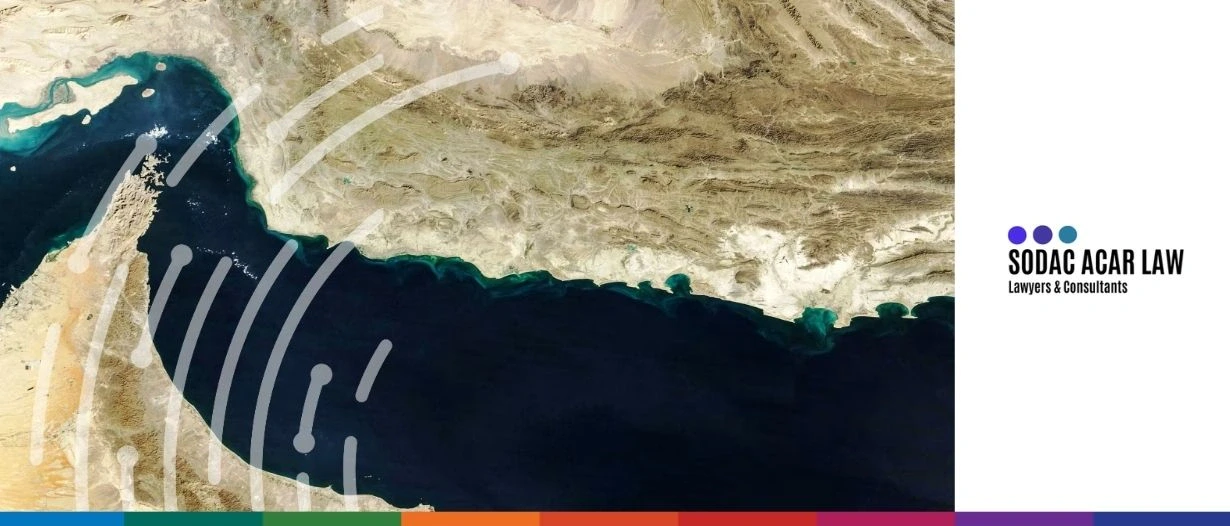
For Asia-Pacific (APAC), the implications ran far deeper than a spike on a trading screen. The Strait of Hormuz is not merely a geographic chokepoint; it is the arterial system of the region’s energy economy. Roughly 20% of the world’s liquified natural gas (LNG), and over 30% of the world’s oil transit those waters on any given day. The bulk of it flows east, toward the refineries, power plants, and factory floors of China, Japan, South Korea, India, and South-East Asia.
When the Strait closed, it did not close equally for everyone. What followed was a crash course in a lesson that Asia’s trade finance community had been quietly deferring: energy security and financial exposure are not separate problems.
A system built on opacity
To understand why the crisis hit so hard, it helps to understand what had quietly accumulated in the years leading up to it. Since the reimposition of US maximum pressure sanctions on Iran in early 2025, a parallel energy economy has taken root across Asia.
Independent Chinese refineries – known as teapots, named for their small, teapot-like stature – had become the primary buyers of Iranian crude, absorbing the majority of Iran’s oil exports to China.
Payment flowed through renminbi channels and front companies. Vessels changed names, flags, and automatic identification system (AIS) transponder signals mid-voyage. Ship-to-ship transfers in international waters obscured origins. The infrastructure of sanctioned trade had become, in effect, a shadow supply chain for the region’s energy needs.
This was not a secret. Regulators in Washington tracked it closely. The Office of Foreign Asset Controls (OFAC) designated vessels, companies, and refineries in successive waves through 2025 and into early 2026. Yet, for every sanctioned entity, a restructured successor emerged.
And the commercial logic was compelling: Iranian crude reached Chinese refineries at a discount often exceeding $8 to $10 per barrel below Brent, giving buyers a structural cost advantage that proved difficult to resist.
The consequences extended well beyond the entities directly involved. Trade financiers extending credit against cargo manifests, insurers writing cover for tanker fleets, and commodity traders structuring back-to-back deals across the region had all, to varying degrees, absorbed exposure to this system, sometimes knowingly, often not.
The compliance frameworks existed on paper. The due diligence workflows existed in policy documents. But the sheer scale and velocity of sanctioned cargo movements had outpaced the institutions designed to monitor them.
The waiver paradox
What happened next was, by any measure, extraordinary. The United States, the very government that had spent two years tightening the screws on Iranian oil exports, began issuing sanctions waivers. First for Russian crude already at sea, initially directed toward India, then broadened.
Then, on 20 March, for Iranian petroleum products loaded on vessels as of that date, with a 30-day authorisation window running to 19 April. Treasury Secretary Bessent framed it bluntly: Washington would use Iranian barrels against Tehran to suppress prices, even as military operations continued.
The optics were jarring. The policy rationale, however, was straightforward: oil prices surging past $100 a barrel threatened domestic US inflation, and with midterm elections approaching, political pressure was acute. Sanctions, it turned out, were not immutable legal structures. They were instruments of policy, and policy responds to circumstances.
For APAC’s trade finance community, this revelation carried a specific and underappreciated implication. The compliance frameworks that firms had built – the sanctions screening tools, the restricted party lists, the vessel monitoring protocols – were calibrated to a world in which the list of prohibited counterparties was relatively stable.
The waiver regime introduced a new variable: authorised windows of legitimacy, narrow in scope and time-limited, through which previously sanctioned cargo could flow legally. Thai buyers, Vietnamese refiners, and Indian state-owned companies all suddenly found themselves evaluating whether to move on Iranian crude that, weeks earlier, would have been untouchable.
The compliance question was no longer simply “is this sanctioned?” It had become, “Is this sanctioned today, and by whom, and through which license?”
Asia’s energy reckoning
Beneath the immediate crisis, a structural shift was already underway, and the Hormuz closure accelerated it dramatically. For years, APAC’s energy import dependency had been treated as a manageable condition, mitigated by diversified supplier relationships and comfortable reserve buffers.
The crisis exposed the limits of that assumption. Japan and South Korea, both heavily reliant on Middle Eastern crude, began accelerating conversations about reserve coordination. India, which had been quietly expanding its Russian oil imports following the Ukraine-related sanctions of 2022, found itself reassessing the risks of over-concentration in any single alternative supplier.
South-East Asian nations, many of which had no meaningful strategic reserve infrastructure at all, confronted their exposure in real time.
The financial dimension of this reckoning is where trade finance enters the picture. Energy import dependency is, at its core, a financing dependency. The letters of credit (LCs), receivables facilities, and structured commodity finance instruments that fund Asian energy imports are the invisible infrastructure of the region’s economic functioning.
When that infrastructure is stress-tested by price shocks, sanctions uncertainty, and the sudden unavailability of insurance cover for vessels transiting conflict-adjacent waters, it does not simply pause. It reprices, reroutes, and in some cases, fails.
The post-Hormuz environment has already begun producing structural changes in how that financing is structured. War risk premiums for vessel insurance have escalated sharply. LCs covering Middle Eastern cargo have attracted heightened scrutiny from confirming banks.
Commodity traders operating in the region have faced margin calls and credit line reductions as counterparty risk assessments were revised. The financing gap between what Asian buyers need and what the conventional trade finance market is currently willing to provide is one of the defining challenges of the coming months.
What comes next
The waiver windows will expire. The military situation will evolve. Prices will, eventually, stabilise. But the underlying dynamics that the crisis has exposed will not simply revert.
APAC’s energy trade has been forced to confront three realities simultaneously: the fragility of Hormuz-dependent supply chains, the political malleability of sanctions regimes, and the inadequacy of existing financial infrastructure to absorb shocks of this magnitude.
For those operating in the region’s trade finance ecosystem, the practical implications point in a consistent direction. Compliance frameworks need to be dynamic rather than static, built to accommodate rapidly shifting sanctions landscapes rather than assuming stability.
Counterparty due diligence needs to reach deeper into shipping and cargo chains, not merely the immediate transactional parties. And the question of energy supply chain transparency – where cargo originates, how it moves, who finances each leg – needs to become a first-order concern rather than an afterthought.
—
None of this is comfortable. It requires investment, expertise, and a willingness to engage with complexity that the industry has historically preferred to defer. But the alternative, continuing to operate as though the Strait of Hormuz of January 2026 still exists, is no longer a feasible strategy.
The Strait changed. The question is whether the financial systems that depend on it will change fast enough to keep pace.
Editor’s note: This article was completed on 7 April 2026. On 8 April, the United States and Iran announced a two-week ceasefire brokered by Pakistan, with Iran agreeing to reopen the Strait of Hormuz. Subsequent face-to-face talks in Islamabad on 11–12 April ended without agreement – with nuclear enrichment and control of the strait remaining the central sticking points. As of 15 April, the ceasefire remains nominally in place but under strain, with the US announcing a naval blockade of Iranian ports and a second round of talks under discussion.