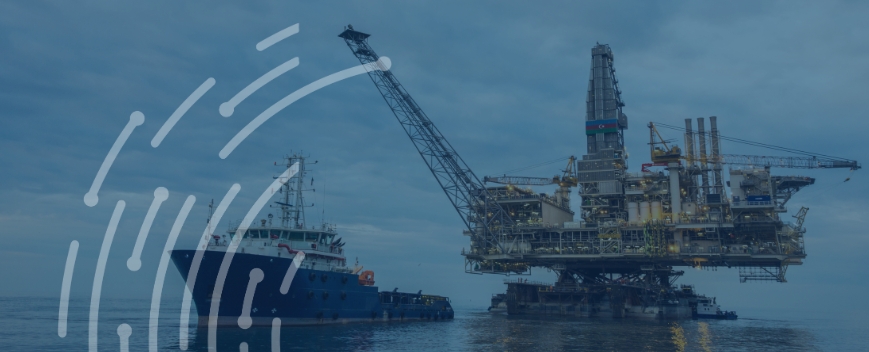







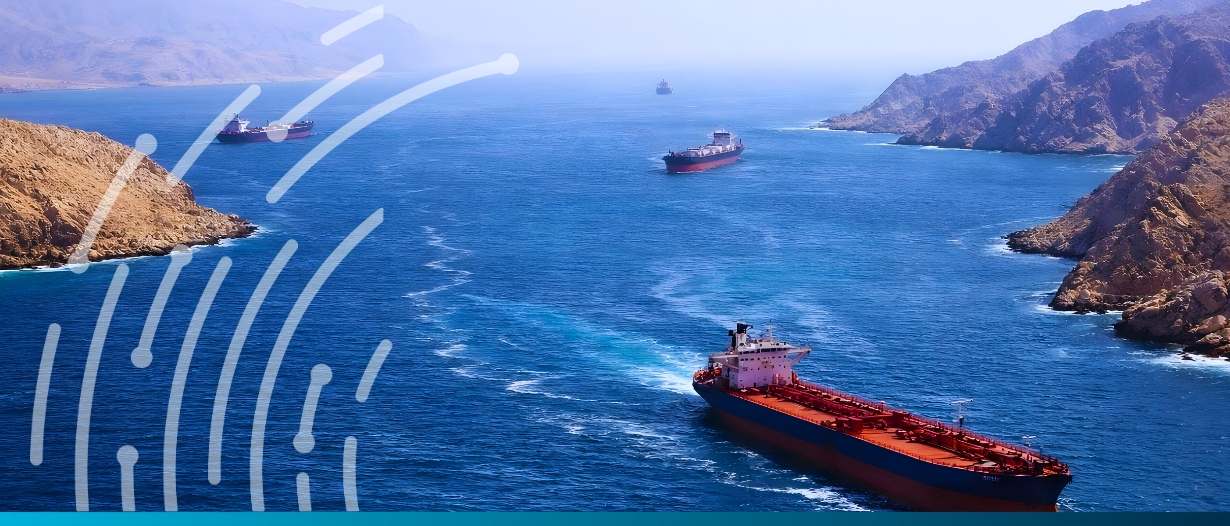

- A two-week ceasefire between the US and Iran has enabled the gradual reopening of the Strait of Hormuz, a critical route for roughly a fifth of global oil and gas supplies.
- Despite the agreement, ongoing explosions and retaliatory strikes highlight continued instability and uncertainty in the region.
- The prior blockade reduced shipping traffic by around 95%, leaving thousands of seafarers and hundreds of vessels stranded while disrupting global energy markets.
On Wednesday, 8 April, the US and Iran agreed to a two-week ceasefire, leading to the gradual reopening of the Strait of Hormuz.
While the agreement gave some preemptive relief to countries reliant on the waterway for their energy supply, reported explosions in the Persian Gulf and in Iran’s Lavan oil refinery – just hours after the declaration of a ceasefire – mean uncertainty persists. Iran has said a precondition for transit is that its armed forces maintain control over navigation across the Strait, and has been charging up to $2 million for the transit of some carriers.
According to Iran’s state broadcaster, Iran has since launched retaliatory missile and drone attacks in Kuwait and the UAE.
Since the conflict began on 28 February, the Strait had been effectively shut down, forcing traffic to decline by around 95%. Prior to Iran’s blockade, around 138 ships passed through the Strait daily, transiting roughly a fifth of the world’s oil and gas supply.
The ceasefire came just before US President Donald Trump’s deadline for Iranian officials to agree to his demands, or face attacks that he claimed would kill “a whole civilization.” As part of the ceasefire, Iran gave a 10-point proposal, deemed “workable” by the US. The proposal included the “complete and permanent cessation of the war on Iran with no time limit.”
The announcement of a ceasefire saw the slow reopening of the Strait this morning. According to the International Maritime Organization, since the blockade began, around 20,000 seafarers have been stuck on board and trapped, grappling with waning supplies. 800 vessels remain trapped.
This morning, two ships moved to exit the Strait, sailing toward Iran’s Larak and Qeshm islands. One of them is the US-sanctioned Suezmax, which has been flagged to Iran; and next to it is the Greek-owned bulk carrier NJ Earth, which is known for spoofing to hide its location. Other ships have also been spotted sailing toward the Strait from within the Persian Gulf.
Following the ceasefire, oil and gas prices plummeted, with Brent crude trading below $96 per barrel – its lowest since before 9 March – while the US West Texas Intermediate (WTI) oil fell by over 15%.
Prior to the ceasefire, the US had been gaining traction as an alternative oil supplier. In March, the US committed to releasing 172 million barrels of oil from its petroleum reserves to reduce the surging oil prices. This followed warnings by Iran that the world should prepare for oil being $200 per barrel.
The US reserve has around 415 million barrels – 58% of its authorised capacity of 714 million barriers. Analysts have warned this reserve is not sufficient to make up for the paralysis in the Persian Gulf.
However, the US has also tapped into Venezuelan oil since the Trump administration’s abduction of former Venezuelan leader Nicolás Maduro in January 2026. Venezuela has the world’s largest oil reserves, known for being difficult to process due to its thick, high-sulphur nature.
US-based energy multinational Chevron now imports around 250,000 barrels of Venezuelan crude oil per day – an over 152% increase from the 99,000 barrels per day they imported in December 2025.