





- The near-closure of the Strait of Hormuz significantly disrupts of global LNG flows – mainly from Qatar – threatening nitrogen fertiliser production, which underpins nearly half of global food output.
-
Up to 40% of global nitrogen fertilisers originate in the Middle East.
-
Beyond energy, the disruption strains agricultural trade and insurance markets, with Middle Eastern food-importing nations exposed and war-risk insurance suspended across the Gulf, compounding food security and trade finance risks.
The effective closure of the Strait of Hormuz strains global food security, given the impact on the transport of agricultural goods and the chemicals necessary for the production of fertilisers.
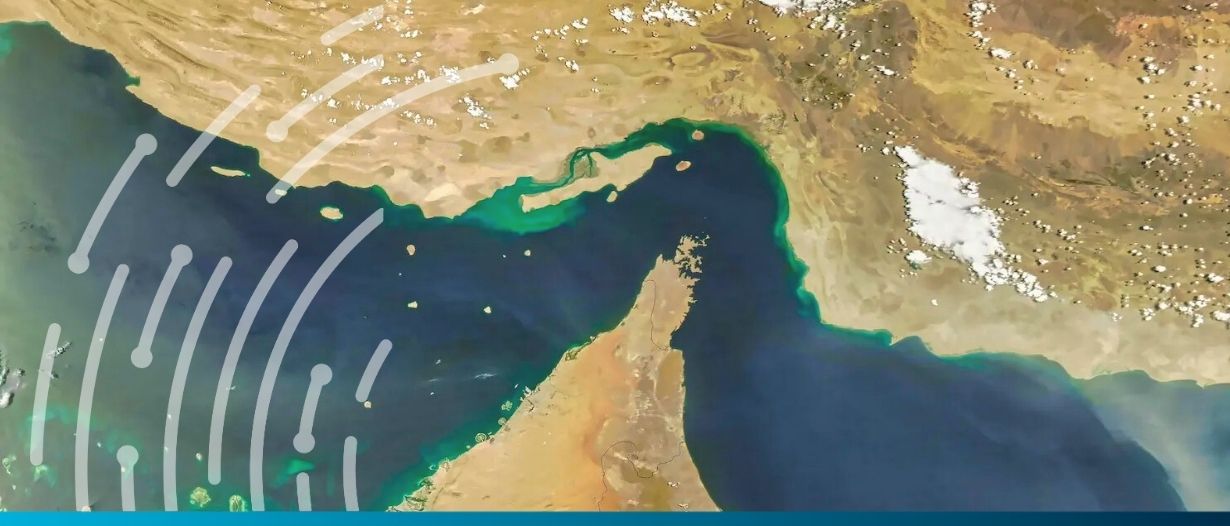
Each month, around 3,000 ships transit through the 50km waterway, which separates Iran and Oman. While there hasn’t been an official consensus on its closure, traffic has declined by 94%.
70% of Iran’s non-oil trade, as well as key food systems globally, are reliant on this strait.
Trade Finance Global (TFG) heard from trade credit insurers at Coface. “The region is one of the main producers for fetilisers, especially of nitrogen. We have tried to identify where we can see the most risk,” said Bruno Fernandes, Head of Macroeconomic Research at Coface.
20% of the global liquified natural gas (LNG) supply passes through the strait, largely thanks to Qatar, which is the world’s second-largest producer of LNG. Qatar has already halted its LNG production, following what it referred to as attacks by Iran on its facilities.
The closure of the Strait of Hormuz would mean that Qatari LNG could no longer travel across the waterway at all. According to Lloyds List Intelligence, an average of six ships carrying LNG travelled the Strait daily in February, but there were none on Sunday, 1 March – the day after missiles launched by Iran and the US-Israel caused great instability in the region.
Natural gas, the raw material for LNG, is critical for manufacturing nitrogen fertilisers. Methane within natural gas is converted into ammonia through an industrial process, and ammonia is the building block for nitrogen-based fertilisers. Almost half of global food production relies on synthetic nitrogen; about 180 million tonnes of nitrogen fertilisers are consumed annually, and about 40% comes from the Middle East.
Additionally, the possible closure of the Strait would risk global urea (a high-nitrogen fertiliser) supplies falling by 30%, and sulphur supplies by 44%. These are two of the world’s most powerful nutrients for plant growth.
This would be particularly detrimental for India and Brazil, which are heavily dependent on LNG imports from Qatar to power their domestic urea production. Half of India’s LNG comes from the Middle East, and Brazil imported 7.7 million tonnes of urea in the last year, with 35% coming from the region.
“For Europe this year, fertiliser purchases have already been [made]. The biggest risk is for Brazil, where the season is still to come,” said Simon Lacoume, Sectoral Economist at Coface.
While crude oil is likely to reroute across the Saudi Arabian East-West pipeline, chemical shipping is more challenging to redirect. Chemical shipping entails specialised equipment alongside rigid safety regulations, such as the Agreement concerning the International Carriage of Dangerous Goods by Road (ADR), risking serious legal and financial penalties upon non-compliance.
On where importers could turn amid this disruption, “The other biggest and largest LNG exporters: the US and Australia,” said Fernandes.
For countries not able to revert to alternatives in time, food security might be threatened.
Agricultural imports to the region suffer from the Strait closure
On the import side, analysts have flagged the consequences for Middle Eastern countries. In the past year and a half, Iran imported nearly 1.9 million tonnes of wheat, accounting for 25% of Indian basmati rice exports. The broader region is likely to be implicated too, as Gulf countries like the UAE, Kuwait, Oman, Qatar, and Bahrain are almost entirely dependent on imports when it comes to beef.
Iran’s declaration of closure was followed by over half of the world’s maritime insurers suspending their war-risk cover for the Strait and the wider Persian Gulf, starting from Thursday, 5 March.
—
Under the new policy, war-risk cover will automatically dissolve if a vessel is to enter the Persian Gulf, certain adjacent waters, or Iranian waters. Coface declined to respond when asked about the implications of this decision.