












-
The Credendo Global Risk Atlas highlights escalating geopolitical conflicts and fragile alliances as major sources of uncertainty shaping global risk in 2026.
-
Supply chains and global trade face growing disruption from conflict-driven shipping risks and climate-related chokepoints such as the Red Sea and Panama Canal.
-
Despite turbulence, innovation in AI, clean energy and advanced agriculture offers long-term opportunities for resilience, productivity and strategic growth.
Headlines over the past few months have been taken over by reports of upheaval in almost every part of the globe: from bombs dropping in Venezuela, to protests in Iran, escalating fighting in the Ukraine war, and US threats to take over Danish territory, the world is in turmoil.
Introduced by Nabil Jijakli, Deputy CEO at Credendo, the fourth edition of the Credendo Global Risk Atlas is an atlas in the original sense: a set of maps the industry can use to navigate the uncharted seas of 2026.
What we found in surveying the global risk landscape for this year is disruption – from the prevalent (Ukraine and Middle Eastern conflict) to the overlooked (droughts in the Panama Canal) – but so much more than that, too. Artificial intelligence (AI), green energy, and groundbreaking innovations in agriculture will go a long way in helping the world adapt to the turbulence and usher in a brighter future.
Navigating conflicts
New conflict zones continue to emerge, while many existing ones remain unresolved. The war in Ukraine is approaching its fifth year without a settlement; the situation in Gaza has shifted into a fragile ceasefire; and Sudan’s civil war continues with no indication of de-escalation.
A fragile situation in the Sahel – growing tensions between Rwanda and the Congo, domestic trouble in Mali, and unrest in Nigeria – may bubble over and threaten international security in the year ahead.
The involvement of the US has done little to ease tensions. On the other hand, the US’s changing web of alliances – deepening divisions between Russia and China while pulling away from Europe with an undiscriminating handful of protectionism – is further increasing the fracture between nations.
China, for its part, is somewhat filling the vacuum left by the US. Despite brief scuffles with the EU last year (such as its short-lived trade war with the Netherlands over a chip-making company), China is trying hard to be seen as an international peacemaker. Its ever-increasing export numbers and near-monopoly on rare earth elements aid its international standing.
However, both China and the US are fragile, facing domestic or structural challenges like a stagnating economy and stubborn unemployment levels.
The choppy seas of shipping
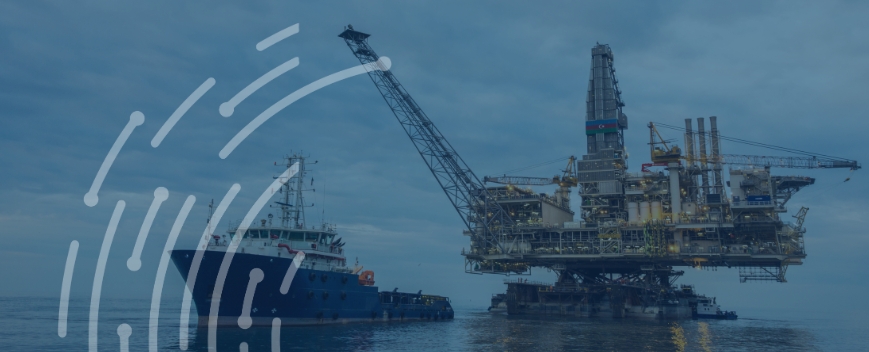
As conflict rises, so do supply chain risks. Global shipping, which carries over 80% of world trade, relies on a handful of straits, channels, and chokepoints – some just a few hundred metres wide – to get goods to their destinations on time. When even one of these routes is cut off, all of trade suffers.
Although Houthi attacks in the Red Sea have nearly subsided, partly thanks to the recent Gaza truce, the route is still a long way from being safe and reliable. The nearby Strait of Hormuz is similarly vulnerable: on 3 February, Iranian Revolutionary Guards forces threatened to board and seize a US tanker on the Strait, after the US military shot down an Iranian drone near the country’s coast.
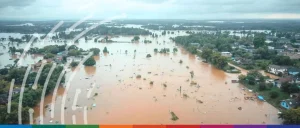
The Panama Canal is becoming vulnerable to weather over geopolitical risk. Climate change caused severe droughts in 2023 and 2024, reducing the traffic that could go through the canal; similar changes in water levels could reverberate around the world, in both maritime and inland shipping.
While shipping routes won’t completely transform anytime soon, disruption and uncertainty will result in more frequent delays, rising shipping costs, and increased risk for trade in goods travelling by sea.
A point to consider is the new shipping lanes, as rising temperatures are opening up new shipping lanes, like the Northern Sea Route, which could reduce reliance on the most turbulent shipping channels and cut down transit times for oil and gas tankers bound for Asia.
A path for the dollar
The dollar, the world’s reserve currency and closest thing to a gold standard since the 1950s, is weakening. This is the result of faltering confidence in the US Federal Reserve, US debt requirements, and international currency diversification.
However, signs of dedollarisation are yet to materialise beyond speeches and newspaper op-eds. While there is a growing push to reduce international reliance on the dollar (two major European pension funds, for example, have recently announced they would exit or greatly reduce their US Treasury holdings), the sheer size of the US economy means its hold on currency markets is still strong.
The yuan, the euro, and alternative currencies like stablecoins have so far not proved to be credible replacements to the dollar, which still underpins over 90% of global transactions.
Uncertainty over tariffs and currencies is, unsurprisingly, bad news for exporters. Global uncertainty leads to lower demand, while businesses are themselves incurring higher costs to become more resilient. Hedging is helping some treasury managers cope with the fluctuations, but long-term hedging is far too expensive for most businesses, leaving them at least partly exposed.
Following the lead of innovation
The shift to clean energy has unlocked new technology and massive opportunities for investment; however, drastic changes can leave countries vulnerable. Europe’s move away from fossil fuels made it too dependent on Russian natural gas, while Latin America’s increasing reliance on hydroelectric power put it in dire straits during extended droughts. While the US is moving away from renewables, China has invested massively, becoming the top global provider of necessary technology like solar panels.
The shifting makeup of energy sources will profoundly affect the operations of businesses around the world, determining the availability, price, and environmental impact of the energy they use to manufacture and transport goods.
The energy transition presents a significant opportunity for Europe to invest in becoming energy self-sufficient: a positive herald, especially for industries that trade goods essential to the energy transition, like copper.
AI has the potential to significantly reshape industrial processes, particularly through machine learning and data-driven optimisation. Most companies are still in an exploratory phase, and only a minority have embedded AI deeply into their operations. Rather than automating entire workflows, AI should first be deployed to support workers and improve productivity. Realising these benefits nonetheless requires time, investment, and leadership willing to move beyond hesitation and ensure that the necessary data and systems are in place.
Other innovations, such as advancements in bioengineering and heating technology, could transform our everyday lives before we know it. Breakthroughs in precision fermentation, for example, could enable scientists to produce complex proteins and fats in a lab, reducing our reliance on many key commodities and animal products.
—
The past year has underscored how quickly global dynamics can shift, increasing the level of unpredictability. In an environment marked by heightened risks, emerging opportunities, and persistent uncertainties, the real challenge lies in assessing the landscape with clarity and charting a course that balances resilience with strategic growth.