














- Russia’s first domestically built Arctic LNG tanker, the Alexey Kosygin, completed its first journey on the Northern Sea Route, marking a milestone in Russian Arctic shipping.
- The US is due to begin construction on its only deepwater Arctic port in Nome, Alaska, which could turn the town into a major northern shipping hub by 2029.
- As Arctic ice melts, countries including Canada and South Korea are investing in routes and ports to exploit faster shipping corridors, intensifying geopolitical competition.
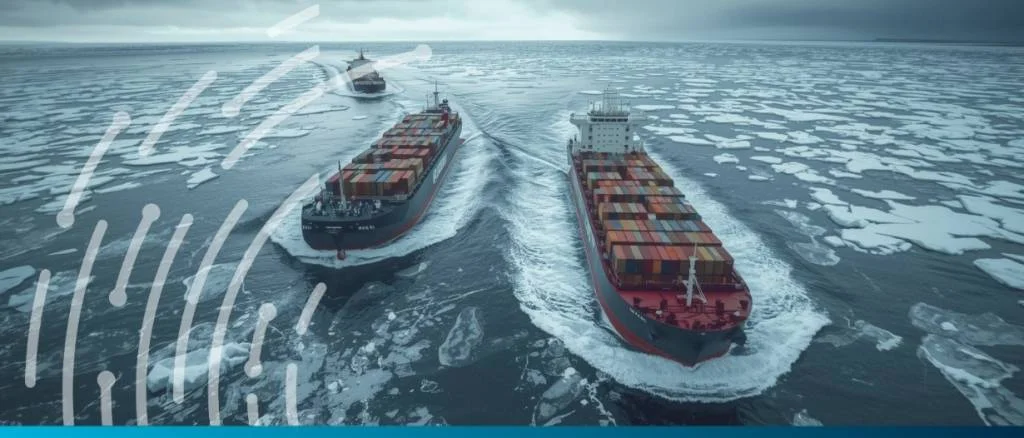
Yesterday, the first Russian-built Arctic LNG tanker – the Alexey Kosygin (IMO: 9904546) – arrived at the sanctioned Arctic LNG 2 facility in Western Siberia. The passage, aided by a Russian-built icebreaker, took 13 days and saw the ships travel through the Northern Sea Route, the first time a Russian tanker has completed the journey.
The Kosygin is an Arc-7 rated vessel, meaning it can break ice up to two meters thick with its hull and can complete most passages through ice with little to no icebreaker assistance. The only other tanker to complete the transit so far – the South Korean-built Christophe de Margerie – has been experiencing significant maintenance issues, potentially due to difficulties accessing repairs in European shipyards due to its links to Russia.
On the other side of the Pacific, construction will soon start for the US’s only deepwater Arctic port in the small goldmining town of Nome, on Alaska’s Seward Peninsula. The port, whose first phase is due to be completed in September 2029, will allow most US naval and Coast Guard vessels to dock in the port.
This could transform the town, which currently has a population of 3,699, into a global northern shipping hub with a key position on the Northern Sea Route (NSR).
The NSR is a perilous but increasingly popular shipping route that runs through the north of Russia, linking the Atlantic and Pacific Oceans by way of the Arctic Circle.
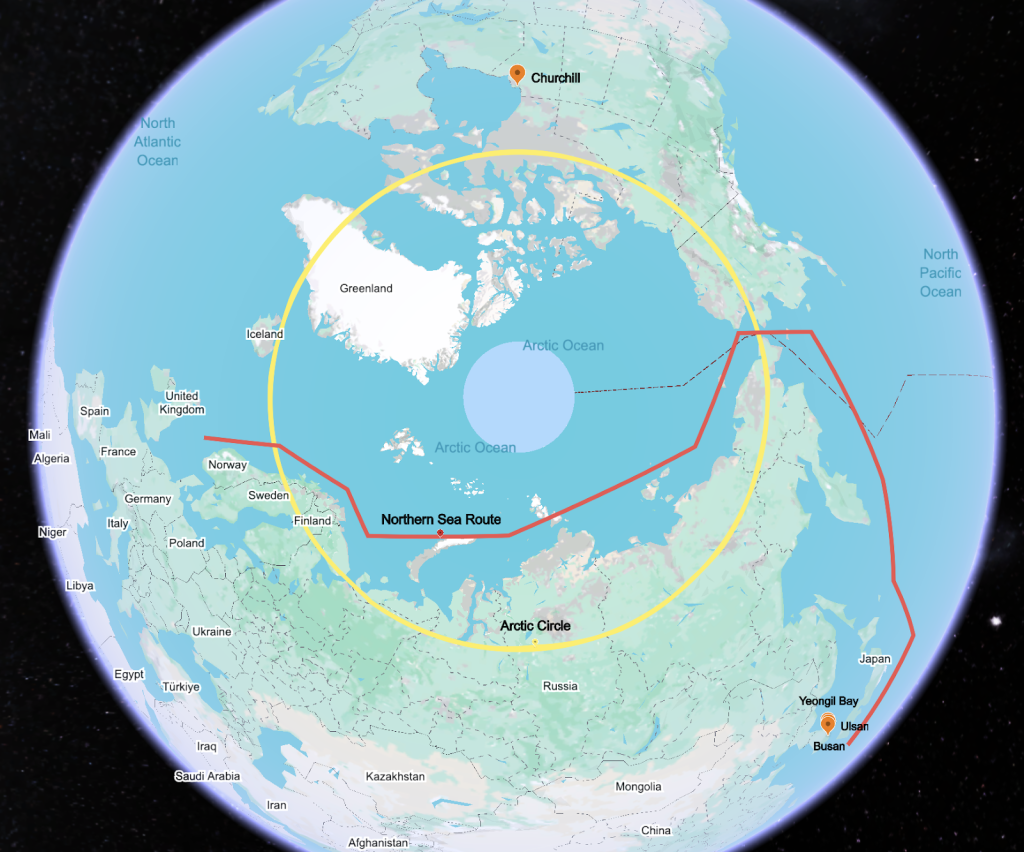
Source: Google Earth and TFG
This summer, Canada announced major investments in the port of Churchill, Manitoba, which would grant it access to the route by transiting near Greenland. During the same time, South Korea launched a pilot programme, due to start this year, to enable ships to leave from the ports of Busan and Ulsan and access the NSR.
As ice caps melt, previously inaccessible shipping routes have been opened. These could cut travel times from Europe to East Asia by more than half, causing exporters to rush to take advantage.
Russia’s move could signal an important new development in maritime shipping and sanction evasion. Construction for the Kosygin, a sanctioned vessel, was completed in 2025, and yesterday’s arrival in China marked the end of its maiden voyage in the Arctic. The average sanctioned vessel, on the other hand, is 20 to 25 years old, almost twice the age of a non-sanctioned operating vessel.
Russia’s sanctioned fleet, and forging relationships with China to trade energy and materials, could cement BRICS’ move away from the West in the trade sector, one of the last remaining links.
For its part, the US’s move to invest in Arctic shipping could open the way for a renewed “space race” for the planet’s northernmost seas.