














- Formula 1’s delayed adoption of paddle shifting shows how industries can recognise better technology years before they are ready to trust and fully adopt it.
- Global trade still suffers from operational drag caused by paper documents, spreadsheets, email chains, and manual processes.
- With legal frameworks advancing, trade must remove outdated workflows rather than preserve them alongside new technology.
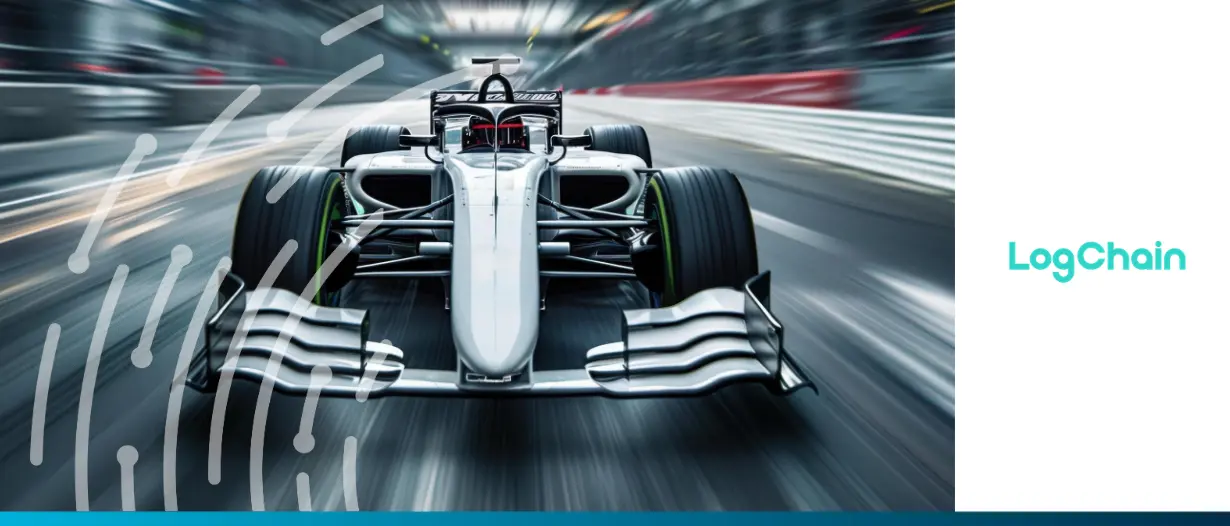
Formula 1 (F1) is an industry built to hate wasted time. The sport fights for milliseconds, spends fortunes to remove friction, and treats every unnecessary movement as a performance problem.
That is why one piece of Ferrari history still matters far beyond motorsport. In 1979, Ferrari had already explored a semi-automatic gearbox direction. Engineer Mauro Forghieri’s team tested a system that allowed the driver to change gear from the steering wheel. It was faster, but it was also crude, heavy, and uncomfortable.
Six Grands Prix-winning Ferrari driver Gilles Villeneuve did not trust it, and made his feelings known to Ferrari founder Enzo Ferrari. In the wholly analogue cockpit of a 1979 Formula 1 car, Villeneuve’s wasn’t an unreasonable reaction, so the idea was paused.
10 years later, Ferrari returned to the concept. In 1989, the Ferrari 640 introduced paddle shift to Formula 1. Nigel Mansell won the opening race in Brazil. Within a few years, the manual gear lever was heading for extinction.
10 years.
In Formula 1, 10 years is not a delay. It is an era: cars change, regulations change, materials change, drivers come and go, and entire design philosophies rise and fall. The uncomfortable lesson is not that people should blindly trust new technology. They should not.
The lesson is that the future can be technically visible before an industry is emotionally ready to trust it, and this applies to trade finance today.
What hard used to look like
Before paddle shift, changing gear in a Formula 1 car was not a simple movement. It was a sequence: brake, clutch, hand off the wheel, gear lever, throttle blip, clutch release. Repeat.
All while approaching a corner at extreme speed, balancing the car, and trying not to select the wrong gear. The old way demanded skill and courage. It also created workload, mechanical compromise, and risk. A wrong shift could damage the gearbox, over-rev the engine, lock the rear wheels or contribute to a crash.
The physical toll on the drivers was also significant, with bloodied and blistered hands wrapped and distracting the driver from their mission.
That distinction matters: not every hard thing is valuable and not every familiar process deserves to survive.
The breakthrough was about removing the wrong kind of difficulty, so the driver could focus on the real job: driving the car as fast as possible.
Trade has its own gear lever
Global trade has a similar problem. Paper gets the attention because it is visible, historical, and absurdly persistent. The wet signature is kept because the process says it must. The email chain is acting as a filing cabinet, approval trail, and dispute mechanism. The portal creates another place to check, rather than enabling one fewer thing to do.
We have built a global trade system where the human workaround is treated as part of the process.
Think of Bob. Bob is not one person. He is the warehouse supervisor, shipping coordinator, operations lead, customs broker, or trade administrator who must make the process work after the boardroom or business owner has moved on. He is the person dealing with the shipment held at 16:55 on a Friday, while everyone works from slightly different versions of the truth.
From the boardroom, this can look like ‘admin’. It is not ‘admin’. It is operational drag. The people approving the transformation may have walked the shopfloor in a high-visibility jacket, but Bob carries the gearbox.
The risk is not in change. The risk is in waiting ten years
The original F1 hesitation was understandable. In 1979, asking a racing driver to trust electronics and hydraulics with gear changes was a serious leap.
Trade should apply the same discipline. A bank asking whether an electronic trade document is legally valid is not being backward. A carrier asking whether the record is transferable and auditable is not being difficult. A customs authority asking whether the data is reliable is not anti-innovation. These are the right questions.
But when the questions become a permanent excuse for preserving every spreadsheet, signature, paper fallback, and manual approval loop, the organisation has moved from prudence to paralysis.
The commercial case for change is already visible. McKinsey has estimated that electronic bills of lading could save $6.5 billion in direct costs and enable up to $40 billion in global trade. Digital Container Shipping Association (DCSA) member carriers have committed to 50% electronic bills of lading within five years from 2023, and 100% by 2030.
The risk is not only commercial. Poor trade information can become an operational risk. MSC Flaminia and the Tianjin port explosions were complex, tragic events, but they remind us that hazardous cargo information, warnings, and operational control are far more than trivial paperwork.
The legal gearbox is built
For years, one honest objection to trade digitalisation was legal uncertainty. Could an electronic record do the job that paper did? Could it be possessed, transferred, controlled, and relied upon when challenged?
In key jurisdictions, the answer is no longer theoretical. The United Nations (UN) Commission on International Trade Law (UNCITRAL) adopted the Model Law on Electronic Transferable Records (MLETR) in 2017 to enable electronic transferable records to be accepted domestically and across borders.
The UN gave the world a great framework; however, it created little impetus. For there to be a domino effect, the world needed the UK’s adoption of MLETR. Estimates suggest that English law governs approximately 40% of all cross-border commercial contracts and international trade. The UK’s Electronic Trade Documents Act 2023 then gave legal recognition to electronic trade documents including bills of lading (BLs) and bills of exchange.
This is enabling legislation. The legal gearbox is not being built, it is already built. The question is whether operations will keep reaching for the old lever.
No half measures
There is a dangerous middle ground in trade digitalisation: adopting just enough technology to create complexity, but not enough to remove the old workflow.
A PDF attached to an email is not digital trade. An Excel tracker updated manually is not digital visibility. A new portal that creates another place to check is not transformation. A digital document treated as secondary to the paper fallback is not progress.
Trade has its own version of two gears engaged at once: a paper truth and a digital truth; spreadsheet truth and platform truth; email truth and operational truth. This is a gearbox under stress.
None of this is anti-human. Trade will always need humans in the loop. The goal is not to remove Bob. The goal is to stop making Bob compensate for broken systems.
F1 did not become less demanding when the gear change disappeared. It became more focused. The driver still had to drive. The team still had to engineer. The stakes were still brutal. But the wrong kind of difficulty was removed.
Trade should ask itself the same question. Are we protecting control, or are we protecting the comfort of the old gear lever?
F1 fought for milliseconds and lost ten years. Trade does not need to repeat the same mistake just because the old workflow still feels comfortable.