














- Disruptions to maritime and air routes in the Middle East have pushed freight companies to shift towards road transport, despite limited infrastructure and capacity challenges.
- Road freight faces significant pressures from fuel surcharges, congestion, customs delays, and inefficiencies compared with maritime shipping.
- Logistics providers are exploring alternative corridors, including the increased use of rail, to manage rising demand and cost volatility.
Since the war in the Middle East began earlier this month, disruptions to maritime and air shipping routes have urged carrier companies to move to road freight.
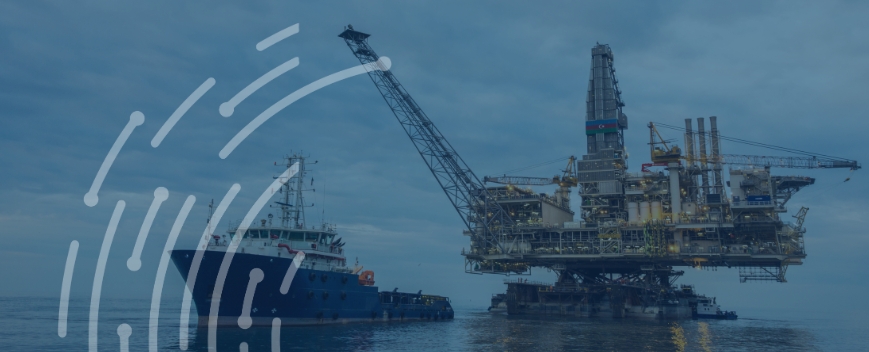
Maritime shipping companies have faced a stalemate, particularly due to the effective closure of the Strait of Hormuz, which, prior to the conflict, routed around 3,000 ships each month. Air routes linking Asia and Europe are also facing significant disruption.
Given their dependence on food imports for 90% of supply, the Middle East has been left scrambling for alternative options.
The Qatar Chamber has since urged shipping companies to register with the International Road Transport (TIR) and reroute to land travel, attempting to facilitate transit through the country’s land border with Saudi Arabia. However, land-based transport networks prove unsuitable for the large volumes of containerised cargo, and fuel surcharges are putting a strain on petrol-dependent options.
Carriers operating in the broader region, such as CMA CGM, Hapag-Lloyd, Maersk, Ocean Network Express, and Zim Integrated Shipping Services, are among those deploying land solutions, reported the Journal of Commerce. Maersk offers the options of keeping the cargo in temporary storage or returning it to the port of departure as well.
CMA CGM is facilitating transport through road corridors linking the Red Sea port of Jeddah, Saudi Arabia, to the UAE, Qatar, Bahrain, Kuwait, and Iraq. However, road routes aren’t suitable for shipments intended for the sea.
“The infrastructure was not originally designed to accommodate such a high level of incremental trucking demand, particularly given the longer distances resulting from cross-country movements,” a spokesperson for Hapag-Lloyd told the Journal of Commerce.
In their latest Middle East update, released on Wednesday, 18 March, Crane Worldwide Logistics said road freight is “largely operational but facing growing customs delays and capacity pressure as air/sea cargo shifts to land,” and that Saudi redistribution volumes are accelerating.
Volatility in airfreight – particularly between Asia and Europe – has also pushed logistics providers to explore establishing long-distance road corridors through Central Asia. The corridor would connect Chinese production hubs, and potentially manufacturing hubs in Vietnam and Cambodia, with European markets.
According to industry observers, Central Asian road infrastructure, particularly that of Kazakhstan, has made the route increasingly viable.
Road infrastructure and fuel surcharges
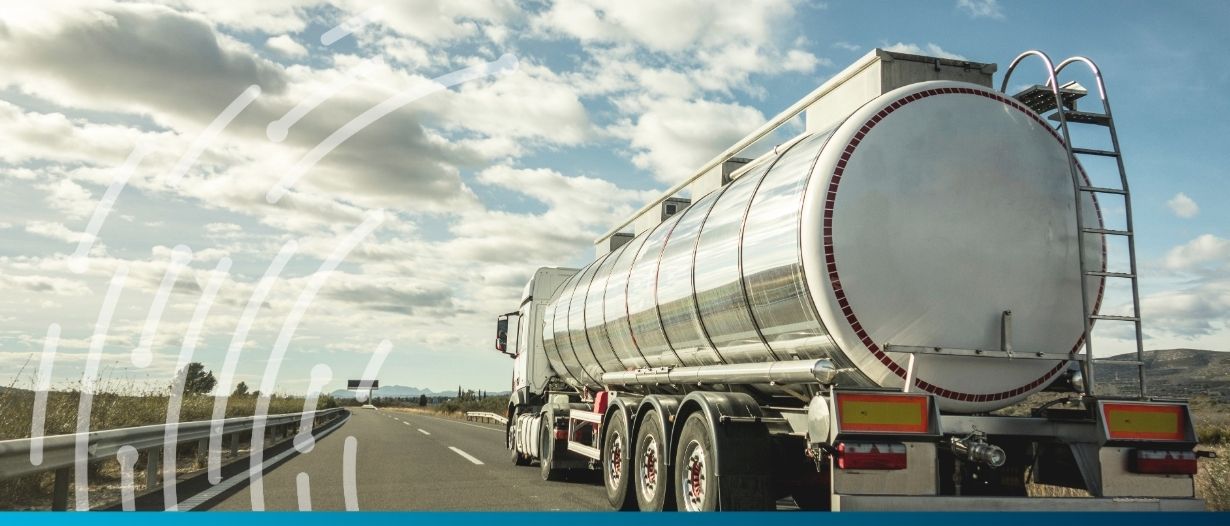
However, road transport is highly vulnerable to traffic congestion, border delays, and accidents, as well as driver shortages and driving bans. Ships are more resilient to such disruptions and can carry higher volumes of cargo, not least because of their sheer size; they also benefit from hydrodynamics, with water being far less resistant than land-based travel when it comes to heavy loads.
Ships are also exponentially more efficient when it comes to fuel usage. Although around 80% of global trade is ordinarily done through maritime shipments, road vehicles like trucks and vans account for 65% of freight’s total emissions. 80% of the increase in global diesel is attributed to trucks.
Since the conflict in the Middle East began, fuel surcharges – the extra fees imposed by transportation companies to account for the fluctuating costs of fuel – have caused controversy. While the fee is said to be intended to maintain stability within operational expenses, the fees, ranging from $30 to $300 per twenty-foot equivalent unit (TEU), evoked anger among shipping companies.
The surcharge is likely to have a particularly dire impact as traffic grows across the fuel-inefficient road freight.
Amid frenzy over fuel, rail is becoming an increasingly attractive alternative. Fuel accounts for around 20% of the cost base in road haulage, while rail-road solutions are largely dependent on electricity, making them more predictable when it comes to costs.