

-
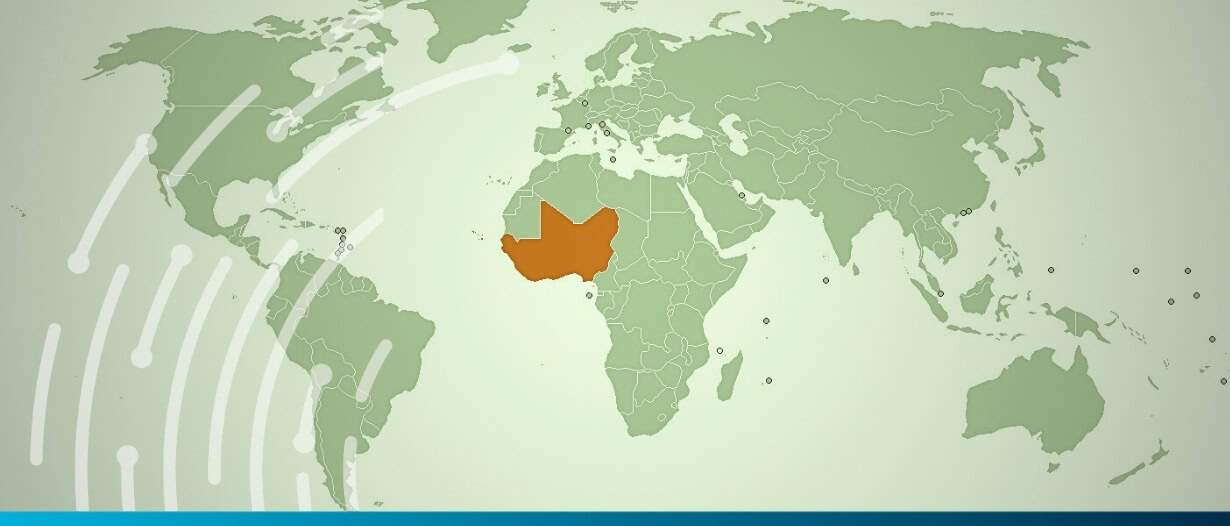
ECOWAS and the African Development Bank have revived discussions on introducing a single regional currency, the ECO, as part of extending West Africa’s Regional Integration Strategy beyond 2025.
-
While a shared currency could reduce transaction costs and boost trade, uneven macroeconomic convergence, inflation volatility and economic instability make immediate benefits unlikely.
-
Recent steps such as easing non-tariff barriers, advancing monetary co-operation and lifting sanctions on Guinea signal renewed momentum towards deeper economic integration in West Africa.
In a meeting held last week in Abuja, Nigeria, the African Development Bank (AfDB) and the Economic Community of West African States (ECOWAS) reignited talks of a shared currency across ECOWAS member states.
The three-day meeting focused on extending the Regional Integration Strategy Paper (RISP) for West Africa, which reached its term in 2025. The RISP aims to overcome a dichotomy within ECOWAS: it contains two blocs, the West African Economic and Monetary Union (WAEMU) and non-WAEMU countries, which have overlapping and sometimes competing mandates.
The WAEMU comprises eight states that use the West African CFA franc (XOF), while the remaining seven ECOWAS members use their own currencies, none of which are free to convert.
The adoption of a single currency, ‘ECO’, aims to promote trade by eliminating the transaction costs caused by currency differences.
However, as outlined in the RISP, the idea that there would be immediate gains from a shared currency is also unlikely, particularly due to uneven progress in meeting macroeconomic convergence criteria, inflation volatility, and overall economic instability.
The last decade has addressed many barriers to African economic integration. The African Continental Free Trade Area (AfCFTA), launched in 2018, brought together 1.4 billion people with a total GDP of over $3 trillion. The agreement came into effect with the potential to take 30 million people out of extreme poverty.
Yet, regional value chains proved to be difficult to develop due to non-tariff barriers (NTBs) and differences in regulatory and legal frameworks. Non-automatic licenses, issued only at the request of the importer, after verifying they meet legal requirements, are the most common NTB on the continent.
Sanitary and phytosanitary measures (SPSs) and technical barriers to trade (TBTs), designed to protect public policy objectives like human and animal health, also experience divergences across countries, operating as bottlenecks to trade.
However, recent efforts in West Africa signal a move toward easing these barriers. The 58th meeting of the West African Monetary Zone (WAMZ) Technical Committee was held last Thursday, 5 February, in Monrovia, Liberia.
“Liberia is deeply honoured to host this august gathering as we deliberate on critical issues surrounding the consolidation of the ECOWAS Monetary Cooperation Programme and the deepening of regional economic integration, including the much-anticipated launch of our single currency, the ECO,” said Dehpue Y. Zuo, Liberia’s Deputy Minister of Economic Management.
Another recent development is that, on 29 January, ECOWAS lifted all remaining sanctions that were imposed on Guinea following its 2021 military coup, marking the country’s full reintegration into ECOWAS since its suspension five years ago.
Amid rising volatility and geopolitical disruptions from external powers, ECOWAS’ full economic integration through a shared currency could prove invaluable in building resilience across the bloc and cementing its position as an emerging economy.