















-
Embedded finance integrates financial tools directly into non-financial digital platforms, allowing businesses to connect funding with the physical movement of goods.
-
By combining the local expertise of regional institutions with the risk mitigation techniques of development banks, blended finance helps to de-risk transactions for SMEs.
-
The company Done utilizes an end-to-end model that manages logistics, customs, and inventory to provide visibility and comfort for investors in high-risk environments.
This year, more than ever, geopolitics’ impact on supply chain stability, credit risk, financial and insurance costs, and credit access has become evident. This is especially true for Ukraine: the IMF estimated that the country would have a funding shortfall of $137 billion USD by the end of 2027. However, cooperation – across institutions and along supply chains – can make a big difference in increasing access to finance for businesses large and small.
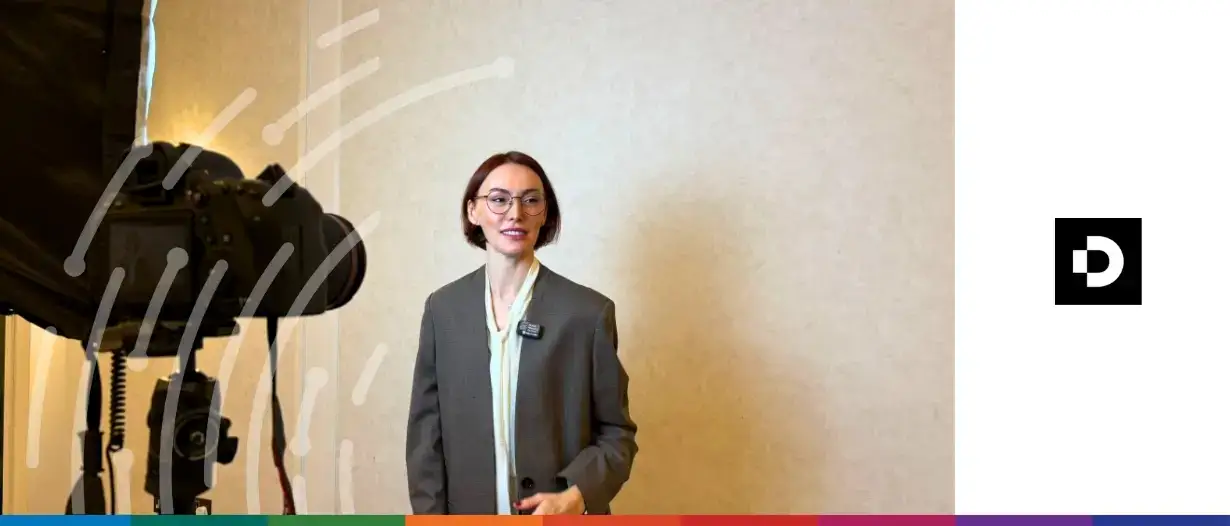
At the third annual Trade Finance Investor Day in London, Trade Finance Global (TFG) talked to Alla Papaika, Head of the Investment Department at Done, to find out how embedded and blended finance can scale financial opportunities for SMEs and investors in Ukraine and beyond.
How is embedded finance transforming trade?
Embedded finance describes the integration of financial tools and services into non-financial digital platforms. This includes services like Klarna, a recognisable name for online shoppers, which allow purchases to be paid for in a few interest-free instalments, seamlessly integrating financial lending services with online shopping.
Travel companies like Expedia or EasyJet may use embedded finance to offer built-in insurance policies as add-on financial services, while Uber or Lyft have built-in payments that eliminate the need to pay taxi drivers directly.
The embedded finance market was valued at $82.5 billion in 2023 and is projected to exceed $1 trillion by 2032. In the trade sector, embedded finance directly connects the flow of funds with the logistical elements of moving goods, thus reducing the number of entities businesses need to engage with to facilitate transactions.
This collaboration is crucial for SMEs, which, lacking large-scale infrastructure, often face the most significant barriers in accessing financing, including higher costs, time, and paperwork.
Done began in 2011 as a local supply chain management company. In 2024 embedded financing has become a significant part of their business model. The company integrates financing, logistics, and inventory management, creating flexibility for businesses in both liquidity and physical inventories. “Our financing facility is installed in our entire supply chain from the very beginning,” said Papaika.
For Done, embedded financing offers a mechanism to attract clients, particularly SMEs, who may not be able to access traditional forms of financing due to administrative, fiscal, or geopolitical constraints. Embedded financing has both supported the company’s existing transport and shipping model and attracted new customers.
The benefits of blended finance
Beyond attracting new customers, embedded finance’s potential lies in derisking – especially when it enables collaboration with development banks and institutional investors.
Blended finance products and guarantees, for example, make a loan less risky for the financier, thereby making it easier for SMEs to get financing from sources who may not have been interested originally.
When institutions collaborate, they also benefit from the experience of a wide range of local experts. “The additional expertise helps us derisk the transaction and invite new partners and investors, giving them more comfort in terms of risk mitigation,” said Papaika.
Development banks can contribute to this, bringing a broad understanding of risk mitigation techniques that can build upon the in-depth local understanding of regional institutions.
End-to-end control and risk mitigation
Done’s model is particularly unique in that it uses embedded finance to control the entire transaction. The end-to-end model sees Done originate the transaction with a client they know and have a track record of payments for. Done is then in charge of logistics, including customs clearance, transportation, and inventory management.
The model also allows for flexibility in the delivery and distribution of goods, enabling SMEs to purchase in bulk even if they have specific storage or liquidity constraints. Embedding finance within what was originally a transportation company has streamlined the process for SMEs to access financing.
This also gives the company invaluable information on what happens in the supply chain at every stage, which is invaluable for forecasting risk and building trust. The all-round capacity “allows us to see and control the transaction, while the track record and visibility we have give us comfort in terms of risk mitigation,” said Papaika.
The global supply-chain market has reacted not only to the tariffs but also to the subsequent market uncertainty, including delays, customs, border issues, security concerns, and increased costs.
Control over supplier reliability, shipping issues, customs challenges, and inventory management reduces the risk associated with each investment, enabling the companies to mitigate credit, logistics, and geopolitical risks.
—
Blended and embedded finance both rely on the collaboration of traditionally distinct and separate financial and economic tools to create new financial possibilities.
Both work to spread the risk of transactions in order to create viable pathways for financial access in countries afflicted by loss and damage, without creating burdensome amounts of debt. This creates a path for SMEs to remain active economic participants even when traditional financial institutions are unable to support their activities.
The combination of blended and embedded options may provide a template for closing the trade finance gap with implications further than just in Eastern Europe.