















-
Tokenisation converts real-world assets into digital formats, which reduces costs and lessens the reliance on intermediaries during the audit and settlement process.
-
By allowing for the fractional ownership of assets, this technology lowers barriers to entry and enables a more diverse range of investors to participate in global trade.
-
Blockchain improves security through immutable audit trails and smart contracts, which help to automate workflows and significantly reduce the risk of fraud.
The interest in digital assets and blockchain-based infrastructure is growing, but their practical impact on trade finance remains contested. While proponents believe tokenisation can reduce costs, improve transparency, and expand liquidity, critics question whether it’s merely the reconfiguration of existing capital flows.
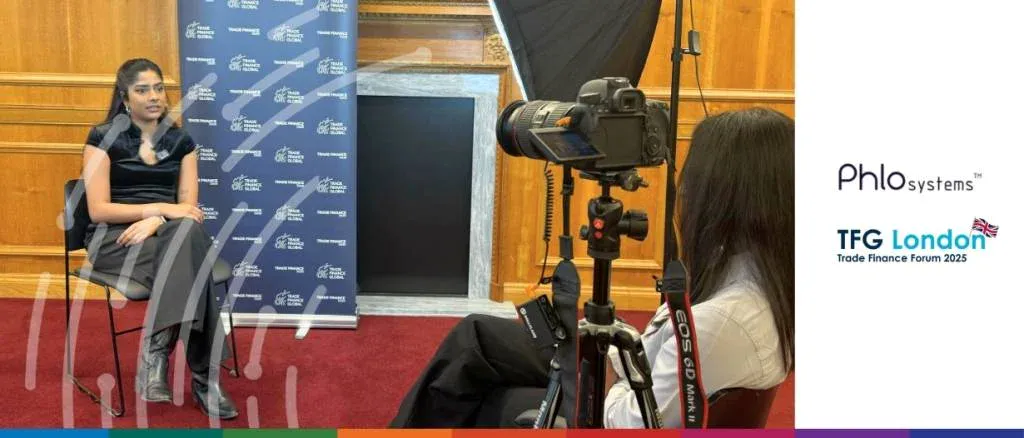
On Tuesday, 9 December, Trade Finance Global (TFG) hosted its inaugural Trade Finance Forum in London, bringing together industry figures from banking, alternative finance, technology, and small and medium-sized enterprises (SMEs).
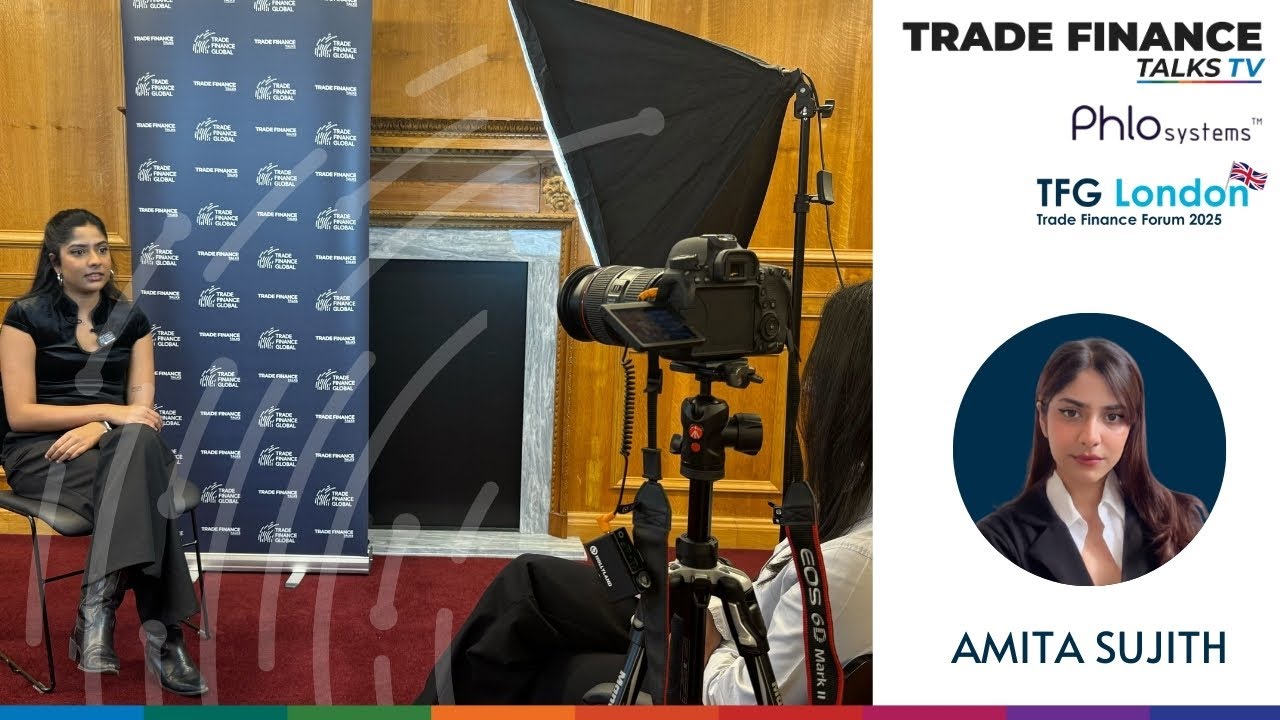
As part of the forum, TFG sat down with Amita Sujith, Trade Finance Product Manager at Phlo Systems, which specialises in solutions that digitise international trade processes, to examine how digital infrastructure is reshaping global trade.
Sujith is the head of finPhlo, a trade finance platform that helps traders, trade financiers, and fund managers with their operations, utilising digital assets and tokenisation to make trade finance more accessible. In the discussion, she unpacked the practical uses of tokenisation, whether digital assets are actually changing the industry, and what blockchain technology means for security.
Tokenisation: Cost-cutter or a deferred promise?
Tokens – the digital representations of real-world assets – are on the rise. In 2024, a report by Standard Chartered predicted that tokenised assets could reach $30.1 trillion by 2034, with trade finance assets making up 16% of this.
“Digital assets do have a great practical utility in trade finance,” said Sujith. “This is because tokenisation itself is the act of converting real-world assets […] into digital assets, which can now be transferred, audited, and settled with far fewer intermediaries.” This makes the entire trade finance process much less laborious and costly.
Tokenisation also allows assets to be divided into smaller units and distributed across multiple investors, enabling investors to purchase portions of what would otherwise be a high-value asset. This can lower the barriers to entry into global trade and broaden who can participate in owning and trading assets.
The World Economic Forum argues that tokenisation can help ‘democratise financial market access,’ playing a crucial role in supporting individuals in emerging economies to participate in global finance.
Some analyses of tokenisation frame it as a modernisation of existing financial infrastructure, rather than as something that fundamentally alters the capital base. Harsher critics even argue that digital assets largely repackage existing funds that would have reached the industry regardless.
However, for Sujith, tokenisation unquestionably means market expansion. “In today’s market, a large portion of liquidity cannot really reach trade finance because of operational hurdles like onboarding friction. Tokenisation helps remove these barriers,” she said.
Beyond improving accessibility by enabling assets to be fractionalised and distributed across multiple investors, tokenisation can bring new pools of capital into trade finance and diversify the investor base.
This includes investors such as crypto funds, stablecoin treasuries, and alternative asset managers, for whom traditional trade finance structures have been operationally inaccessible. This means tokenisation is “expanding the pool dramatically,” said Sujith.
Blockchain and security
Historically, key concerns in traditional trade finance have been fraud and data manipulation. A whitepaper by the International Chamber of Commerce (ICC) highlights how 1% of all trade finance transactions – or $50 billion – are susceptible to various types of fraud.
Blockchain has emerged as a potential tool to address these risks, offering greater transparency and traceability and reducing reliance on manual processes.
“Blockchain introduces something called an immutable audit trail, which means that any data that is published cannot be destroyed and cannot be tampered with. If it is changed, then everyone involved is going to be alerted,” said Sujith. “This massively reduces the risk of fraud.”
Smart contracts can further support this process by embedding preestablished rules into transactions and automating particular workflows. In practice, this means that funds can be released automatically once agreed-upon conditions, like proof of delivery or document verification, are met, limiting the chances of human error.
Blockchain-based systems also distribute data across multiple nodes, rather than storing it in a single central database. This decentralised structure reduces the potential for data manipulation or system failure.
These features position blockchain as a potential infrastructure upgrade for trade finance. However, while improved security and automation may improve trust in transactions, in the long run, technology must address the persistent structural gaps in the market.
Digital assets and the future of trade finance
Sujith argued that the growing trade finance gap is largely driven by cumbersome traditional processes, with banks often reluctant to finance smaller firms due to limited visibility, compliance challenges, and the high operational costs involved.
Through opening trade finance assets to a broader range of investors and improving transparency, Sujith argued that digital infrastructure can help channel liquidity towards different segments of the market.
—
According to Sujith, the longer-term promise of digital assets is making trade finance more accessible and transparent, with tokenisation strengthening existing systems while widening participation across the market.
“I don’t think we are going to be replacing traditional trade finance in any way,” she said. “We’re enhancing it.”