















-
Financial crime in trade finance is becoming more sophisticated as technology advances, with fraud and money laundering costing the industry $1.6 trillion annually.
-
Despite the rise of AI and blockchain, traditional investigative methods often prove more effective in preventing fraud, as data analytics can be easily manipulated by criminals.
-
Fraud in trade finance is cyclical, with major incidents often surfacing during economic downturns or global shocks, highlighting the need for constant vigilance in crime prevention.
In 2025, nearly everything is digital. While digitisation usually conjures up images of real-time automated KYC checks, friendly AI customer service agents, and ever-growing innovative tech, there is also a dark side.
As businesses evolve, so do bad actors. Financial crime in trade finance, as in many other industries, has gotten more sophisticated and diverse as technology has advanced, leading to more and more complex frauds and increasing attempts to evade sanctions or launder money.
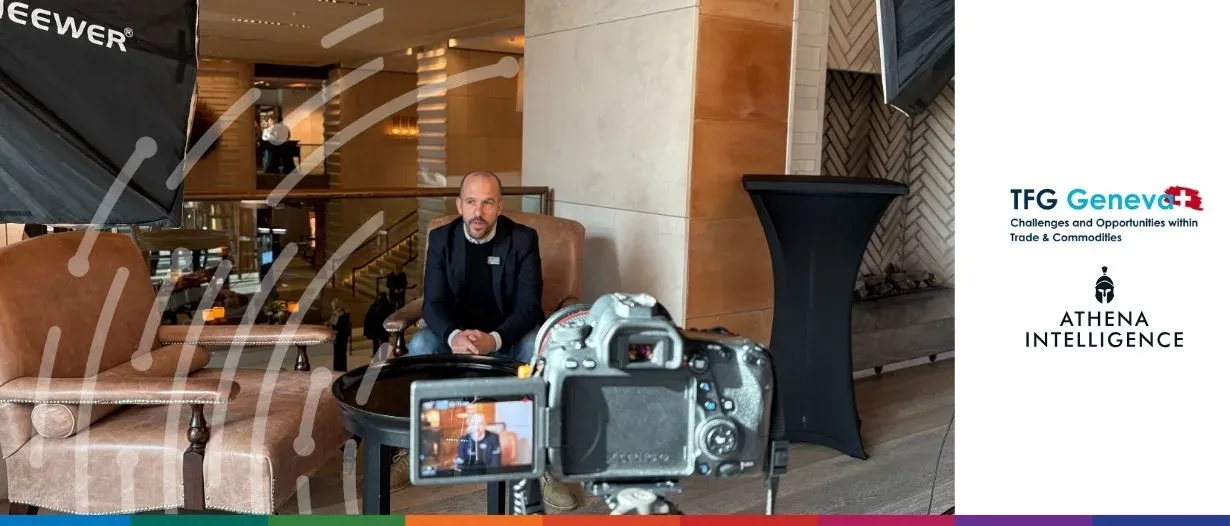
The good news is that technology can help here, too, as can an awareness of the most common types of financial crime and the ways they’re carried out. At its inaugural conference in Geneva, Switzerland, Trade Finance Global (TFG) spoke to Jonas Rey, CEO of Athena Intelligence, about his years of experience in crime prevention in the trade finance and commodity trading industry, and the ways companies can outsmart would-be criminals.
More than just fraud
Anyone who follows news headlines would guess that fraud is by far the most prevalent type of financial crime, especially as high-profile cases have been getting increasing media attention. However, in 2024, fraud accounted for just one-third of total trade-based crimes globally. On the other hand, the impact of fraud is immediate and profound: over $5.1 billion was lost to fraudulent activities in the industry in that year alone.
Fraud and deliberate misrepresentation of facts and figures are widespread in the trade industry, contributing to financial losses and breaches of trust. This fraud can take different forms. For instance, multiple financing – where scammers use the same transaction, invoice, or documents to back financing from multiple venues – is a long-standing type of fraud that remains popular around the world.
Internal fraud is also often an issue, especially for large companies, with embezzlement or other misrepresentations often going undetected and costing the business millions in losses and legal fees once discovered.
Buyers and sellers also sometimes cooperate in a fraud, for example, by using trade finance instruments to finance a transaction that isn’t really happening, pocketing the funds instead. Documentary collections fraud and invoice manipulation are other frequent issues in the industry.
Because trade finance transactions require large amounts of capital, they are also an easy target for money laundering. Criminals sometimes use the movement of goods and services and international transfers of money to obscure the trail of their illicit funds.
One of the most popular trade-based money laundering schemes is the Black Market Pesos Exchange (BMPE). The BMPE involves transferring funds, usually profits from the illegal narcotics trade, to offer cheap foreign currency to importers, who then use it to trade. Money laundering is one of the oldest financial crimes in trace finance, yet it is ever-evolving, with more sophisticated checks often leading to novel schemes by criminals wishing to evade them.
A rosy world – for now
Taken together, these crimes cost the trade finance industry $1.6 trillion each year. In response, more and more trade finance businesses are taking steps to eradicate trade-based crimes. As a result, “in general, fraud has reduced, because banks, insurance companies, market participants, and traders have developed better control and better processes to detect those frauds early on,” said Rey.
Fraud is also much more prevalent during economic downturns, with a study finding that some types of fraud nearly doubled during the global recession in 2008. “Market conditions have been slightly better until now for traders, and usually that’s not when we see fraud at all,” explained Rey.
Tech: Between fanaticism and scepticism
While AI and innovative tech solutions get most of the attention, old-fashioned methods for preventing financial crime are often the ones to prove most effective.
“We are actually a good old-school investigation firm, where we pick up the phone, we talk to people, we go on the ground, we look at things, and we visit sites,” said Rey. The recent data analytics craze often leads to disappointing results, due in large part to low-quality or corrupted data. It is also far too easy for market participants to poison data in order to fool the analytics systems and perpetuate fraud.
Tech tools can be helpful, but only if users acknowledge their limitations. For example, Rey explained, an innovative data analytics system can “look at documentation and establish that it matches where a ship has been – but it doesn’t tell us much more important things: does the company really exist? Does the subjacent trade really exist? Have the goods been picked up by the legitimate party?”
Whenever new technology enters the market, it is almost always hailed as the new solution that will eradicate fraud once and for all. First, we had blockchain and electronic bills of lading (eBLs), which were allegedly going to save the industry tomorrow; now, we have AI,” said Jonas. This is not to say the new tools aren’t helpful: AI and blockchain could, over time, largely benefit the trade and fraud detection industries, especially once they are implemented more widely and by a broader range of market participants.
However, that’s decades away. For now, “the jury is still out, but new tech is not the Holy Grail that we were promised it was. And usually, if people want to cheat the system, they would find a way: whether you have the most amazing blockchain out there or not, that will not change,” said Rey.
Is fraud gone or just in hiding?
While some amount of fraud is endemic in the trade industry, as it is in many others, it has been years since a massive scandal on the level of Greensill made headlines around the world. Does this mean financial crime is on its way out?
“Fraud is cyclical to some extent: a lot of these big cases come out of the woodwork once there is a macro event,” explained Rey. For example, tightening credit lines after the pandemic brought many who had been cheating the system, for example, by embezzling funds or double-pledging invoices, to the fore.
While the trade finance and commodities industries have had a good few years, a macro shock – for example, the AI bubble bursting and causing ripple effects across the global economy – could make fraud a headline issue again.
“It’s when the tides go away that you see who is swimming naked,” Rey explained.
—
As the global economic situation ebbs and flows, the trade finance and commodities industries would do well to prepare for fraud to come out of the woodwork. While new technology often gets most of the hype, a human approach to fraud detection is often the winning strategy.