



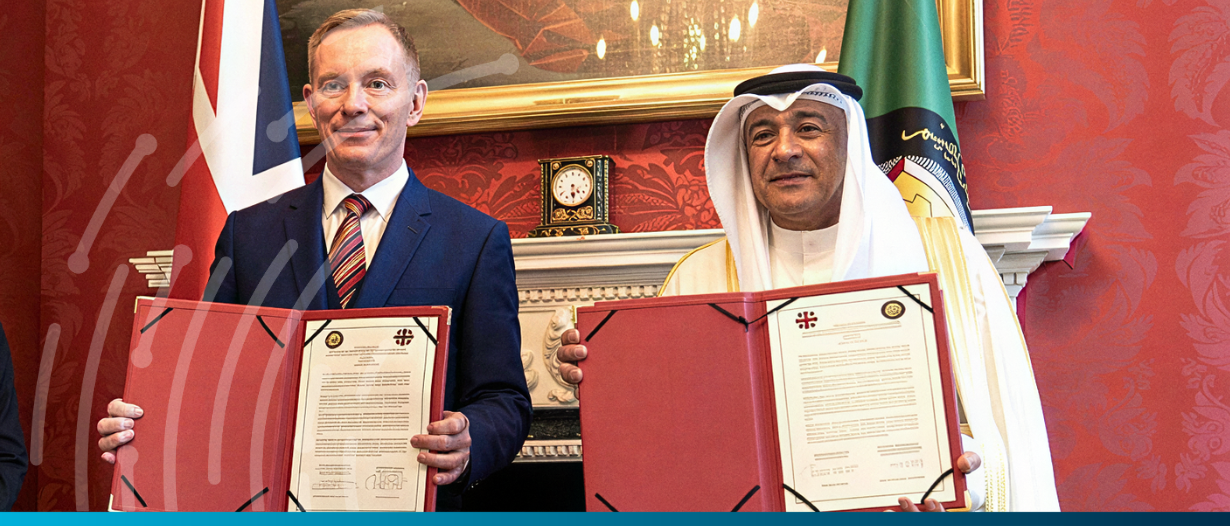

- The UK has finalised a free trade deal with the Gulf Cooperation Council, aimed at boosting the UK economy and cutting export tariffs.
- The agreement has been criticised for lacking strong labour protections and overlooking concerns about workers’ rights in Gulf states.
- Supporters say the deal will expand trade, help Gulf countries diversify beyond oil and strengthen food security, while also benefiting UK businesses through easier data sharing and exports.
On Wednesday, 20 May, UK Prime Minister Keir Starmer finalised a free trade agreement with six Gulf countries, projected to expand the British economy by £3.7 billion annually. However, the agreement has sparked criticism due to its lack of provisions on labour rights.
Marking the culmination of four-year-long negotiations, the deal is a first between a Group of 7 (G7) state and the Gulf Cooperation Council (GCC), a regional alliance including Bahrain, Kuwait, Oman, Qatar, Saudi Arabia, and the UAE.
It involves cutting an estimated £580 million in yearly tariffs – 93% – from UK exports into the GCC, and is anticipated to significantly boost their current £53 billion bilateral trade relationship. But the deal has received pushback because of concern over labour protections.
UK’s Trades Union Congress (TUC), the Trade Justice Movement, and various human rights organisations have raised criticism. A key reason is that the deal doesn’t outline the enforceable labour standards as seen in the UK’s other trade deals, such as its agreement with the European Union (EU).
Labour practices across the GCC are also cause for concern. Kuwait is the only country in the GCC to have ratified both of the International Labour Organization’s (ILO) two central conventions on trade union rights. The rest of GCC states heavily restrict or fully ban independent trade unions.
The Gulf is also heavily criticised for its use of the kafala (sponsorship) system, where a migrant worker’s legal status – including residency, movement, and work permits – is entirely reliant on their local employer. On 29 April, United Nations (UN) human rights experts urged Saudi Arabia to abolish the kafala system, highlighting the excessive control, abuse, and exploitative practices that it enables.
However, the deal is praised by officials for its potential to boost the UK’s exports, particularly for food, medical, luxury car, and defence exports. The agreement is also unprecedented as this is the first time the GCC is committing to protect the cross-border movement of financial data.
This permits UK businesses to process and store data outside the Gulf region, without being subject to data-localisation requirements, while also being able to store data in these jurisdictions.
“Today’s agreement is a huge win for British business, and for working people who will feel the benefits in the years ahead through higher wages and more opportunities,” said Starmer.
For GCC states, the deal is anticipated to ease the strain they have been under for the last few months. It is expected to support the region’s diversification from oil, while protecting its food security – top priorities as the disruption in the Strait of Hormuz continues to halt the Gulf’s energy, fertiliser, and wider trade flows.