



Listen to this podcast on Spotify, Apple Podcasts, Podbean, Podtail, ListenNotes, TuneIn
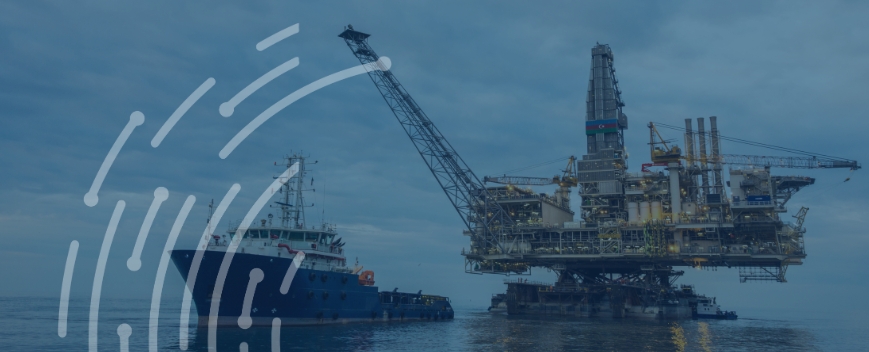
- Russia has rapidly expanded its “shadow fleet” of ageing, poorly regulated tankers bypassing Western sanctions, which now account for a significant share of global seaborne oil trade.
- Weak enforcement, flag-hopping, false registries, and opaque ownership structures have made these vessels difficult to track, insure, and regulate, increasing environmental and safety risks.
- Ukraine’s attacks on shadow fleet tankers in December 2025 mark an unprecedented escalation that heightens risk and uncertainty across the global shipping industry.
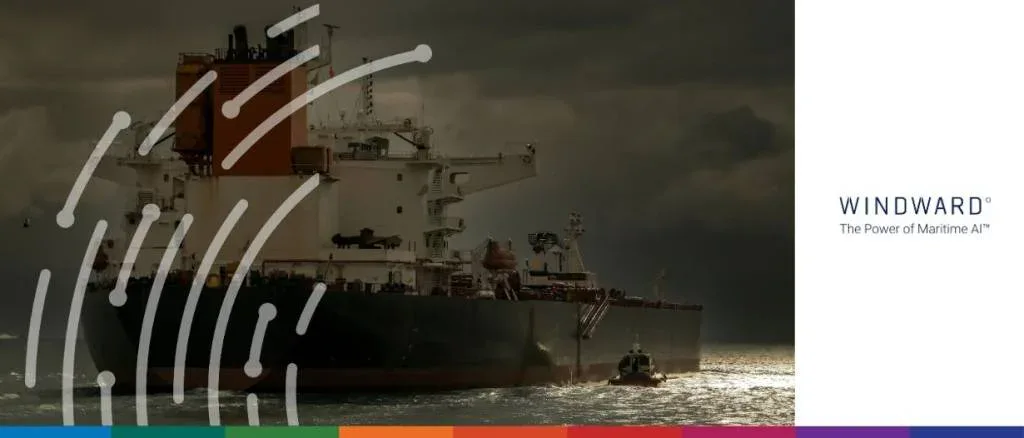
Every day, hundreds of so-called “shadow fleet” ships carry millions of barrels of sanctioned Russian oil, raising the question of how effective Western measures to frustrate Russian trade have been.
While the shadow fleet has become an almost permanent fixture in global commodities trade, Ukraine’s recent military attacks on several commercial Russian vessels in the shadow fleet may reflect a strategy shift. In the meantime, stricter sanctions enforcement and novel evasion tactics are leading to near-daily changes in the murky world of shadow fleets.
Amid these changes, Silvia Andreoletti, Senior Reporter at Trade Finance Global (TFG), spoke with Michelle Wiese Bockmann, Senior Maritime Intelligence Analyst at Windward, to discuss what the shadow fleet actually is, how it operates, and the challenges of international enforcement.
What is the shadow fleet?
Shadow fleets comprise vessels that employ a variety of deceptive shipping practices to transport sanctioned oil, liquefied petroleum gas (LPG), and liquefied natural gas (LNG).
The benefit is that the official owner is unknown, “hidden behind byzantine structures in permissive jurisdictions” that make it near-impossible to track who is behind them, Bockmann explained.
Also known as dark fleets, ghost fleets, and parallel fleets, shadow fleets have primarily been used to transport sanctioned Russian, Venezuelan, and Iranian oil. However, before the start of the Ukrainian war in 2022, the number of ships engaged in illicit activities was relatively small and did not significantly impact non-sanctioned trade.
Now the balance has shifted. Russia has tripled the size of its shadow fleet since the outbreak of the Ukrainian war, spending an estimated $14 billion USD to amass more than 500 tankers. It is estimated that 16% of the global tanker fleet is currently blacklisted.
The majority of the ships Russia purchased came from European owners. Older ships have higher maintenance costs and require special surveys, so “there is a ready-made market for ships over 15 years of age”, said Bockmann. Many European companies sold ships legally to entities that ultimately traded them to Russia.
A recent report found that almost half of all tankers over 15 years old sold in the first ten months of 2025 had entered the shadow fleet. 60% of all large oil tankers engaged in sanctions evasions are over 20 years old, according to another report.
These vessels employ several deceptive practices to conceal the origins of the crude oil.
These include ship-to-ship transfers at sea, stopping at several other ports before reaching the final destination, and delivering the oil to “teapot refineries,” privately owned terminals in Northern China which process and redistribute the oil. Ships have also begun an additional practice known as “flag-hopping”, which involves changes in flags, names, and owner registration, sometimes as frequently as once a month.
The challenge of enforcement
Ships are required to be registered with a single country. The flag determines the rules and regulations that ships are required to follow, which vary in standard between different countries.
This administrative setup laid the groundwork for a Flags of Convenience market, where countries can generate revenue by charging fees to join their ship registries in exchange for low regulatory standards.
Bockmann offered insight into the “cottage industry of low-quality flags” that emerged since the start of the war in Ukraine. Governments of those countries had contracted private operators to run flags on their behalf, who in turn had “opportunistically” gone after the market, increasing the ship registry tenfold for countries such as Gabon, Barbados, and the Cook Islands.
In July of this year, in an attempt to crack down on the shadow fleet, the UK and EU sanctioned Intershipping Service LLC. This company operates the Gabonese flag registry and has been accused of intentionally taking measures to evade ship detection.
Yet, as Bockmann indicated, there has still been an increase in flag-hopping, with nearly two-thirds of internationally trading sanctioned crude tankers now flying “false flags”.
The EU and UK have both amended their laws to enable the sanctioning of ships by their International Maritime Organisation (IMO) number, in an effort to prevent the abuse of this loophole for sanction evasion. The seven-digit IMO number is assigned to every ship when it is built and remains unchanged throughout its lifetime, even as the flag, name, and ownership of the vessel change.
Sanctioned ships increase maritime risk
Yet, as Western markets have shut, Russia has found new markets in India and China, exporting more than 1.4 million barrels of oil to China by sea each day.
As Bockmann indicated, that means the scale of trade occurring through shadow fleets is unprecedented, with around 17% of global seaborne crude now under unilateral oil and shipping sanctions.
These ships are often unregulated, uninsured, and in poor condition, posing high risks to both the crews and the environment.
However, scrapping these vessels has become increasingly complex. Banks have refused to grant letters of credit to recycling operations, which ordinarily buy old tankers and break them down for scrap metal, to purchase sanctioned ships. That means that sanctioned ships that are unsafe often continue to travel due to the high risk and costs associated with repairing or recycling them.
As Bockmann points out, the practice of flag-hopping and false-flags also renders any insurance or certificates of seaworthiness the vessels may have invalid.
Bockmann described the passage of these ships “through very treacherous, environmentally sensitive waters like the Danish Strait, the Gulf of Finland, in this stateless, flagless state” as “one of the biggest emerging threats, especially for coastal states.”
Ukrainian attacks on the Russian shadow fleet
On November 28th this year, Ukrainian naval drones hit two oil tankers from Russia’s shadow fleet off the coast of Turkey, causing major explosions on both vessels. The ships, identified as the Kairos and Virat, were both falsely flagged to The Gambia and had been removed by the country’s maritime administration for having fraudulent certificates. On December 10th, the Ukrainian Security Service (SBU) hit the Comoros-flagged Dashan, which was also fraudulently flagged.
The two vessels hit in November were among 72 vessels that The Gambia had recently removed from its ship registry, meaning the vessels were flying false flags.
An SBU source told the Independent that the Dashan, which was sailing through the Ukrainian exclusive economic zone when it was hit, had its automatic identification system switched off at the time of the strike.
As Bockmann highlighted, these acknowledged attacks, by a government’s military on a commercial vessel, are unprecedented in the Russia-Ukraine war, despite the vessels’ involvement in the shadow fleet.
“The last time this has happened, the attacks from the Houthis in the Red Sea on vessels, on commercial shipping, it was done by proxies, not a government”, Bockmann said.
Attacks on commercial vessels on this scale have not been seen since the tanker wars of the 1980s, when Iranian and Iraqi attacks on commercial ships in the Strait of Hormuz killed over a hundred sailors and disrupted shipping around the world.
Besides the shadow fleet vessels, several other ships have been hit in recent weeks, including a Turkish-owned tanker, Mersin, legitimately involved in the price-cap-compliance trade of Russian refined petroleum products. Mersin was blown up by four limpet mines in Dakar, Senegal, the day before the attack on Kairos and Virat. Ukraine has denied any involvement in this attack.
—
The attacks on commercial vessels, including those involved in compliant and legitimate trade, have heightened the risk for the shipping industry.
Beyond the unprecedented shifts in Ukrainian policy, the risks associated with the shadow fleet are unpredictable due to the volume of trade occurring outside of regulated international and national frameworks.
Perhaps the most significant issue is the uncertainty caused by the unpredictable future, making the management and response to the shadow fleet nearly impossible.