


















Listen to this podcast on Spotify, Apple Podcasts, Podbean, Podtail, ListenNotes, TuneIn
- Stablecoins are fully backed digital assets that provide stable value, enabling near real-time, cost-efficient cross-border payments on blockchain networks.
- Their most effective use cases lie in sectors with high payment friction, such as remittances, commodity trading, and interbank liquidity transfers.
- Regulatory clarity and interoperability between systems will be critical to unlocking stablecoins’ long-term adoption and integration into global banking.
Fully transparent, programmable, secure digital money that maintains a stable value: 20 years ago, stablecoins sounded about as realistic as flying cars and holograms. But recent technological advancements and regulatory innovation have made this once-distant dream a reality, turning it into one of banking’s hottest topics.
However, as with much almost too-good-to-be-true tech, it can be hard to separate hype from substance. And the more hype, the further from the fundamentals we stray. For the first episode of Trade Finance Global’s (TFG) new podcast series with BAFT, Banking on the Present, Mahika Ravi Shankar, Deputy Editor at TFG, sat down with Deepa Sinha, Senior Vice President, Payments & Financial Crimes, and Women in Transaction Banking, and Martin Cannings, Co-Chair of Payments, at BAFT, to dissect the stablecoin: what they are, who they’re for, and where they’re really headed.
Making sense of the chatter
Stablecoins are digital assets designed to maintain a stable price, making them far more attractive to bankers than other, famously volatile cryptocurrencies like bitcoin. Stablecoins avoid fluctuations by being fully backed by fiat currency reserves or, more rarely, other assets such as commodities or short-term government securities.
From a transaction banking perspective, “stablecoins represent programmable digital cash that can move on blockchain rails with almost real-time settlement, 24/7 availability, and potential cost efficiency in cross-border corridors,” explained Sinha.
When the talk around stablecoins manages to keep these definitions straight (which happens less often than you’d think), another common mistake is thinking the technology is immediately applicable to all aspects of transaction banking.
“Stablecoins are certainly more suitable for certain types of transactions than for others. We don’t need to force-find solutions to all problems, but rather identify where stablecoins can be used most valuably,” said Cannings.
The industries most likely to benefit are those that currently experience high cross-border payment frictions, are very exposed to foreign exchange volatility, and have a need for speed and certainty of settlements. Strong candidates include global commodity markets, remittances, and interbank liquidity transfers.
Best of both worlds: Stablecoin vs CBDC vs tokenised deposit
All cryptocurrencies are not created equal. The most common types of stablecoins are tied to fiat currencies, most often the US dollar. The USDC is backed by the US dollar, and is currently the world’s largest regulated stablecoin, with its circulating supply reaching $75.3 billion last year.
Because stablecoins are required by most regulators to be backed in full by cash or other high-quality, readily available assets, they are far safer than other cryptocurrencies (whose prices are driven by supply and demand). “Stablecoins are designed to take advantage of the benefits of blockchain payments – being 24/7, immediate, programmable – but without the inherent volatility of pure cryptocurrency,” explained Cannings, making them more secure as a long-term store of value.
Stablecoins are often lumped together with central bank digital currencies (CBDC), like the increasingly evolving digital euro, due to be issued in 2029. However, the latter are essentially another form of central bank liability, meaning they don’t carry the same reserve requirements as stablecoins. On the other hand, stablecoins are usually privately issued, meaning they carry some amount of issuer risk – albeit greatly reduced by the reserve requirements.
Tokenised deposits, on the other hand, are digital versions of traditional bank deposits, also stored on blockchain. Like stablecoins, tokenised deposits provide a stable store of value, but they are typically treated as regular deposits by existing regulations. The issue with tokenised deposits is interoperability: most of the activity with tokenised deposits today is within a single institution, so they don’t yet function as effectively as a way to exchange value between banks.
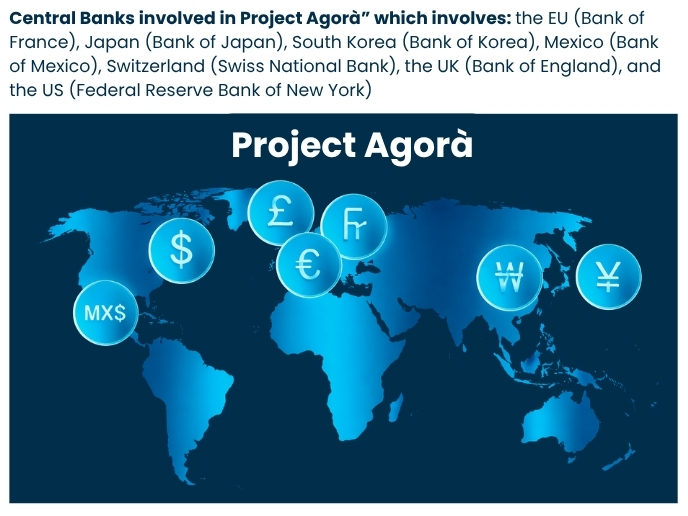
As interest around tokenised deposits grows, institutions are working together to change that. Project Agorà – Greek for “marketplace” – is a global initiative by the Bank for International Settlements involving seven major central banks and over 40 commercial banks and payments providers, aiming to test the feasibility of tokenised deposits for wholesale cross-border payments.
The regulation question
The thorniest topic around stablecoins is, of course, regulation. Compared to just a few years ago, when regulatory skepticism ran high, stablecoins are now “increasingly being treated as payment instruments, stored value or e-money equivalents, or even a new category of regulated digital settlement assets,” said Sinha. Regulation is mostly focused on a handful of systemic concerns: risk, reserve transparency, financial stability, monetary sovereignty, and financial crime controls.
The European Union’s (EU) Markets in Crypto Assets regulation, or MiCA, adopted in 2023, is “probably the most comprehensive stablecoins regime right now,” said Sinha. MiCA requires stablecoins to have authorisation from a national regulator, one-to-one reserve backing with at-par redemption, and mandates that assets must be segregated separately from the fiat currency they are linked to.
While this stringent oversight could be thought to discourage the market, it is doing the exact opposite: MiCA provided the regulatory certainty needed for stablecoin issuers to implement their solutions in the EU, which they have been doing since 2024.
The US, on the other hand, still lacks finalised federal legislation on stablecoins. However, last year’s GENIUS Act sets a fairly clear regulatory direction: when properly structured, stablecoins will probably be treated as payment instruments, with different levels of scrutiny depending on the type of stablecoin and issuer.
For now, “Europe, the UK, and the US are leading this charge, and other jurisdictions are looking to them for guidance,” explained Sinha. Singapore and Hong Kong’s regulations mostly mimic the UK, which itself uses a framework similar to MiCA, but that also seeks to integrate stablecoin regulation into the broader financial services regulatory perimeter. China, on the other hand, prohibits all cryptocurrency trading, including stablecoins, instead promoting its national CBDC, the e-CNY.
Inevitable innovation, avoidable challenges?
While the exact path of stablecoins going forward may be uncertain, they have a bright future ahead.
Many have predicted that stablecoins will spell the end of the dollar’s global dominance, providing an alternate global reserve asset and accelerating the de-dollarisation trend. However, the opposite is just as likely to happen: so many major stablecoins are currently pegged to the dollar that an increase in stablecoin use will almost certainly reinforce, not weaken, the dollar’s dominance.
Even if non-USD stablecoin regulation were accelerated, it would not be enough to overcome the network effects of the dollar, which still underpins most global liquidity pools and settlement corridors. On a broader level, none of these developments will change the macro drivers that have for decades made the dollar the world’s reserve currency: its use in commodities, its behaviour under stress, and the depth of US capital markets. Local currency stablecoin regulation, then, is “necessary for de-dollarisation, but it is not sufficient,” said Sinha.
While there has been “an incredible amount of change” over the past two years in stablecoin regulation around the world, “there is still a journey there, not least on the harmonisation of these different regulatory codes,” explained Cannings.
To scale, stablecoins must be interoperable both between countries, which requires harmonised regulation, and between institutions. This can be difficult when different issuers operate on different blockchains, with different token standards, or incompatible messaging layers. For stablecoins to reach their full potential in the payment sphere, issuers must also tackle hidden costs, such as the value lost when converting in and out of the stablecoin.
—
No one is sugarcoating the challenges of the current stablecoin landscape – from regulatory fragmentation to its still-high costs – but the sentiment is still overwhelmingly positive. Perhaps most encouraging is the increasing collaboration between banks, financial institutions, and fintechs.
Pilot projects like Agorà, which is due to release its findings in a few months, are bringing together institutions from around the world towards a shared goal. Banks and fintechs, framed as adversaries in the early days of stablecoin innovation, are coming together to find shared solutions to transaction banking’s biggest problems using stablecoin.
Looking forward, then, “integrating digital asset technologies like stablecoins with established rails and ensuring that interoperability is going to be the key to success,” concluded Cannings.