


- Canada and China have eased trade tensions through a new deal cutting tariffs on electric vehicles and canola oil, signalling a notable shift in Canada’s trade policy away from the United States.
-
The EU and Mercosur have finalised a landmark free trade agreement eliminating most tariffs, creating the world’s largest trading zone and boosting EU exports and GDP.
-
Together, the two deals highlight a broader move towards international cooperation and diversified trade partnerships in contrast to recent US-led protectionism.
Two major international trade deals have been in quick succession this week, involving the European Union and the South American trade bloc Mercosur on the one hand, and China and Canada on the other.
These developments were announced just before the World Economic Forum began in Davos and amid the Trump administration’s ongoing tariff threats.
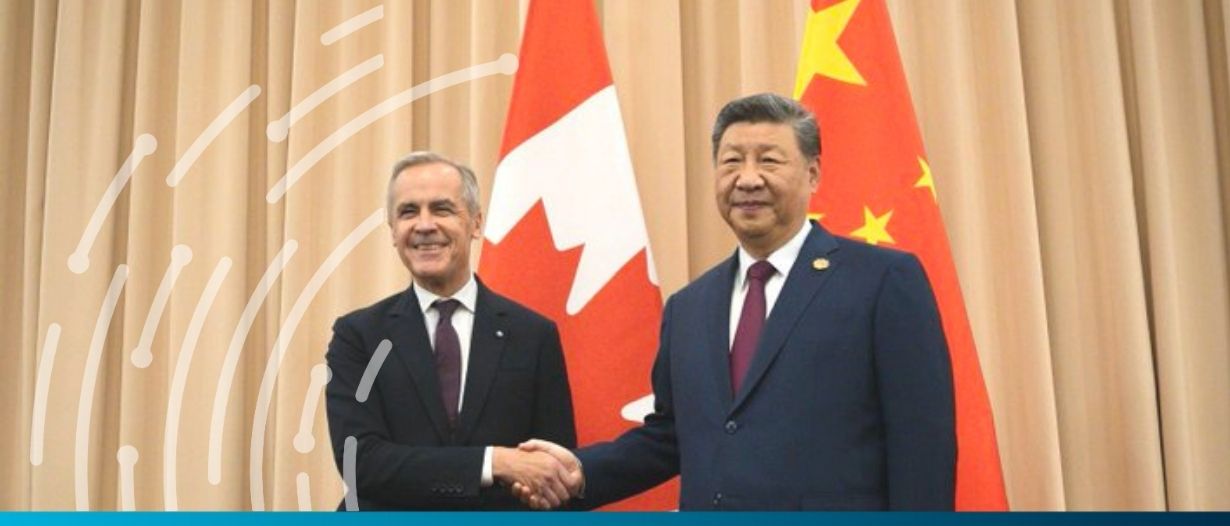
The Canada-China agreement, signed on Friday, 16 January, after a pivotal meeting in Beijing between Chinese leader Xi Jinping and Canadian Prime Minister Mark Carney, shows an easing of relations between the two economic superpowers.
The deal will see Canada lower the tariffs it had imposed on Chinese electric vehicles (EVs) back in 2024. In return, China is expected to lower its retaliatory tariffs on Canadian canola oil from 85% to 15% by 1 March.
Under the new agreement, Chinese EVs will be taxed at 6.1%, a sharp decrease from the previous 100%. This is expected to direct 10% of Canadian EVs to Chinese automakers. This is a significant amount, particularly given the positive trajectory of the Canadian zero-emission vehicle market, valued at $17.3 billion in 2024.
This move could also potentially sideline US-based EV-makers, like Tesla, that are looking to expand in the Canadian market.
Some officials warned that the removal of the EV tariffs would lead to job losses. At least 130,000 Canadians are employed directly and indirectly in the EV sector – a number projected to grow prior to this deal.
This new deal comes one day before the announcement of a free trade agreement between the EU and the Mercosur bloc, which includes Argentina, Brazil, Paraguay, and Uruguay. The deal, finalised on Saturday, 17 January, eliminates tariffs on more than 90% of bilateral trade and establishes the world’s largest trading zone, since the two blocs make up 30% of global GDP.
By 2040, it is expected to deliver a €77.6 billion increase to the EU’s GDP, as well as a 39% increase in the EU’s annual exports. It will also significantly lower tariffs on industrial goods like cars, machinery, and pharmaceuticals.
Mercosur is also a crucial supplier of materials needed for the green and digital transitions, such as niobium. It accounts for about 88.8% of global niobium processing and supplies roughly 82% of the niobium the EU currently sources. The new agreement will secure EU access to such raw materials.
While the European Commission anticipates the deal will be particularly positive for EU agrifoods exporters, whose exports are expected to rise by almost 50%, recent backlash by farmers suggests otherwise.
Thousands of farmers in France and Ireland, two of the EU’s largest agricultural producers, have been protesting in the lead-up to the deal, which many fear will bring in low-cost, little-regulated agricultural products to compete with European staples.
Besides their immediate effect on global supply chains, the past week’s trade deals reflect a striking divergence from the US’ tariffs and isolationist policies that have dominated the headlines. They also reflect a rerouting of trade corridors and reframe China and the Mercosur bloc as viable trading partners for countries in the global North.
Canada and China’s deal comes almost a year after Carney’s condemnation of China’s human rights violations, referring to Beijing as “Canada’s biggest security threat.” The new collaboration marks a change of tack and cements Canada’s move away from the US when it comes to trade policy: previous levies imposed by Canada were done alongside the Trump administration’s hawkish tariff impositions.
The EU’s finalisation of the Mercosur agreement, a historic deal that was in the making for 25 years, also signals a renewed focus on international collaboration.