














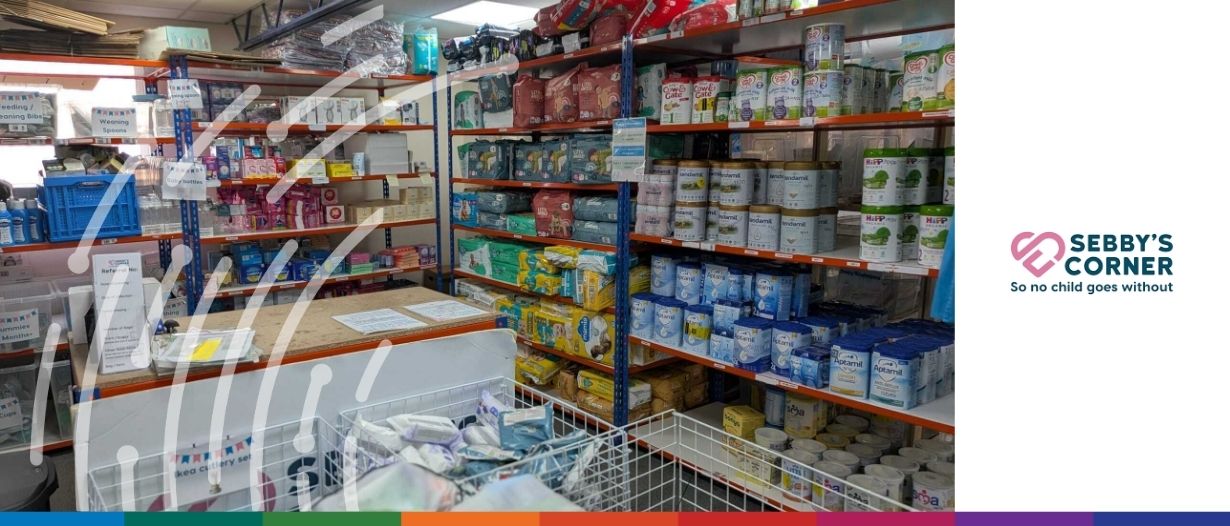



- Charities such as Sebby’s Corner help bridge the gap between families with excess baby items and vulnerable families who lack basic essentials.
- Large quantities of clothing and baby items are wasted in the UK, partly due to fast-fashion and the short lifecycle of children’s clothing.
- Economic pressures and the cost-of-living crisis have reduced donations of high-value items like buggies, even as the number of families needing support increases.
Bianca Sakol is founder and CEO of the London-based charity Sebby’s Corner, which works to support vulnerable children and families by providing essentials – from nappies and baby formula, to presents and stationery. Speaking to Trade Finance Global (TFG), she recounts being visited by a mother during her pregnancy.
“[She] had fled domestic abuse and arrived with almost nothing for her baby. She told us she spent nights awake worrying about how she would bring her newborn home safely without even a buggy or basic baby equipment,” Sakol said. Buggies can range anywhere from £35 at Argos to £1,299 for the iCandy Peach 7.
Through donations, Sebby’s Corner was able to provide her with a buggy, clothing, nappies and other essentials so she could focus on welcoming her baby rather than stressing about how she would afford the basics.
“She later told us it was the first time since leaving her situation that she felt hopeful about the future,” said Sakol. “Experiences like this remind us that while many families have more than they need, others are going without the very same items, and charities like ours exist to bridge that gap.”
Volunteering at Sebby’s Corner, you are struck by the sheer amount of oversupply that culminates in a global capitalist economy. It’s all well and good figuring out how to maximise efficiency in global supply chains, but the notion of excess and donation is not discussed in an industry which perpetuates the problem.
Shortages in a world of excess
Many mothers around a dinner table tell their children, ‘Don’t waste your food because other children around the world are starving.’ Many children quip back, ‘I can’t give them the broccoli from my plate.’ In the fashion industry, the oversupply is just as staggering as in food, but clothes are, naturally, far easier to donate.
Approximately 350,000 tonnes of clothes end up in landfills in the UK alone; but a survey from the Waste and Resources Action Programme (WRAP), a UK-based NGO, found that 23% of UK citizens who buy clothes only intend to wear them for a short time.
Studies have also shown that competition in fashion, and particularly fast-fashion, has resulted in garments decreasing in quality, so organisations are pushing for the lowest price possible. This is pertinent in UK supermarkets, and especially for school uniforms. As companies fight to slash prices, the notion of disposability is encouraged. It’s a bit of a catch-22 – making these essentials more affordable results in quality suffering. Charities, the likes of Sebby’s Corner, and donations can break the buy-and-throw cycle.
The baby clothing industry is slightly different: parents are keen to ensure fabric is gentle and breathable, and protected from toxic chemicals or dyes. But the arguments regarding a shorter lifecycle hold, mainly because “babies grow so quickly that many outfits are only worn once or twice, if at all,” as Sakol told us. Research shows that there are 183 million items of outgrown baby clothes across the UK.
“New parents are often gifted lots of clothing when a baby is born, which means wardrobes fill up very quickly. Because of that short window of use, families are often keen to pass these items on, so baby clothing tends to be the category we receive in the highest volumes.”
On the other hand, Sebby’s Corner sees the most consistent demand for larger pieces of baby equipment, particularly buggies suitable from birth – essential items, which are also very expensive to buy. “Unlike clothing, they are donated far less frequently because they retain resale value, and families often need to sell them on,” Sakol said.
“That creates a real imbalance between supply and demand, with far fewer donated buggies than the number of families who need them.”
While the volume of clothes donated to Sebby’s Corner has stayed fairly constant over the last five years, the amount of larger, high-value equipment – like buggies, baby bouncers, or playmats – which is donated has decreased.
“Our sense is that this reflects the cost-of-living crisis. As household budgets have tightened, more families need to recoup some money by selling these items rather than donating them,” Sakol explained. “At the same time, the number of families needing support has increased, which makes that gap even more noticeable.”
In our backyard
As a country’s disposable income decreases, so does the level of donations received by Sebby’s Corner. At these times, “the need for support rises,” said Sakol.
General national health is one factor making clothing more expensive. So too are the trade barriers which have been put in place over the last year. The weighted average of tariffs on apparel and footwear has settled at 36%, while 76% of fashion executives say that trade disruptions and rising duties will shape the industry in 2026. Some of the major clothing manufacturers – China, Vietnam, India, Bangladesh, Indonesia, and Cambodia – saw exporting to the US grow more expensive. Cost pressures have raised consumer prices worldwide.
In response, brands around the world have raised the prices of clothing. When UK inflation fell in November 2025, many thanked the clothing industry – but this drop was a likely result of Black Friday sales, rather than any consistent changes to supply chains. While clothing inflation fluctuated throughout 2025, spikes (rising to 7% in March and 6.8% in September) reflect tariff volatility and implementation on consumer prices.
Seasonal changes in demand affect the items which families need. “In winter, we see a sharp rise in requests for things like bedding, blankets, coats and dressing gowns,” said Sakol. “Many families we support are already facing impossible choices between heating and eating, so staying warm becomes a major challenge.”
“Cold homes and damp conditions can also mean bedding needs to be replaced more frequently, particularly in properties affected by mould. In warmer months, the demand shifts slightly towards lighter clothing and outdoor items, but winter is always when the pressure on families becomes most acute.”
Additionally, the toy market has seen a lot of disruption from tariffs. One of Sebby’s Corner’s offerings is the opportunity for children to receive presents and shop for toys – characteristics of a normal childhood which are oft taken for granted. This service is put in jeopardy by the rising cost in trade of toys, which relies heavily on Chinese manufacturing. Tim Hislop, co-founder of UK-based toy brand Floss & Rock, told the BBC that the US market accounts for more than half of his company’s revenue – and is not optimistic that the Supreme Court ruling on the illegality of certain tariffs will result in refunds.
To this end, Sebby’s Corner works closely with Hasbro, the American toy manufacturer. Every year, Hasbro donates new toys to the charity.
“Periods of economic uncertainty tend to widen the gap between what families need and what charities like ours receive in donations,” Sakol summarised. Donation of excess – from companies and individuals alike – could make a childhood.