


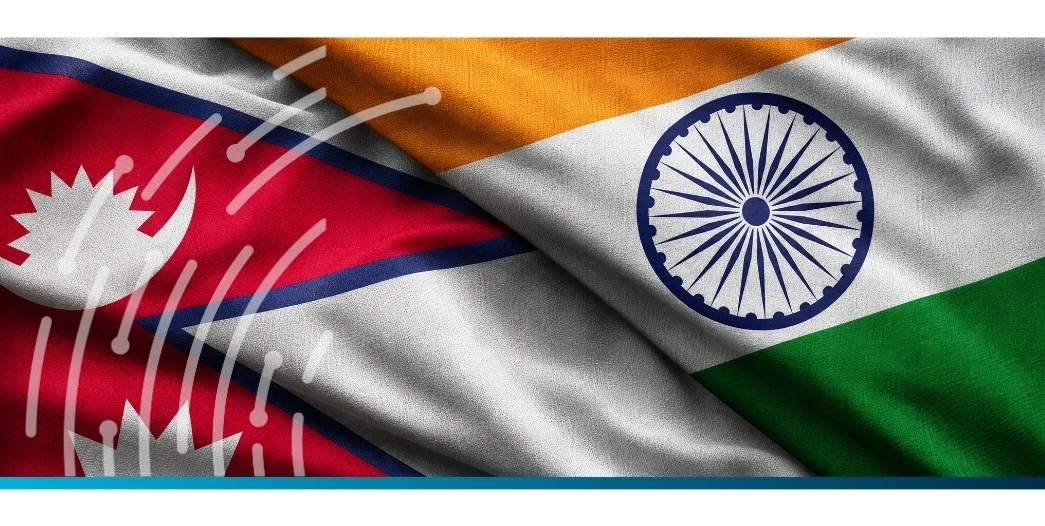

- India and Nepal have launched a new peer-to-peer cross-border remittance service by linking India’s UPI with Nepal’s National Payment Interface (NPI)
- This makes money transfers between the two countries faster, simpler and more convenient for merchants.
- UPI’s expansion into Nepal further strengthens its international reach, as it now operates across nine countries.
A statement released today, 11 June, announced that India and Nepal officially launched a peer-to-peer (P2P) cross-border remittance mechanism last Thursday, transforming how commerce between the two countries can be conducted.
The connection was brought by a linkage between India’s Unified Payments Interface (UPI) and Nepal Clearing House Ltd. (NCHL), which has connected with Nepal’s National Payment Interface (NPI). It eliminates the friction and unfamiliarity of foreign exchange, not only for local merchants but also for travellers’ convenience.
Nepal-to-India transfers are limited to INR 15,000 per transaction and INR 100,000 per month, while India-to-Nepal transfers can reach INR 200,000 per transaction, with no monthly limit.
While not yet reaching the trade space, the P2P connection sets an encouraging precedent for larger cross-border digital trade transactions.
The Nepali banks which are active for both sending and receiving transactions include: Everest Bank, Global IME Bank, Machhapuchchhre Bank, Nabil Bank, and Nepal SBI Bank. In India, 18 participating banks include SBI, HDFC Bank, ICICI Bank, Axis Bank, Kotak Mahindra Bank, and Punjab National Bank.
India’s Unified Payments Interface (UPI) is an instant payment system and protocol which runs as an open source application programming interface (API) and is regulated by the Reserve Bank of India (RBI).
As of October 2025, UPI accounts for 75-85% of all retail digital payment volume in the country, thanks to its real-time settlement, zero transaction fees, and simplified interfaces for a market with low digital literacy.
UPI is now accepted in Bhutan, Cambodia, France, Mauritius, Nepal, Qatar, Singapore, Sri Lanka, and the United Arab Emirates.