














- The Budget will remove customs duty relief for low-value imports by 2029, levelling the playing field for UK retailers but raising costs for many budget online retailers.
- The government is pursuing an agrifoods agreement with the EU to cut red tape at the border and decrease fresh food transport costs.
- Tariff suspensions on key imports and higher sugar quotas aim to ease costs from 2026.
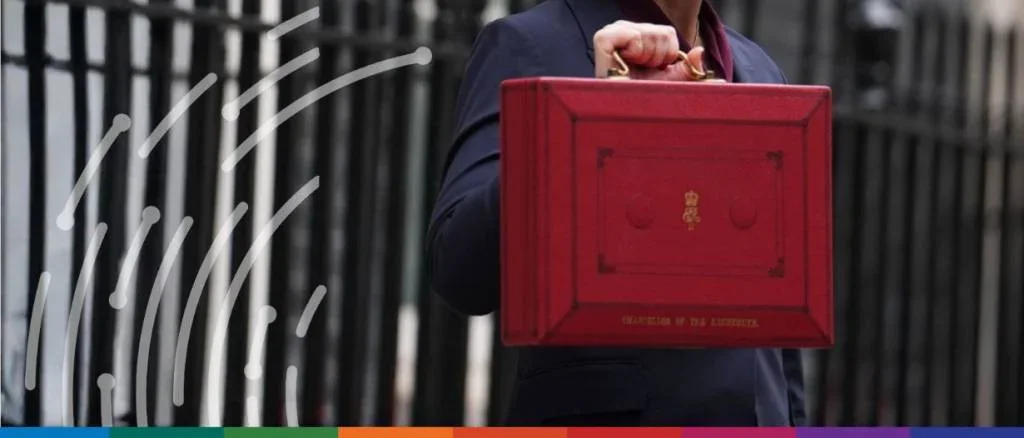
UK Chancellor of the Exchequer Rachel Reeves published the government’s yearly Budget last week, a much-awaited look into the government’s fiscal and spending plans for the next year and more.
While headlines focus on personal finance, talking about tax hikes and ISA allowances, the newly announced plans will deeply affect global trade. As the world’s fourth largest exporter and regulatory first-mover, the impact of the Budget is likely to go far beyond the UK, affecting supply chains and influencing regulators around the globe.
So let’s dig in: what are the main takeaways from the 2025 Budget?
Removal of customs duty relief for low-value imports
In a move reminiscent of Trump’s de minimis removal, the government has announced it will reform the way low-value imports – goods valued under £135 – are declared and taxed when entering the country.
The low-value customs duty relief, which currently exempts inexpensive imports to the UK from the rate faced by other imports, is placing some online retailers at an “unfair advantage” according to the Budget, harming high street businesses. From March 2029 at the latest, low-value imports will be charged the same rate as goods imported in bulk, which can range from 2.5% to 25% or more for some goods.
The US announced a similar move as part of its tariff war with China, but, unlike other measures, did not retract it once tensions loosened; the EU announced a similar move in February 2025. The move is unlikely to harm most UK importers, but will likely make online retailers, such as Shein and Temu, lose a significant portion of their business as parcels become more expensive, likely placing these and similar Chinese retail giants in trouble.
Past trade deal wins, EU agrifoods as the new frontier
After recent high-profile trade deals with the US and India, the latter of which is expected to add £4.8 billion to the UK economy each year, the Government is looking towards the EU for more trade concessions.
An upcoming UK-EU Sanitary and Phytosanitary (SPS) Agreement, negotiations for which started in early November, would link the UK and EU’s agrifoods sanitary standards, removing the need for most certificates and checks on plants, animals, and food products traded between the two. This will also make it easier to trade with Northern Ireland, further linking UK food producers with the rest of Europe.
The deal is expected to save food businesses up to £200 for each fresh food shipment and add up to £5.1 billion to the UK economy each year.
Some tariff relief on aluminium and sugar
Further on the import side, the UK will extend the suspension of import duty on a range of everyday products and commodities until the end of 2026 in a bid to keep prices down. The tariff pauses, many of which were due to expire in 2026, will instead be extended until the end of the year, and possibly further depending on government review.
This means a range of goods, from aluminium frames to agricultural products, will be able to enter the UK without paying import duties; businesses may apply for suspensions to more categories of goods until February 2026.
After government review, the Autonomous Tariff Quota (ATQ) for raw cane sugar has been raised from 260,000 to 325,000 tonnes, meaning more sugar for refining will be able to be imported in the UK with minimal tariffs. Other ATQs on fish and seafood products were reviewed but left unchanged.
Higher crypto reporting requirements
Cryptocurrency reforms were muted in this Budget, making investors breathe a sigh of relief after last year’s raise in capital gains tax cutting into many’s profits. However, the new Cryptoasset Reporting Framework will require all cryptoasset service providers to report on all their UK tax resident customers for HMRC starting in January 2026.
A summary of responses to the ‘Taxation of decentralised finance (DeFi) involving the lending and staking of cryptoassets’ consultation, opened in 2023, was published at the same time as the Budget. The summary found that stakeholders wanted a way to simplify compliance and rules that better reflect the true nature of transactions; in response, HMRC is developing an approach where some transactions are treated as “no gain, no loss” disposals for tax purposes, which would significantly simplify borrowing against crypto collateral.
—
Compared to last year’s Budget – Labour’s first since getting into government, and which included a wide array of tax and spending reforms – this was a more muted affair, especially for the trade and banking industries. While last year saw the launch of the recently expanded UK Export Finance critical minerals support, payments reforms, and tax changes for alternative finance, the 2025 Budget presents little in the way of concrete change for the UK trade finance, banking, and commodities industries.
“There were clearly missed opportunities in this Budget to go further in backing UK exporters, with a marked lack of additional export support funding beyond what has already been announced this year. Given the OBR expects global trade growth to slow from 3.7% in 2024 to 2.3% in 2026, now would have been an opportune moment to double down on supporting exporters,” Marco Forgione, Director General, Chartered Institute of Export & International Trade, told Trade Finance Global (TFG).
“However, the removal of customs duty relief for low-value imports, by March 2029 latest, is a positive move. It is important that we work together with logistics firms and border officials to get this transition right, and the Chartered Institute will be engaging with the upcoming consultation on new customs arrangements. The only way we can stimulate sustained and long-term growth in the UK economy is by supporting more businesses to export,” said Forgione.