


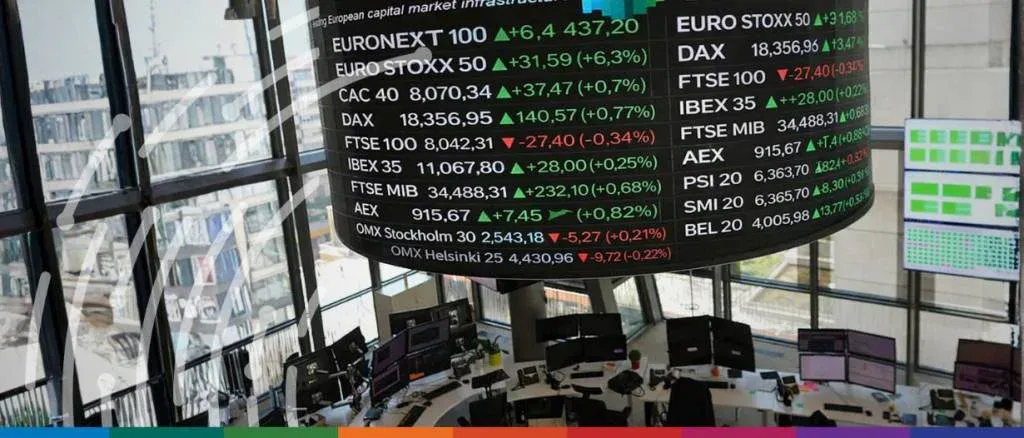

- Despite its long-standing economic integration, Europe still lacks a single, integrated stock exchange, with capital markets fragmented across national centres.
- Regulatory, fiscal, and infrastructural differences make cross-border investment within Europe costly and complex, reducing liquidity and weakening competitiveness compared with US markets.
- As the Draghi report recently noted, the situation is at an impasse, with individual countries unwilling to give up their exclusive control while European businesses miss out on vital investment.
In the United States, the equity market is unified: companies list in New York, choosing between the New York Stock Exchange (NYSE) and NASDAQ. One is more traditional, the other more technology-oriented, but both operate within an integrated system, with Wall Street standing as a global symbol of American finance.
A new financial hub could soon emerge in the United States. The Texas Stock Exchange (TXSE), based in Dallas, received approval from the Securities and Exchange Commission (SEC) in September 2025 and is expected to begin operations by 2026. The new stock exchange would compete with the NYSE and NASDAQ, facilitating listings for mid-sized companies.
A hub of hubs
The earliest stock exchanges, physical places where merchants, bankers and investors met to trade securities and commodities, originated in Europe in the 17th century, in Amsterdam, Antwerp and Bruges. Today, however, Europe still lacks an integrated market comparable to a true single stock exchange like the one found in the United States.
Europe’s main financial centres remain Paris, Frankfurt, London, Milan, Amsterdam and Madrid. These are distinct markets, each with its own rules, investor bases, and liquidity levels, reflecting the persistent fragmentation of the European financial system.
While there has been increasing concentration among European exchange operators, there has been no genuine market integration. Today, Euronext represents the main pan-European hub, bringing together the exchanges of Paris, Amsterdam, Brussels, Lisbon, Dublin and Milan. Deutsche Börse, based in Frankfurt, remains the other major continental player, while the London Stock Exchange – despite operating outside the EU- continues to be one of Europe’s leading financial hubs.
An interesting and somewhat curious case is that of the Nordic and Baltic exchanges – Sweden, Denmark, Finland, Iceland and the Baltic states – which operate under the Nasdaq brand and use the same trading technology as the US exchange while still remaining local markets regulated under European rules.
The last stand of fragmentation
Europe has a single market, a single currency (for many countries, including, as of a few days ago, Bulgaria), but it still lacks a truly integrated capital market.
For a European investor, buying shares listed in another EU country is often more costly and complex than investing domestically. Trading costs on foreign exchanges are generally higher due to additional commissions and market-infrastructure charges. These are compounded by differences in dividends withholding taxes and post-trading costs, making cross-border investment less convenient and more complex for the average retail investor.
A unified European stock exchange would pool fragmented capital into a larger, more liquid, and more competitive market, lowering transaction costs and improving access to capital for SMEs and long-term investors. This would also strengthen Europe’s competitiveness vis-à-vis U.S. markets, supporting sustainable economic growth.
The fragmentation of infrastructure, tax regimes, and market regulations remains one of the main obstacles to the creation of a genuine European capital market. This dispersion reduces liquidity, efficiency, and overall attractiveness, limiting opportunities for both companies and investors.
How did we get here?
First, history and national sovereignty have led to the development of well-established domestic markets, and – perhaps understandably – no country is willing to relinquish control over its own financial marketplace.
Regulatory diversity also plays a major role: taxation, corporate law, bankruptcy procedures, and investor-protection frameworks differ significantly across countries, making cross-market operations more complex.
Another obstacle lies in language and financial culture. Unlike the United States, which operates within a single linguistic and cultural framework, Europe remains fragmented in this respect as well, further complicating integration.
Finally, entrenched interests matter. Each financial centre seeks to defend its role and attract companies and investors, with little incentive to give up competition in favour of deeper integration.
Concrete consequences
European fragmentation has tangible effects: less capital available to companies, firms choosing to list in the United States for greater visibility and liquidity, and shallower national markets, affecting valuations and investment flows.
What would be required is a strong political agreement among EU member states to harmonise regulation, taxation, and supervision, allowing national exchanges to merge into a truly integrated market. Without this political will, each exchange remains autonomous, and liquidity stays fragmented, as demonstrated by the limited results achieved so far by initiatives such as the Capital Markets Union.
Mario Draghi’s recent report on the future of European competitiveness made waves across Europe, highlighting how European financial markets remain fragmented and relatively unattractive.
Administrative costs related to listings discourage market access, especially for small and medium-sized enterprises (SMEs), while the smaller size of European funds compared to US counterparts undermines competitiveness and efficiency to the detriment of investors.
Regulatory barriers should be reduced and market integration strengthened to move Europe closer to a more efficient and less fragmented capital-market system.
The alternative: European exodus
There are some – although fortunately still relatively only a few – European companies listed exclusively outside European stock exchanges.
The most emblematic case is Ferrari: legally headquartered in the Netherlands, with a long history and core operations in Italy, yet listed exclusively on the NYSE, with no listing on any European exchange. This was a strategic choice aimed at accessing global capital, achieving higher valuations, and tapping into a strong US investor base, particularly in the consumer and luxury sectors.
Another notable example is Spotify, a company of Swedish origin with legal headquarters in Luxembourg, also listed exclusively on the NYSE and absent from European exchanges.
A truly integrated capital market is a fundamental condition for strengthening European competitiveness and making Europe more attractive to investors.
A single stock exchange would represent a powerful driver of growth and efficiency. The benefits would extend far beyond companies to include savers and investors as well. Lower costs, greater liquidity, and more uniform rules would make investing simpler, more transparent, and more attractive, helping to close the gap that currently separates Europe from the world’s leading capital markets.