
















- Global supply chain finance is converging as companies worldwide prioritise working capital optimisation.
- Digitisation and ecosystem integration streamline historically inefficient trade finance processes.
- Payables finance and other digital trade finance products are evolving from automation.
Trade digitisation permeates nearly every conversation about the future of supply chain finance, and that trade finance ecosystems are evolving faster than ever before amidst mounting macroeconomic pressures and exciting new technologies is certain. But how it’s evolving – and how it’s concretely helping clients access working capital – is not always clear.
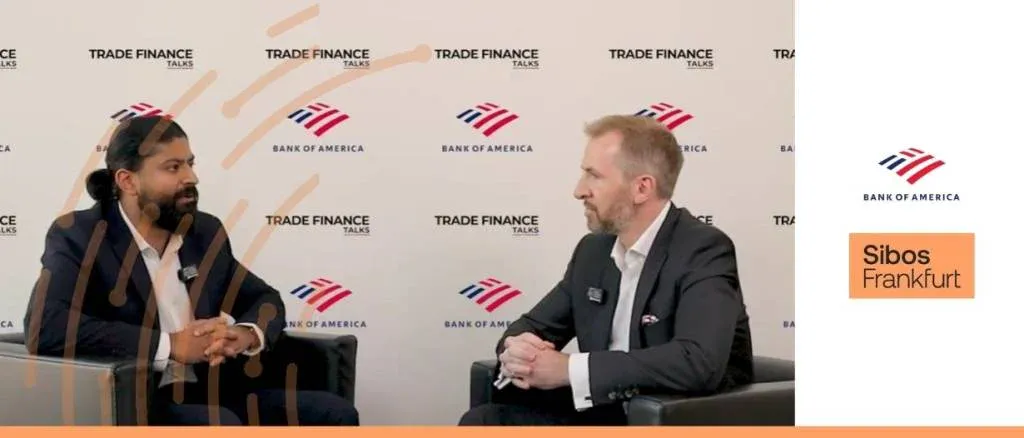
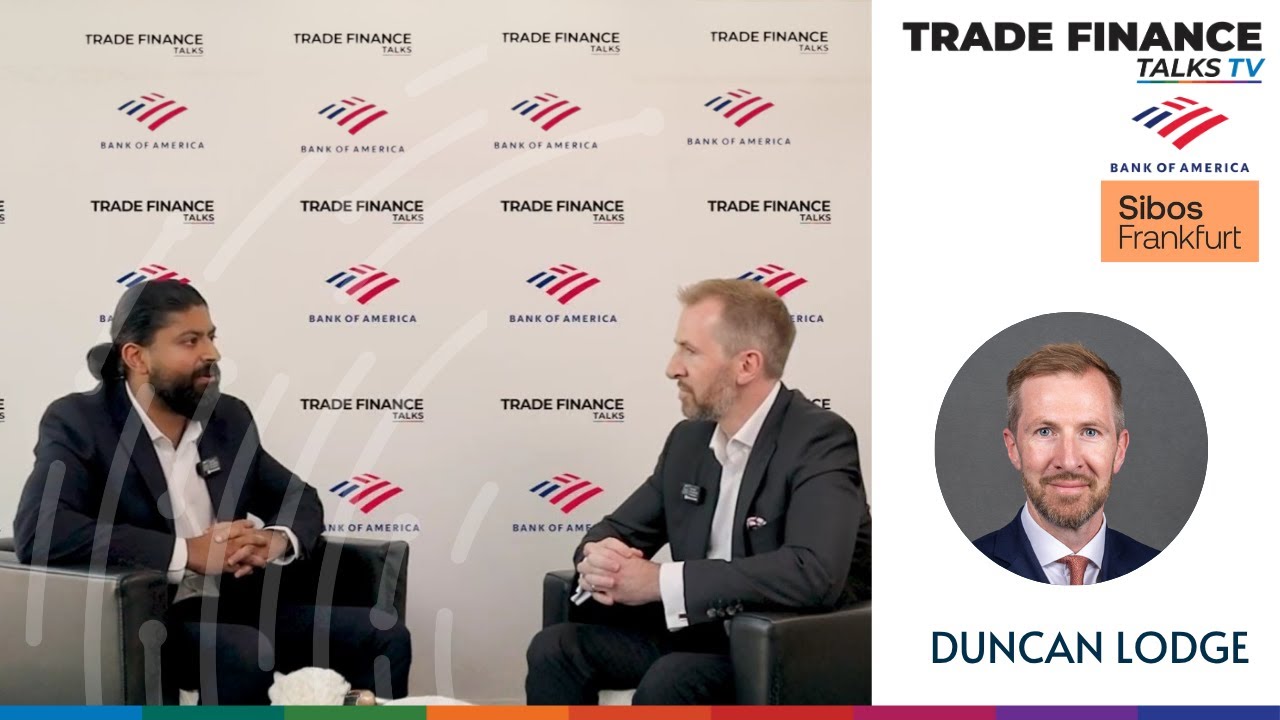
At the 2025 Sibos conference in Frankfurt, Germany, Trade Finance Global (TFG) spoke to Duncan Lodge, Global Head of Supply Chain Finance and Head of Trade Finance for GPS EMEA at Bank of America, to find out about the evolution of supply chain finance and its intersection with an ever-expanding payments industry.
A global convergence
News headlines would have us believe that the world is growing increasingly divided and fragmented; nonetheless, the macro themes concerning companies are the same across regions. Geopolitical instability and rising costs are plaguing supply chains in all continents, driving similar responses from corporates and banks struggling to retain their margins.
“At the moment, we’re in a higher cost environment: we have inflation, we have higher interest rates, we have tariffs. We’re also in quite an uncertain environment,” said Lodge. Banks are seeing clients that are “laser-focused on working capital optimisation to unlock liquidity and to pay down debt,” as well as on risk-management solutions to limit their exposure.
Historically, regions tended to have specific trade finance products they turned to: for example, Asia-Pacific (APAC) leaned towards documentary trade, while pre-shipment and pre-export finance dominated in Latin America (LatAm). Now, however, a global need for optimisation and converging corporate priorities is driving the growth of supply chain finance solutions, especially payables finance, across the globe, with LatAm seeing an impressive expansion.
The payments pipeline: Trade finance digitisation as an ecosystem
It’s no secret that trade has historically been difficult to digitalise – as can be expected of any industry so vast and global. However, the rapid evolution of technology is creating opportunities to streamline and digitalise trade processes, much like it has done for payments in the past few years.
“Corporates have seen the innovation in payments, moving towards real-time payments and real-time settlement. But when you look at either side of the payment process, there’s still a lot of inefficiency,” Lodge summarised.
Different service providers in the payments sphere are working together to improve speed and efficiency across most of the payments lifecycle. But some of the most fundamental parts of the trade finance process remain inefficient, for example, in invoice approval or when dealing with documentary letters of credit.
Taking a similar approach to payments could fast-track trade digitisation. “No single platform is going to be able to digitalise the entire trade: we think you need to bring together an ecosystem,” said Lodge.
Integrating different platform providers that excel in their area and connecting them with clients through clients’ own platforms – whether treasury management systems, multibank trade finance platforms, or ERPs – is going a long way towards making a complicated, multi-step process much more streamlined and efficient. “We can stitch together the disparate parts of the trade finance transaction and then digitalise that end-to-end,” said Lodge.
Faster systems, faster capital
10 years ago, payables finance was not very well-known by corporate clients, with few adopting it as a working capital strategy. It has since grown to an established and mature product, with both bank and non-bank investors now regarding it as an increasingly attractive asset class. Payables finance was one of the fastest-growing trade finance products according to a 2024 ICC report, and is projected to grow by nearly 5% year-on-year in the next decade.
Digitisation is driving growth across the product range, making it easier for clients to access trade finance solutions. “We have much better ways of integrating platforms for our clients through API integration and embedded finance. We have a more rapid supply and onboarding, so programs have scaled and clients are getting a lot more benefit out of [them],” said Lodge.
Processes on either side of the receivable – like invoice approval – are also getting a makeover. Automation and digitalisation cut down processing time from weeks to seconds, reducing clients’ reliance on paper documents and removing bottlenecks and delays. This allows clients to access funds faster by making the invoices available for financing earlier in the procure-to-pay cycle.
—
In trade finance, as in the payments industry, digitisation is transforming both the types of products clients are using and the very ways they are accessing them. An increasing demand for efficiency – driven by both an eagerness to adopt innovative processes and a need to adapt to macroeconomic challenges – is also transforming trade finance ecosystems across the globe.
AI has emerged as the new game-changer, being adopted across the trade finance transaction lifecycle for a wide range of purposes, from fraud prevention to document drafting. How AI will really change the industry, and where it fits in amidst the race for digitisation, will only become clearer with time.