











-
China and the US have reached an agreement that will likely ease trade tensions, including suspending port fees and removing semiconductor export restrictions.
-
The new deal sees China lifting rare earth mineral export controls and resuming US soybean imports; both countries have agreed to lower tariffs and end maritime shipping fees, positively impacting global logistics.
- This also means that Nexperia chips, crucial components of automotive supply chains, will now be allowed to be shipped to Europe, ending a shortage that had been disrupting the industry since September
Global trade tensions seem to be easing this week as China announced on Monday, 10 November, that it would suspend port fees on US ships docking at its ports following a similar announcement by the US.
On Friday, 7 November, China agreed to remove export restrictions on Chinese chips made by Nexperia, a Netherlands-based chip company at the centre of ownership disputes between the Chinese and Dutch governments.
These new developments point to a trade detente, as the US and China reach agreements on long-contested issues like the sale of social media giant TikTok and critical minerals exports. This culminated in a deal signed earlier this month that is set to undo many of the trade restrictions born of the recent trade spats.
According to the deal, China will suspend its rare earth minerals export controls around the world and remove or suspend all trade restrictions enacted since 4 March, including tariffs on many US agricultural exports.
China has also committed to buying 12 million metric tons of soybeans from the US before the end of the year and 25 million each year going forward, bringing exports back up to normal levels after a complete halt to American soybean imports resulting from the tariffs.
For its part, the US will lower tariffs on China by 10% and extend the pause on higher tariffs for the third time, to November 2026.
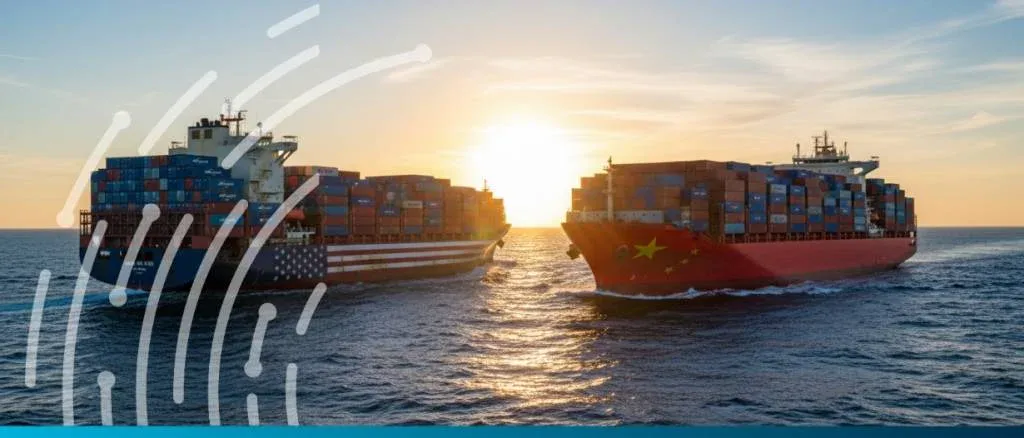
On the shipping side, both the US and China have committed to ending their extensive restrictions on maritime shipping by removing port fees and closing investigations into their reciprocal shipbuilding sectors. This means US ships docking in China will no longer face the high container fees in place since 14 October, and vice versa.
The port fees raised costs by hundreds of thousands of dollars for global logistics companies handling US-China trade routes, and had caused some shipping companies to divert their China-bound ships to South Korea to avoid the fees.
The deal also had an effect on China-Europe relations, with the resolution of a long-standing feud around Dutch-based but Chinese-owned car semiconductor maker Nexperia. The Dutch government seized control of the company in September, citing concerns over foreign influence. In response, the Chinese government halted deliveries of Nexperia chip components from the company’s Chinese factories to Europe, disrupting automotive supply chains across the region.
On Friday, Dutch Prime Minister Dick Schoof said China had removed the restriction and would be resuming imports of the chip components. However, the dispute over Nexperia’s ownership is yet to be resolved; China may leverage ongoing negotiations with the EU to gain back control of the chipmaker.