















-
The trade finance industry needs a makeover to change its public image of risk and instability, despite being an attractive asset class.
-
The most tempting aspect of trade finance for investors is its direct relation to the real economy, financing essential, tangible transactions that power industry.
-
Trade finance is a rapidly ageing industry that needs to attract the younger generation to replace senior professionals nearing retirement.
The trade finance industry has an image problem. Like the nerdy girl in 2000s teen movies, whose striking good looks are revealed once she takes off her glasses and lets her hair down in a makeover scene set to a Britney Spears hit, the trade finance industry is an attractive asset class hiding behind a public image of risk and instability.
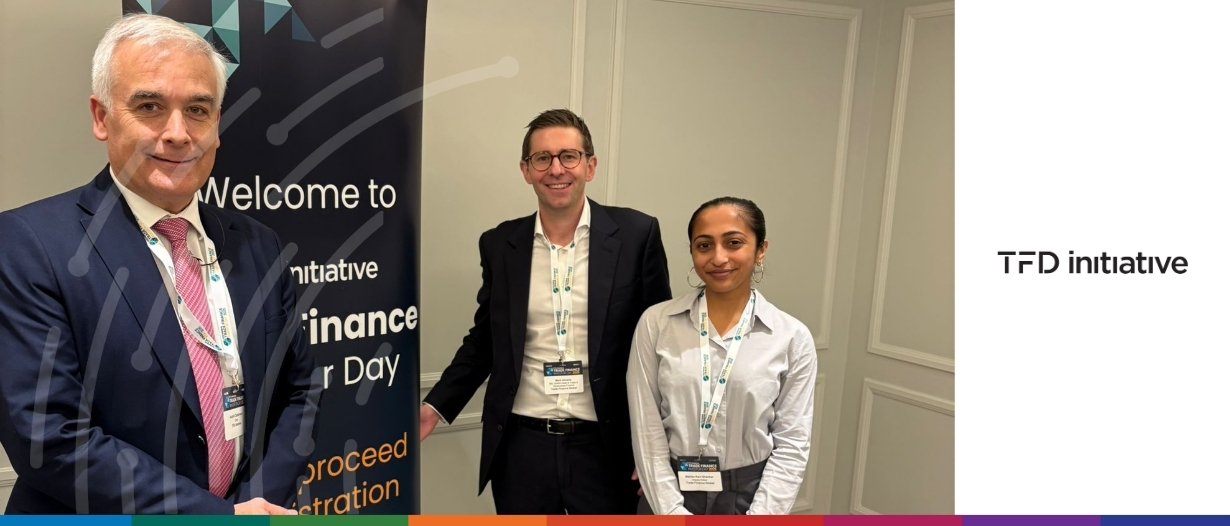
At the third annual Trade Finance Investor Day (TFID) in London, Mahika Ravi Shankar, Deputy Editor at Trade Finance Global (TFG), spoke to the man who made the day happen, TFD Initiative Chair André Casterman, to hear about why trade finance is an attractive industry, to investors and young people alike, and how to make outsiders see this too.
Trade finance needs a makeover
The Trade Finance Investor Day – much like the supportive sidekick in the aforementioned movie – is working to change the industry’s image for good. The day saw over two dozen speakers discuss ways to turn trade finance into an appealing asset class, from tokenisation to asset-backed lending and verifiable legal entity identifiers (vLEI). And, now more than ever, people are paying attention.
“My biggest takeaway from this third edition of the Trade Finance Investor Day is the presence of new entrants in the market – whether it’s traders, B2B platforms, electronic documentation platforms providing verifiable transactions, new liquidity providers, or new institutional investors,” said Casterman.
New players are doing more than just bringing a breath of fresh air to the industry. Innovations like electronic trade documents, tokenisation, SaaS platforms, and AI are making the trade finance landscape safer and more efficient – which also means more enticing for investors.
Sticking up for trade finance
Despite the excitement and potential around innovation, it’s still not the strongest argument in favour of investing in trade finance. The most tempting aspect of the industry is still its relation to the real world, its role in enabling $32.2 billion of global trade each year, financing tangible, essential transactions that power industry and feed populations.
Trade finance “represents a real economy, and the real economy doesn’t stop. It’s repetitive sales, it’s transparent transactions: These are industries we can understand, analyse, investigate, and take risks on,” explained Casterman.
That’s not to say that trade finance’s reputation for being a risky business is wholly undeserved, but the risk in question comes from tangible transactions rather than invisible financial forces as in many other areas of finance.
Because it finances real-world trade, funds often go directly to small and medium-sized enterprises, often in emerging economies, multiplying its impact in the global economy. Trade finance “can be risky if you don’t pay attention, but it can be extremely rewarding in terms of contributing to the real economy actors, businesses, and SMEs,” said Casterman.
To entice more investors to come on board despite the risk, collaboration is essential. A key theme of Trade Finance Investor Day was the cooperation between public and private sector institutions to form particular securitisation structures – for example, by providing loans backed by public institutions, like UK Export Finance recently did for critical minerals.
How to become a people pleaser
Besides a lack of investors, trade finance is also a rapidly ageing industry. The many years of expertise needed to become knowledgeable about the nuances of many trade finance instruments, combined with waning interest from the younger generation, mean many senior trade finance professionals are near retirement without anyone to replace them.
While other sectors of finance tempt recent graduates with high-profile projects and a Patrick Bateman lifestyle, trade finance’s more muted presence and complicated transactions can be off-putting – for some. “The complexity of the market makes it attractive in my view. And that’s why I moved to trade finance from payments 20 years ago: it’s complex,” explained Casterman.
“This complexity requires new ways of thinking, innovative players, and new technologies,” he continued. No matter the stage in the business cycle or the global pressures, trade finance keeps innovating, with new challenges at every corner.
—
What it all comes back to, really, is trade finance’s effect on the stuff that matters – real transactions, real people, real trade. “The real impact is on the economy, helping billions of people, and enabling SMEs to raise more working capital liquidity to run their businesses,” explained Casterman.