












- European container networks are facing persistent congestion, slower equipment rotation, and extended transit times, reducing the availability of usable capacity despite sufficient global supply.
- Carriers are increasingly repositioning containers from Europe back to China as Chinese manufacturing demand strengthens, creating tighter availability for key equipment such as 40ft high-cube containers.
- Ongoing geopolitical disruption and longer shipping routes around the Cape of Good Hope are forcing operators to adapt supply chain strategies with greater flexibility, resilience, and reduced reliance on single trade corridors.
Operators in Europe are under growing strain.
Over the past few months, much of the industry conversation has focused on volatility in the logistics sector due to the escalations across the Middle East. The more recent developments across cross-border trade are pointing to a reallocation of containers, as carriers position more containers into China.
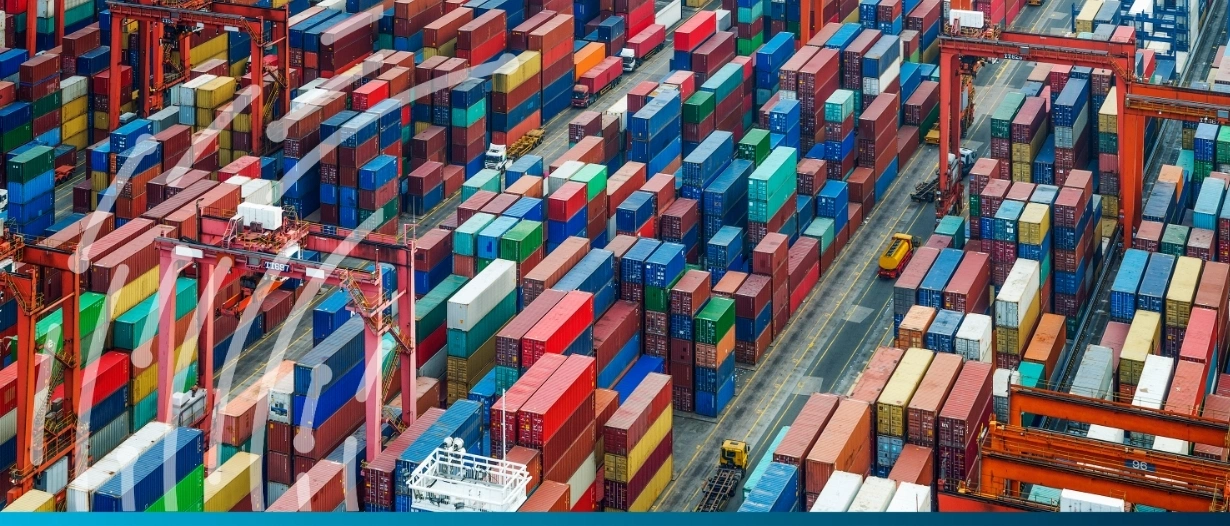
However, there is a widening disconnect between market conditions in Europe and activity levels in China. Across Europe, depot congestion remains elevated. Containers are continuing to spend longer periods sitting in yards, inland depots, and intermediate hubs before returning into circulation.
While global fleet capacity may appear sufficient on paper, operators across the ground network are dealing with slower equipment rotation, extended dwell times, and growing unpredictability around availability.
At the same time, container pricing trends in China are beginning to move upward, showing signs of recovery.
European depots remain congested
In Europe, on the other hand, similar pricing strength is not yet visible., Congestion continues to weigh on operational efficiency and equipment circulation.
That divergence is becoming increasingly important as it influences how operators reposition containers globally.
Carriers and leasing operators are actively trying to move equipment out of Europe and back to China, as manufacturing demand strengthens at origin.
Production lines across Chinese container factories are also in the process of ramping up, reinforcing expectations that export activity and equipment demand could continue rising over the coming months.
This directional pull towards Asia is already starting to change availability dynamics across Europe.
A gradual reduction in European container stock levels is becoming increasingly likely in the near term, particularly looking into the next month regarding 40 foot (ft) high-cube (HC).
Operators are closely monitoring this segment because longer transit cycles and repositioning pressure are reducing how quickly containers can return into active circulation.
The impact of this slowdown extends beyond container availability alone.
Changing vessel cycles and capacity
Longer voyages around the Cape of Good Hope continue to disrupt traditional vessel cycles across Asia-Europe trade corridors. Transit times remain significantly above pre-crisis baselines, simultaneously adding pressure across ports, inland transport networks, and depot systems.
Every additional day a container spends waiting at port, delayed at transhipment hubs, or rerouted through extended corridors reduces the number of times that asset can be reused during the year. Over time, those delays accumulate across the network and begin affecting the broader flow of equipment.
This is why operational pressure across Europe can feel significantly tighter than headline supply figures suggest.
Many operators describe the current market as one where theoretical capacity and usable capacity are becoming two very different things.
Containers may technically exist within the global system, but congestion, routing disruption, and longer cycle times are reducing how effectively that capacity can support active trade flows.
The effects are becoming visible across several layers of the European market.
Major Northern European hubs, including Rotterdam and Antwerp, continue to operate under elevated yard utilisation pressure, whereas Mediterranean and Adriatic gateways, such as Genoa, Gioia Tauro, Ravenna, and Venice, are seeing vessel waiting times extend during peak congestion periods.
At the same time, schedule reliability across Asia-Europe services remains inconsistent, as carriers continue adjusting routing patterns around geopolitical and operational risks.
Adjusting to new logistics norms
Traditional East-West loops are becoming increasingly fluid. Operators are modifying port rotations, transhipment patterns, and deployment strategies based on corridor exposure, fuel costs, congestion levels, and equipment positioning needs.
These factors have caused lower predictability across almost every stage of the logistics chain.
Importers and exporters are now planning around wider delivery windows. Forwarders are managing longer shipment cycles. Inland networks are absorbing additional congestion pressure as containers remain in the system for longer periods before returning to origin.
Across parts of Europe, the commercial effects are also becoming more visible.
Longer shipment cycles are increasing working capital exposure for operators managing cargo movement through unstable networks. Delayed cargo arrivals are increasing payment cycles and delaying – or rather changing – inventory planning across supply chains.
Equipment repositioning delays are creating periodic shortages during peak export windows, particularly for specific container categories such as refrigerated equipment and 40ft HC units.
Interconnected pressure
Italy offers a particularly clear example of how these pressures are building beneath relatively stable cargo volumes.
While throughput across major Italian ports has remained comparatively steady, operational strain is becoming more visible through congestion patterns, waiting times, and growing dependence on intermediate hubs and feeder connections.
According to the recent Sogese Container Market Update, the stress building across Italy’s logistics ecosystem is increasingly commercial, as much as operational.
Businesses are facing greater uncertainty around scheduling, equipment access, and cargo timing. Delays are extending planning cycles and affecting how companies manage inventory, production schedules, and customer commitments.
At a broader level, the market is also adapting to a more fragmented geopolitical environment. Many businesses are moving away from assumptions that global trade flows will quickly return to highly optimised pre-crisis conditions. Instead, operators are increasingly building flexibility and optionality into sourcing, logistics, and inventory strategies.
That shift is also changing how companies think about resilience across the supply chain.
Businesses are spending less time planning around ideal operating conditions and more time preparing for unpredictability across trade routes.
What makes the current environment more difficult is how connected these pressures have become.
A delay in one corridor quickly affects vessel schedules elsewhere. Congestion at ports slows container circulation across inland networks. Rising energy prices feed into transport and operating costs across multiple trade lanes. Containers delayed in repositioning affect export schedules, production planning, and equipment availability in other regions.
The impact no longer stays isolated to one part of the supply chain. Pressure moves across the network very quickly. Many companies are reassessing how much dependency they place on single corridors, single sourcing markets, or tightly optimised inventory structures.
—
For Europe, the next several months are likely to be shaped by how this ongoing rebalancing process evolves.
If Chinese production activity continues to strengthen while congestion and slower rotation cycles persist across Europe, repositioning pressure towards Asian origin markets is likely to intensify further. That could tighten availability conditions across parts of Europe, especially for 40ft HC equipment categories that are already seeing increased pressure.
Ultimately, what is unfolding across the container market now reflects a broader restructuring of trade flows under prolonged operational and geopolitical strain.