














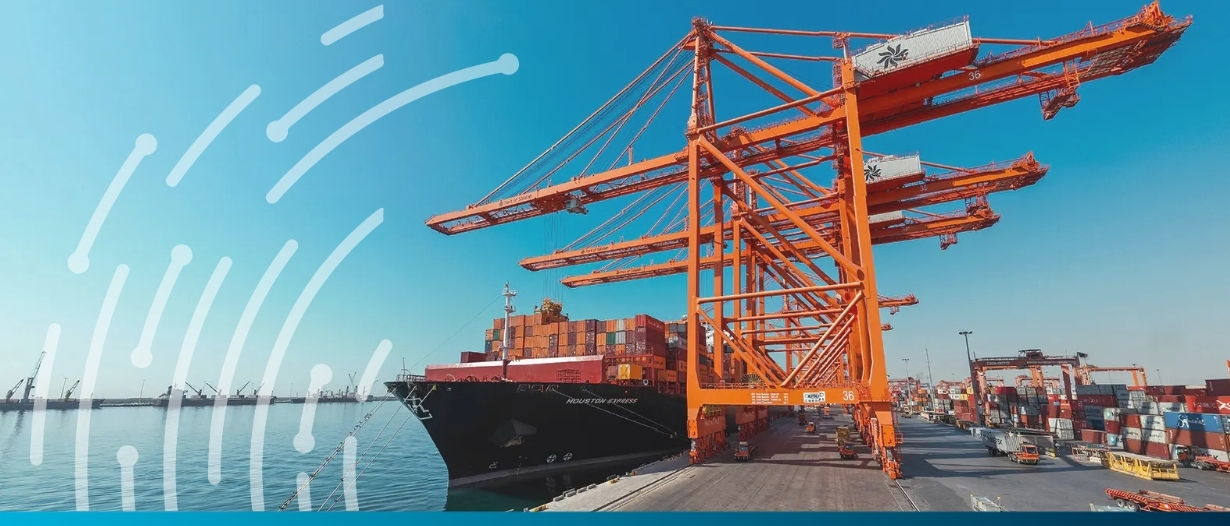

- Major carriers including AP Moller-Maersk and Hapag-Lloyd will cautiously resume operations at Port of Salalah following a drone strike that damaged infrastructure and injured a worker.
- Salalah, a critical transhipment hub linking Asia, Europe and East Africa faces constraints, potentially worsening congestion already rising in South-East Asian ports.
- Regional instability persists, with tensions around the Strait of Hormuz and further attacks.
Container shipping companies are set to restart at the Omani Port of Salalah today, Tuesday, 31 March, after a drone strike on Saturday closed the key transhipment hub.
AP Moller-Maersk and Hapag-Lloyd announced yesterday that services will resume in Salalah, albeit with likely constraints and “additional precautionary measures” in place.
On Saturday, a drone strike damaged a container terminal crane at the APM Terminals regional hub, owned by Maersk and ASYAD, Oman’s logistics conglomerate. One port worker was injured in the attack.
Salalah is a key access point for containers entering Persian Gulf markets overland, and the primary alternative to the Port of Jebel Ali, Dubai, for transhipment flows between Asia, Europe, and East Africa.
Salalah has an exceptionally high transhipment share of 90-95%, making it one of the world’s purest transhipment hubs, alongside the likes of Singapore and Algeciras.
Disruption will likely place further strain on gateway ports in South-East Asia, which are already seeing approximately 40% more congestion this month compared with February figures.
Though Chinese ships yesterday sailed through the Strait of Hormuz, which has remained effectively shut since the start of the US-Israeli war with Iran, tensions in the Middle East show no signs of abating. Earlier today, Iran attacked the Kuwaiti Al Salmi crude oil tanker in Dubai, setting it ablaze.