










- Pakistan has opened six overland routes to Iran, allowing third-country goods to bypass Hormuz disruption and clear thousands of stranded containers.
- The new corridor eases pressure on Pakistani ports and boosts its ambitions as a regional trade hub, though sanctions still limit direct Pakistan–Iran trade.
- The scheme reduces Pakistan’s reliance on Afghanistan as a transit route amid worsening ties between the two neighbours.
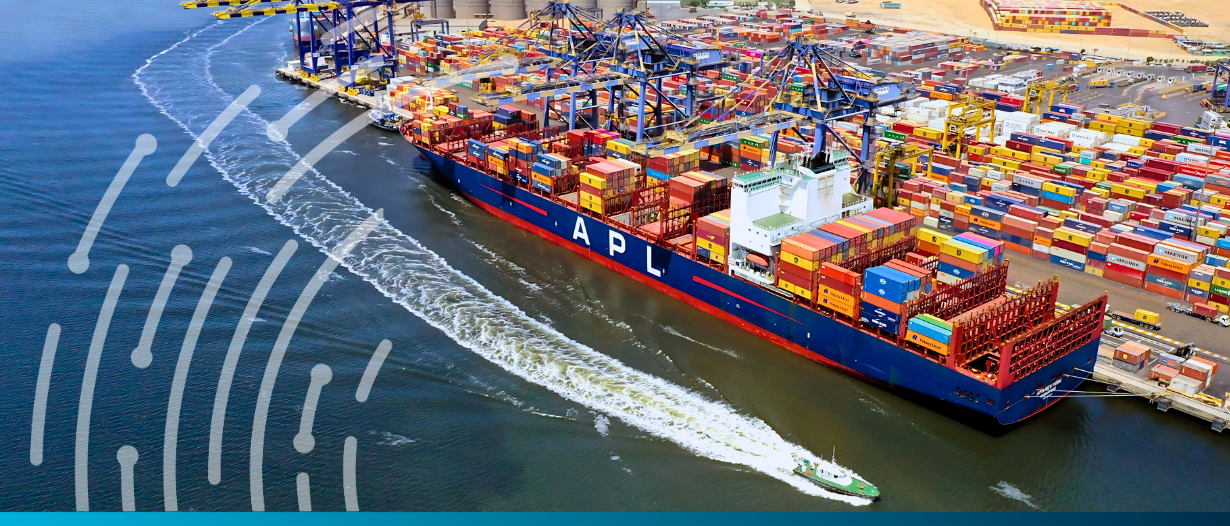
Pakistan has opened six road transit routes to enable third-country goods to reach Iran, creating a new land corridor. The initiative came as 3,000 containers destined for Iran were stranded at Pakistan’s Karachi port, due to the conflict-driven disruption.
Since late February, Iranian trade has plummeted, with the country’s non-oil trade dropping by 50% from the previous year, just in the first month of the war.
On Sunday, 25 April, the ‘Transit of Goods through Territory of Pakistan Order 2026’ took effect, allowing the immediate use of Pakistani territory for cargo destined for Iran, easing congestion on Pakistani ports. The six routes link Pakistan’s Karachi, Port Qasim, and Gwadar, with Iran’s Gabd and Taftan border crossing.
The routes run through Balochistan, passing through Turbat, Panjgur, Khuzdar, Quetta, and Dalbandin. Gwadar’s proximity to the Iranian border has pushed authorities to consider shifting some cargo from Karachi to Gwadar in small vessels, reducing reliance on long-haul trucking. This could help cut the costs and logistical pressures associated with land shipping.
The arrangement is set to create service revenues for Pakistan for its handling, transport, and logistics support. The policy also reinforces Pakistan’s ambition to become a regional trade corridor linking South Asia, the Middle East, and Central Asia.
However, the arrangement does not expand bilateral trade between Iran and Pakistan, as sanctions on Iran limit the country’s financial transactions.
The new development excludes goods of Indian origin, as a separate order issued in May 2025 continues to ban Indian goods from transiting through Pakistan.
The Afghan route
The new corridor is primarily useful because it allows Pakistan to eliminate reliance on Afghanistan for westbound trade.
Pakistan has long been Afghanistan’s largest trade and connectivity partner. But the relationship between the neighbours has deteriorated in recent months.
Shortly before the US invasion of Iran, on 27 February, Pakistan declared ‘open war’ against Afghanistan, following a suicide bombing in Islamabad. Pakistan claimed that the Afghan Taliban is sheltering the Tehrik-i-Taliban Pakistan (TTP) inside Pakistan, which the Afghan Taliban denied.
In the first quarter of Pakistan’s 2025-2026 fiscal year, bilateral trade between the two countries declined by 6%, with Pakistani exports to Afghanistan decreasing by 15%.
Simultaneously, Afghanistan has been diversifying its trade routes away from Pakistan, towards Iran and Central Asia, as security problems with its southeastern neighbour sparked border closures.
The movement of goods from Pakistan through Afghanistan is governed primarily by the Afghanistan-Pakistan Transit Trade Agreement (APTTA), which allows the Afghan Ministry of Finance to collect transit fees on every container that crosses its borders. Pakistan’s opening of new road routes weakens Afghanistan’s role as a transit hub. In spite of the conflict on its own border, Pakistan has emerged as a crucial node of mediation for the US-Iran war, facilitating communication and contributing to ceasefire proposals. Combined with the recent transit corridor, the country has taken strides to position itself as a regional hub for international trade.