



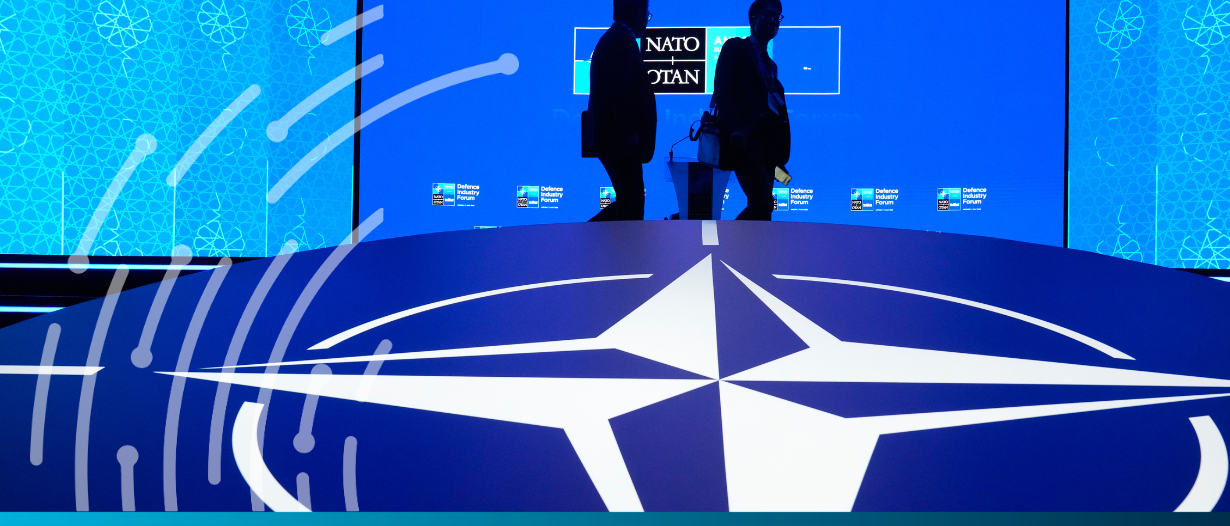

- At the 2026 NATO Summit, members announced new defence procurement deals and reaffirmed commitments to reducing barriers to defence trade.
- The Summit also saw Türkiye advance trade talks with fellow NATO members and call for greater access to allied defence markets.
- The agreements aim to expand joint manufacturing and strengthen defence industrial cooperation across the alliance.
Members of the North Atlantic Treaty Organization (NATO) announced new procurement deals and reaffirmed their commitment to removing barriers to defence trade during the 2026 NATO Summit, which concluded on Wednesday, 8 July. The Summit also oversaw the acceleration of trade negotiations by Türkiye with fellow NATO members.
The two-day Summit, held in Ankara, Türkiye, had all 32 member-states in attendance, as well as non-alliance heads of state from Ukraine and South Korea. Following the conference, NATO released a declaration announcing $50 billion in new defence procurements. The statement also expressed a commitment to expanding joint manufacturing capacity while eliminating defence trade barriers between members.
The new deals include:
- Lockheed Martin and Rheinmetall signed a Memorandum of Understanding (MoU) to jointly manufacture short-range ballistic missiles in Germany, marking the first time these missiles will be produced outside the US.
- Swedish aerospace and defence company Saab will begin formal negotiations with NATO to sell up to 10 GlobalEye airborne planes.
- Finland, Germany, Denmark, and Norway signed a letter of intent to purchase MQ-4C Triton high-altitude drones, bringing US aerospace tech into European markets.
The allies also agreed to a €27 billion investment in modernising and extending NATO’s military fuel supply chain to Poland and the Baltic states. The pipeline was originally built during the Cold War, primarily serving Western Europe.
During the Summit, Turkish President Recep Tayyip Erdoğan emphasised the need for restrictions to defence trade to be lifted among NATO allies, alluding to Türkiye’s removal from the F-35 fighter jet programme following its purchase of Russian S-400 air defence system in 2019. He highlighted Türkiye’s military capacity – home to the second-largest army among NATO allies, after the US – and added that he has already increased defence spending to 3.5% of GDP – NATO’s target for core defence spending.
Erdoğan also emphasised that European Union (EU) countries shouldn’t exclude non-EU NATO allies from building defence infrastructure, pointing to its risks for transatlantic security.
US President Donald Trump announced that he will lift sanctions on Türkiye, which were imposed in 2020 as a result of Turkish procurement of Russian defence missiles. The sanctions included a ban on US export licenses and broad export restrictions on US defence equipment to Türkiye’s defence procurement agency.
On the sidelines of the Summit, Türkiye and Canada formally launched talks over a free trade agreement (FTA).
Meanwhile, Trump ordered US Treasury Secretary Scott Bessent to halt all US trade with Spain. The strained relations stem from Spain’s refusal to allow US forces access to its airspace and military bases for operations against Iran.