







- Mauritius’ banking sector has been central to the country’s economic growth.
- This is driven by strong governance, innovation, and adaptability to global financial trends.
- Mauritius is diversifying its exports into services like tourism, ICT, and sustainable industries.
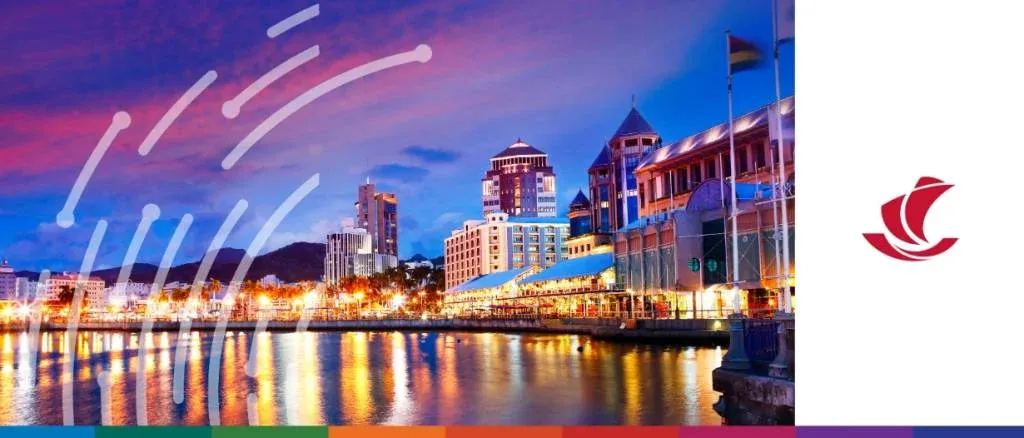
Mauritius, the tiny island country off the coast of East Africa, has been hailed as an African financial miracle. Despite its remote location and population of just over a million people, the country consistently tops financial services and openness rankings for the region.
Trade Finance Global’s (TFG) Silvia Andreoletti spoke to Thierry Hebraud, CEO of Mauritius Commercial Bank (MCB), the country’s biggest and oldest bank, to find out more about Mauritius’ success and its role in the future of African trade.
Silvia Andreoletti (SA): What do you think have been the most important factors that contributed to Mauritius’ flourishing banking sector throughout the years?
Thierry Hebraud (TH): Mauritius’ banking sector has been a cornerstone of the country’s economic development since its independence. Banks like MCB have played a key role in financing the take-off of economic sectors from textile manufacturing and tourism to emerging industries, helping to shape a resilient and diversified economy.
The banking sector’s progress over time has been underpinned by a robust governance and regulatory framework. The sector’s ability to maintain adequate capital and liquidity buffers has proven vital in navigating shocks such as the financial crisis and the COVID-19 pandemic. Moreover, the sector’s investment in people and customers has driven innovation, agility, and service excellence, keeping banking solutions aligned with evolving needs.
With a size of over four times the economy, the banking industry remains at the forefront of digital adoption and is aligned with international compliance and regulatory standards.
SA: How do banks in Mauritius manage collaboration with banks in emerging economies that may be less developed in terms of regulations or technological capabilities?
TH: Many banks, including MCB, approach their counterparts through a partnership model. While regulatory and technological gaps may exist, we focus on building trust, sharing expertise, and supporting capacity development. Whether through correspondent banking, regional subsidiaries or regular interactions, the emphasis is on enabling progress while respecting local realities.
Through this approach, Mauritius has successfully attracted both African banks and major international banking institutions. This success stems from its ability to leverage a mix of local, regional, and international players.
SA: Can you tell us a bit about the African Continental Free Trade Area (AfCFTA) and the effect it is having on intra-African trade? What have been the main challenges to increasing regional trade further?
TH: AfCFTA offers long-term promise for the continent’s economic transformation. While the ongoing global trade disruptions and tariff wars have posed challenges, they have also served as a wake-up call towards accelerating efforts to build a more united Africa.
As stressed in the MCB Trade Report this year, intra-regional trade remains low in Africa at just 16%, compared to 70% in Europe and 60% in Asia. While implementation of the AfCFTA remains uneven, the vision is clear: to turn fragmentation into collective strength by connecting 1.4 billion people and a combined GDP of $3.4 trillion.
In the medium term, AfCFTA could help African economies replace lost markets, such as South Africa’s auto exports to the US, with domestic demand. The road ahead requires infrastructure, harmonisation, and political collaboration. One African voice carries more weight than 55 individual ones.
SA: How has Mauritius been handling the effect of the recent US tariffs?
TH: While the country’s aggregate exposure to the new US tariffs is relatively modest – exports to the US account for just 2.1% of total at around $37 million- the impact is more pronounced in the textile sector, where 10% of exports are US-bound. With the expiry of the African Growth and Opportunity Act (AGOA) on 30 September 2025, these products are now subject to higher Most Favored Nation (MFN) duties plus 15% reciprocal tariffs.
With the US government shutdown delaying renewal prospects, Mauritius and its peers are lobbying for a one-year extension, potentially applied on a retroactive basis. Meanwhile, labour costs have surged over 25%, textile productivity has dipped 3.5%, and total exports to the US fell 2% in the first seven months, with live primates (47% of US-bound exports) sustaining momentum.
The headwinds described above highlight the importance of pursuing market diversification and moving up the value chain by, in particular, tapping into the potential of regional value chains.
SA: As Mauritius’ traditional exports, like sugarcane and textiles,become less competitive, how is the country’s export industry adapting to remain competitive?
TH: Mauritius’ traditional goods exports like sugarcane and textiles are indeed facing headwinds, both homegrown amidst rising costs alongside rising global competition in the wake of eroding preferences. That said, exports of services continue to fare well.
Tourism is on track for 1.4 million arrivals in 2025, with ICT and professional services maintaining steady growth. The Mauritius International Financial Centre (MIFC) has positioned itself as a trusted platform for Africa-facing investment flows. Its 2025–2030 strategy paper focuses on product diversification, digital innovation, and market deepening.
Emerging focus areas such as the blue economy, renewables-led industrial investment, and sustainable finance are also gaining attention. The authorities have, in particular, earmarked approximately $660 million over the next three years for solar and biomass projects, aimed at reducing energy import dependence and fostering sustainability.
SA: Mauritius has an advanced environmental, social, and governance (ESG) banking system, with green bond legislation in place since 2021; what do you think is holding other African countries back from investing in sustainable finance? What can banks do to help?
TH: Mauritius has made good progress in building a banking system that embraces ESG, backed by regulation and collaboration between policymakers and financial institutions. Many African countries, however, have advanced more slowly, often due to limited regulatory frameworks, data gaps, and the need to prioritise short-term fiscal pressures.
Access to affordable green capital and the absence of standardised sustainability reporting remain key challenges, though the rollout of IFRS Sustainability Standards is a positive step. Banks can play a catalytic role by embedding ESG into lending and investment decisions, supporting clients in their transition, and mobilising blended finance. They also have a role in building capacity, particularly for small and medium-sized enterprises (SMEs) and public entities, through knowledge sharing and ESG risk assessment tools.
At MCB, sustainability is at the heart of our strategy: we have integrated ESG into credit policies, launched green finance solutions, and partnered with global institutions to scale sustainable investment into Africa. Importantly, we have fully drawn a $120 million credit line from Proparco to fund climate mitigation, adaptation, and resilience projects.
Our value proposition for ESG and impact-focused private equity funds further reflect our commitment to sustainable finance. Lastly, when talking about ESG in the African context, it is essential to mention that the just transition is not only about climate but also about ensuring social inclusion and equitable development across the continent.
SA: How can Africa continue attracting foreign investment while maintaining economic ownership and decision-making, especially in the commodities sector?
TH: In 2024, Africa attracted a record $97 billion in foreign direct investment -up 75% from the previous year – yet this still represents only 6% of global foreign direct investment (FDI). To build on this momentum while preserving economic sovereignty, the continent must move up the value chain by investing in local processing, manufacturing, and innovation to transform raw materials into higher-value exports.
Regional value chains, supported by the AfCFTA, can strengthen scale, resilience, and intra-African trade. The Mauritius International Financial Centre is well-positioned as a trusted and transparent gateway for channelling investment into the continent. Overall, Africa needs to shift from dependency to self-sufficiency, ensuring that foreign capital supports – not supplants – local ownership and strategic decision-making.
SA: It seems like despite banks’ initiatives to increase access to financing, the trade finance gap is growing bigger and bigger. What do you see as the single most important change that needs to happen to close the trade finance gap in Africa?
TH: Africa faces a persistent trade finance gap of around $80-100 billion each year, particularly affecting SMEs and limiting the continent’s ability to fully benefit from the AfCFTA. It is estimated that only 18% of African banks’ trade finance portfolios currently support intra-African trade, so the single most important shift needed is a change in mindset, with a positive narrative on the African capabilities from a perceived higher risk to tangible opportunities.
The risk premium for African trade remains high, hindering the capacity of trade finance. Thus, transparency and data sharing are essential across the trade ecosystem in order to provide greater insights into real default rates. Visibility across the supply chain, from customs and ports to banks and payment systems, should also provide greater comfort to banks in financing the trade.
Enhanced visibility would allow banks to better assess risk and unlock trade opportunities. Digitalisation and partnerships among banks, fintechs, insurers, and development finance institutions (DFIs) are key to scaling inclusive, cross-border trade finance solutions. Over time, this will strengthen the continent’s trade infrastructure and empower local banks to play a more central role in global commerce.