














-
Bangladesh’s 2026 general election follows the fall of Sheikh Hasina, with rising political violence and strained relations with India creating uncertainty for trade and investment.
-
Ongoing tensions with India, including disputes over extradition and shared river infrastructure, risk spilling into economic relations despite resilient bilateral trade.
-
Although Bangladesh remains on course to graduate from least developed country status in 2026, prolonged instability could undermine its garment exports and broader post-graduation growth prospects.
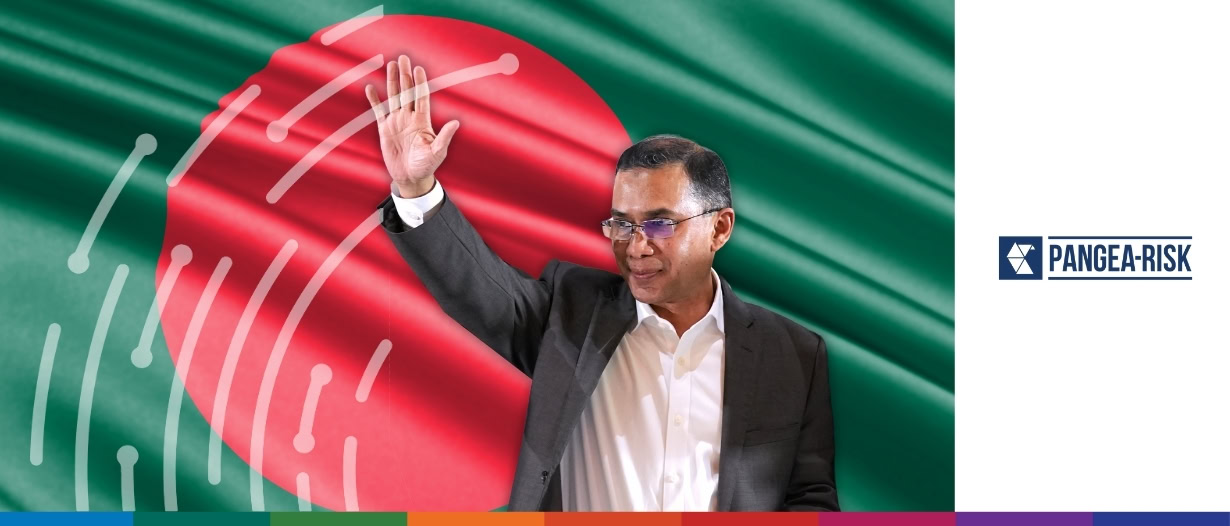
Today, 13 February, Tarique Rahman of the Bangladeshi Nationalist Party (BNP) has become the Prime Minister of Bangladesh. The BNP held a considerable lead over its main contenders, the Islamist party Jamaat e-Islami, with a two-thirds majority and 204 seats in parliament.
127 million voters went to the polls yesterday, for the first time since the fall of former Prime Minister Sheikh Hasina, after a student-led uprising toppled her autocratic tenure in 2024.
Bangladesh is South Asia’s third most populous nation and a garment industry powerhouse – the second-largest garment exporter worldwide. As the turbulence in this electoral buildup demonstrates, it is also currently in flux.
In the half-century since its independence, the country is on the verge of economic success, with rising growth, waning inflation, and expanding trade relationships with the rest of the world.
However, internal disruptions may be putting this in jeopardy. Political violence and instability ahead of the February 2026 national elections, as well as a deteriorating relationship with India, are placing the country in a unique position for both foreign investors and homegrown exporters.
Silvia Andreoletti, Senior Reporter at Trade Finance Global (TFG), spoke to Saif Islam, Head of Asia Forecasting at PANGEA-RISK, to find out more about the source of the disruptions and what could come next.
Silvia Andreoletti (SA): Can you tell us a bit about the events that have been happening in Bangladesh in the past few months?
Saif Islam (SI): Bangladesh is entering a sensitive political transition ahead of the general elections scheduled for February 2026. The country has been one of the most frequently requested Asian countries for analysis by our clients over the past year.
The past few months in Bangladesh have been marked by several high-impact developments, such as the killing of prominent youth leader Sharif Osman Hadi following an assassination attempt in December.
This was followed by the death of Bangladesh Nationalist Party leader Khaleda Zia, the country’s first female prime minister and longtime rival of exiled former prime minister Hasina, and the return of Zia’s son and political successor, Rahman, after 17 years in exile in London.
Overall, the pre-election period has seen a rise in politically motivated violence linked to electoral positioning. Some political factions believe the interim government led by Nobel Peace Prize laureate Dr Muhammad Yunus, in place since August 2024 after Hasina’s resignation, has not implemented significant reforms.
Taken together, these events point to a volatile pre-election environment.
SA: How will the political tension affect Bangladesh’s relationship with India, which is currently sheltering Hasina? What impact could this have on the economic relationship between the two countries?
SI: The relationship between the interim government led by Yunus and the Indian government has been fractious from the outset, driven in part by India’s decision to shelter Hasina and its refusal to extradite her. In November 2025, the International Crimes Tribunal (ICT) in Bangladesh tried and sentenced Hasina, in absentia, to death for allowing lethal force to be used during the 2024 student protests. This puts further strain on India-Bangladesh relations.
This topic has been extensively explored in our Insight Briefings. The killing of Hadi, whose attackers reportedly fled to India, further strained bilateral relations, triggering protests, the suspension of visa services, and mutual accusations of failing to safeguard diplomatic missions.
These political frictions have occasionally spilt into the economic domain. For example, both countries introduced limited trade restrictions in 2025. However, the available data suggests that overall bilateral trade between the two neighbours remains resilient.
SA: When India and Pakistan were experiencing tension in mid-2025, India was accused of mismanaging dams and rivers it shared with Pakistan, exacerbating the summer’s deadly floods. Are there similar ways in which Indian and Bangladeshi infrastructure or resources are enmeshed, and could similar knock-on impacts happen in this scenario?
SI: India and Bangladesh are similarly interconnected through shared river systems and cross-border infrastructure, particularly across the Ganges-Padma, Teesta, and Brahmaputra basins. Upstream water management decisions in India, including dam operations and diversion structures such as the Farakka Barrage, have long been politically sensitive in Bangladesh, especially during the monsoon and dry seasons.
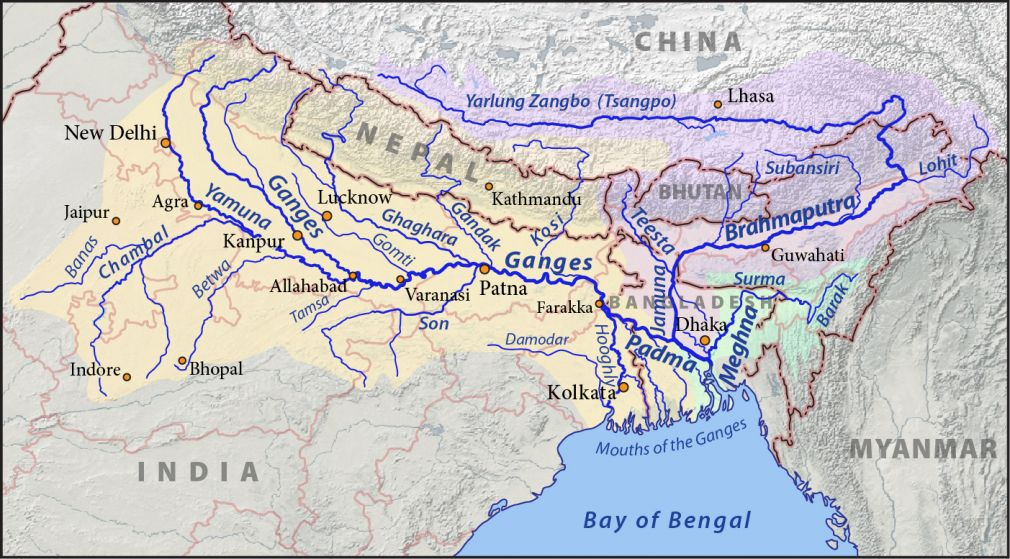
Source: PopulationData.net
While there is no evidence of deliberate water mismanagement at present, periods of heightened political friction increase the risk that technical coordination will weaken, exacerbating flood risks, water shortages, or disruptions to agriculture and power generation downstream.
At PANGEA-RISK, we routinely employ scenario mapping and related analytical methods to examine the complex trajectories of conflicts, bilateral elections, and other geopolitical dynamics.
SA: What has been the impact of the instability in Bangladesh on South Asia as a whole?
SI: Instability in Bangladesh is unlikely to destabilise South Asia as a whole, but it will have regional implications. The interim government has pursued closer ties with China and Pakistan while relations with India have deteriorated, including with the imposition of mutual trade restrictions.
Further instability, particularly as we near the February 2026 elections, could weigh on Bangladesh’s garment sector, which has already faced security concerns, labour unrest, US tariffs, and related disruptions since the 2024 insurrection. While the sector remains resilient, prolonged disruptions would increase the risk of foreign buyers gradually diversifying procurement to alternative markets.
SA: Bangladesh is on track to graduate from the class of least developed countries (LDCs) in 2026, according to the WTO. Are the recent developments likely to cause a setback?
SI: Bangladesh’s graduation from LDC status remains broadly on track, as it is anchored in long-term structural criteria rather than short-term political shocks. The interim government has managed the economy with relative effectiveness despite significant domestic pressures and a challenging global trade environment.
While graduation itself is unlikely to be reversed, a stable democratic transition and an elected government with a clear mandate for economic reform and development will be critical to sustaining post-graduation growth and competitiveness. We will closely monitor developments in Bangladesh over the coming months, publishing both short- and long-form analysis across multiple channels, including the Media Monitor and Insight platform.
—
Rahman’s campaign has been run on a promise to stamp out corruption, ushering in an era of ‘clean politics’, and with a manifesto to turn Bangladesh into a $1 trillion economy by 2034. Stability both internally and regionally (with tensions among South Asian countries along the spectrum from environmental catastrophe to cricket) would allow Bangladesh to enjoy the economic exponentialities of healthy trade dynamics.