











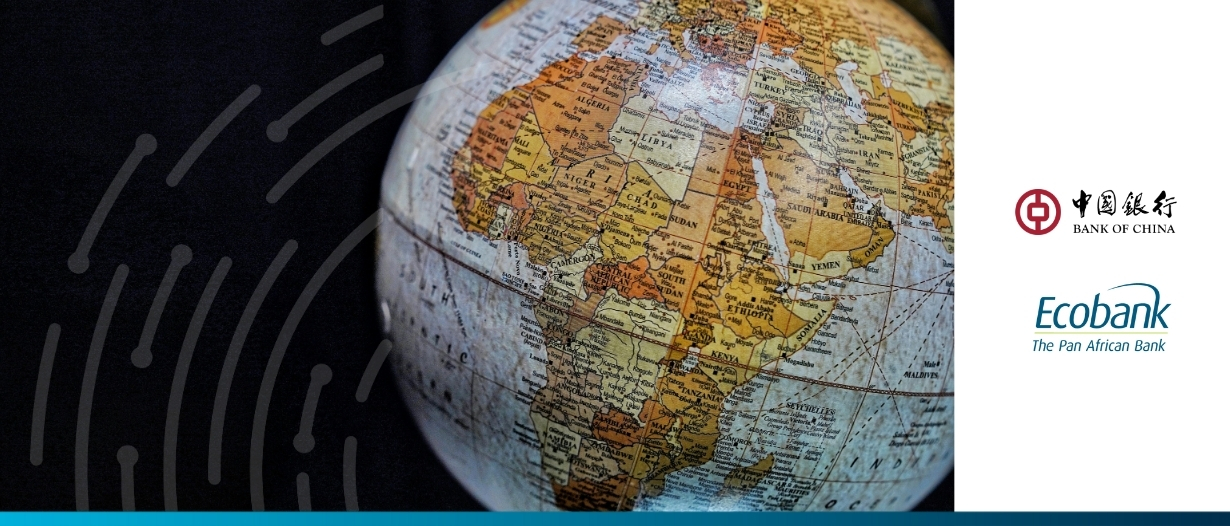

- The Ecobank Group and Bank of China (Mauritius) have established a partnership to lower currency conversion costs and settle trades more efficiently.
- Africa currently faces a massive $120 billion annual trade finance gap, with bank lending supporting far fewer goods than in developed markets.
- New banking initiatives are prioritising renminbi settlement capabilities to bolster trade as direct lending from China continues to fall.
Announced yesterday, 29 December 2025, Ecobank Group’s memorandum with Bank of China (Mauritius) follows Standard Bank’s integration with China’s Cross-Border Interbank Payment System in November.
Both initiatives aim to reduce settlement delays and currency conversion costs for businesses trading between the regions – a practical response to China’s position as Africa’s largest trading partner for 16 consecutive years, as bilateral trade between the two regions nears $315 billion annually.
Africa’s annual trade finance gap stands at $120 billion. Bank-intermediated finance supports just 25-40% of goods trade across most of the continent – well below the 60-80% typical in developed markets.
Chinese lending to Africa peaked in 2016 at $28.5 billion and has since declined to under $1billion in new commitments by 2022, reflecting Beijing’s economic slowdown and debt sustainability concerns. African countries owe China approximately $134 billion, with three of its top ten borrowers – Zambia, Ghana, and Ethiopia – having defaulted in recent years.
Trade finance initiatives targeting small and medium enterprises face additional hurdles: weak credit assessment infrastructure, currency volatility, and stringent anti-money laundering requirements that make African banks less attractive correspondent partners.
Banks cite insufficient collateral and high perceived risk as reasons for rejecting over 20% of trade finance applications, even though default rates on trade finance remain lower than other lending categories.
The African Continental Free Trade Area (AfCFTA) aims to boost intra-African trade, which currently represents just 15% of the continent’s exports compared to 60% in Asia. Banking partnerships expanding renminbi settlement capabilities offer improvements.