










- EBRD has given Bank of Africa-Benin a $20 million trade finance line to support imports, exports, and local firms.
- It aims to help tackle Benin’s trade deficit and strengthen growth, forecast at about 7% in 2026.
- However, poverty and security risks in the north continue to disrupt agriculture and weigh on economic stability.
On Thursday, 11 June, the European Bank for Reconstruction and Development (EBRD) announced it has extended a $20 million trade finance line to Bank of Africa-Benin (BOA-BENIN), aiming to boost financing for Benin’s trade operations and support the country’s private sector.
The line is granted under EBRD’s Trade Facilitation Programme (TFP) and will enable the bank to issue guarantees to international banks, while providing short-term financing for imports and exports. It will also support the local distribution of goods, including foodstuffs, agricultural products, construction equipment, and industrial items.
The country has been grappling with a persistent trade deficit for decades. In the first quarter of 2025, Benin’s trade deficit surged to roughly $1.02 billion. Later in the year, it narrowed by around 70%, largely because overall imports experienced a sharp decline, even as rice imports (the main import commodity) increased.
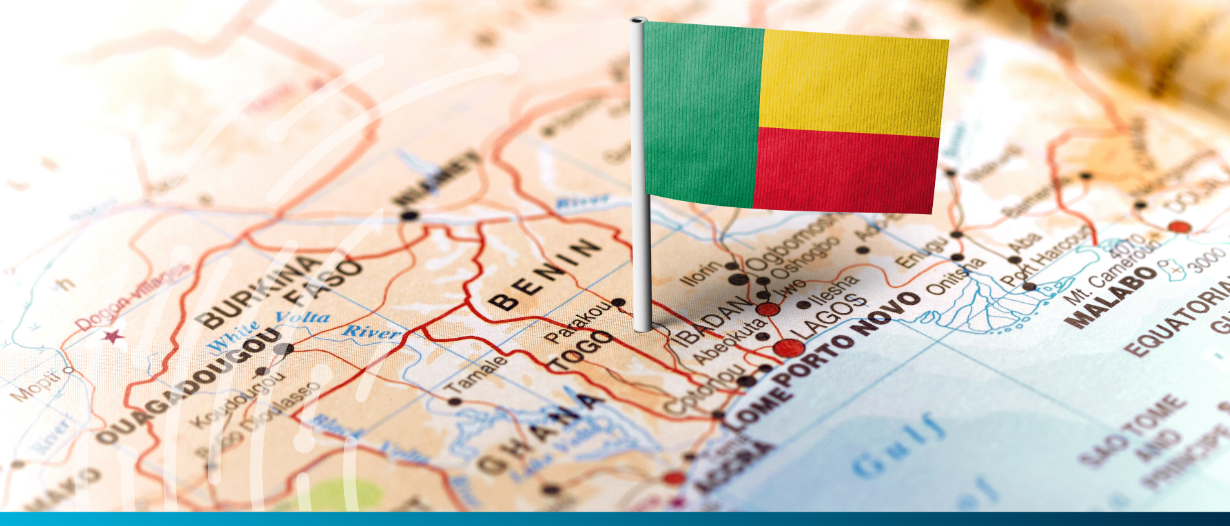
In 2026, with a GDP of $27.79 billion and a projected growth rate of 7%, Benin is increasingly situated as one of West Africa’s emerging economies. Sitting on the Gulf of Guinea, the country is positioned to connect the key waterway with landlocked countries in the region.
Benin’s economic growth is forecasted to continue into 2027, supported by former Finance Minister Romuald Wadagni’s recent presidential victory in April 2026.
EBRD first invested in Benin in 2025, with a cumulative investment of approximately $76.3 million. This includes the development of a soil waste management system in southern Benin and a rural electrification project in the west and the northeast.
“We are pleased to be completing this first trade finance operation with BOA-BENIN,” said Dasha Dougans, EBRD Head of Benin. “The facility will boost trade, increase local companies’ access to finance, and help deepen Benin’s integration into regional and international markets.”
Still, 40% of Beninese people live in poverty. The country remains vulnerable to global shocks to oil and fertiliser prices. It’s also exposed to food insecurity and risks to its main export commodity – cotton – driven by conflict across key agricultural production sites in the northern regions of Atacora and Alibori.
This instability stems from the spread of violent extremist activity from groups operating in neighbouring Burkina Faso and Niger. Last year, Beninese officials revealed that 54 soldiers were killed in northern Benin due to an al-Qaeda-linked insurgency.