









- The recent ‘CELAC-Africa High Level Forum’ in Bogotá aimed to strengthen commercial ties and investment between Latin American, Caribbean, and African nations.
- Colombia’s non-mining exports to Africa saw a significant 112% increase in 2025, reaching a total value of $296.5 million.
- A new trade agreement with Ghana includes the establishment of a maritime shipping route between the ports of Cartagena de Indias and Tema.
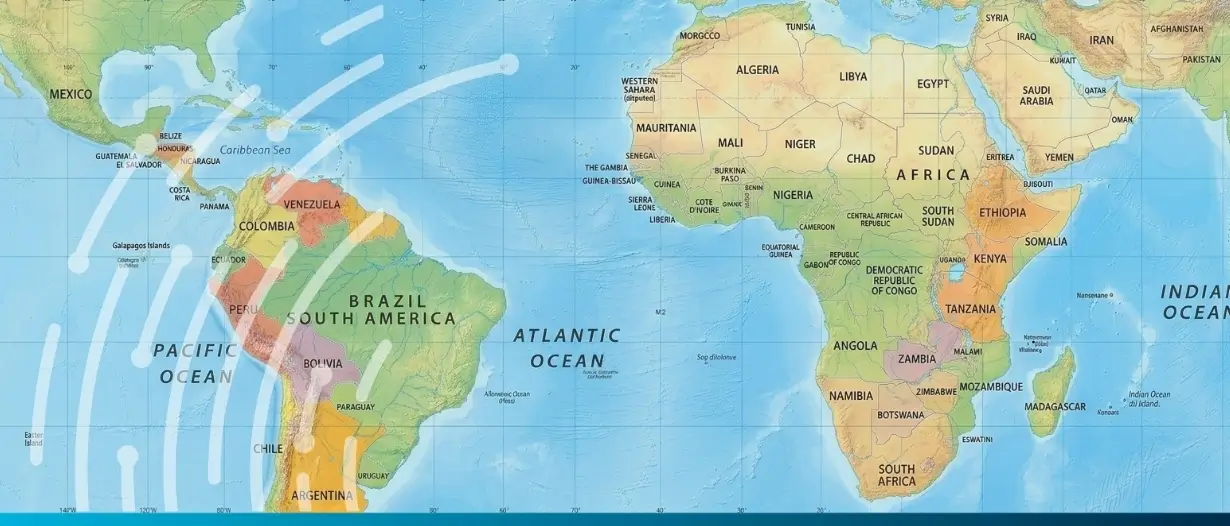
Last week, the Colombian Ministry of Trade, Industry, and Tourism held the first ‘CELAC-Africa High Level Forum’ in Bogotá. The forum was part of a broader initiative to strengthen the economic ties between the Community of Latin American and Caribbean States (CELAC) bloc and Africa, and Colombia is taking the lead.
The three-day forum ran from Wednesday, 18 March to Friday, 20 March. It brought together CELAC’s 33 member-states with delegates from 19 African nations, with the central objective of boosting South-South cooperation. Jewelry, agricultural machinery, food, beverages, construction materials, software, and digital marketing were among the sectors identified as potential areas of growth.
The forum came amid deepening trade relations between Colombia and Africa. Colombia’s non-mining exports to Africa reached $296.5 million in 2025, marking a 112% increase from 2024. The main products behind this expansion include coffee, bananas, machinery, paper, and apparel.
During the forum, Colombian Vice President Francia Márquez also announced a new trade agreement with Ghana. This would involve the creation of a maritime route between the Colombian port city Cartagena de Indias and the African port of Tema, aiming to increase bilateral trade.
Upon coming to power in 2022, the current Colombian administration was quick to establish the ‘Estrategia África 2022–2026’, looking to strengthen Colombian relations with the African continent.
Speaking at the forum, Márquez noted that there is a historic alliance between Latin America and Africa, as well as a need for solidarity. She emphasised the complementary economies of the two regions, highlighting the potential for forming new value chains and for harnessing the mineral reserves necessary for the energy transition.
“We aim for this forum to mark the beginning of a new stage: one of strategic cooperation, trade with equity, and the construction of shared opportunities,” said Diana Marcela Morales Rojas, Colombia’s Minister of Trade, Industry, and Tourism.
This new development exemplifies the growing cooperation between emerging markets. Global South-South trade more than doubled since 2007, reaching $5.6 trillion in 2023.