





Listen to this podcast on Spotify, Apple Podcasts, Podbean, YouTube, and TuneIn.
- The African Continental Free Trade Area (AfCFTA) has the potential to boost intra-African trade, but its full benefits will depend on sustained implementation and regional cooperation.
- African MSMEs need greater access to finance, digital connectivity, infrastructure and practical support to compete effectively in cross-border trade.
- Collective action and stronger governance are essential to tackling corruption and unlocking Africa’s long-term trade and economic potential.
The African Continental Free Trade Area (AfCFTA) forms a single market of over 1.4 billion people, making up the largest free trade zone in the world. Rooted in the philosophy of pan-Africanism, the AfCFTA unites the African Union member states as a means to build regional value chains and bolster the continent’s industrial development.
Pan-Africanism – both the idea and its practice – predates the birth of the nation-state and the borders it champions, promoting a shared African identity supported by free movement. Free trade serves as an essential component of this, yet intra-African trade sat at around 14.9% of all continental flows in 2023 – a strikingly low proportion when compared to its Asian and European counterparts.
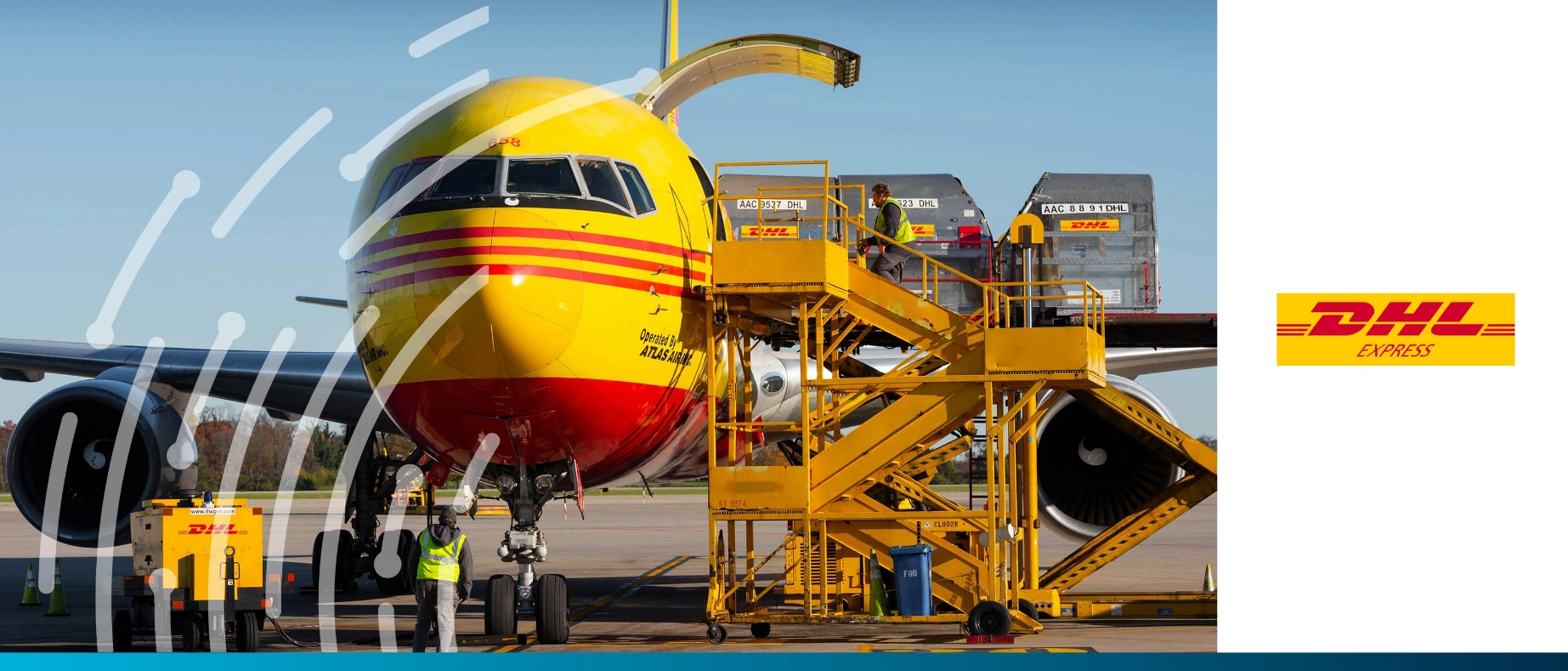
Trade Finance Global (TFG) recently spoke with Hennie Heymans, CEO of DHL Express, sub-Saharan Africa, to get his thoughts on the status of the ultra-promising AfCFTA, the global opportunities and challenges for African micro, small, and medium-sized enterprises (MSMEs), and DHL’s hand in that, as well as how Africa can begin to overcome the scourge of corruption.
DHL, as the first major international firm to set up a sweeping footprint across Sub-Saharan Africa, has a special vantage point and insider knowledge on the state of the continent’s trading environment in these interesting times.
We need patience on the AfCFTA
The AfCFTA has come a long way since its 2018 launch to now, when 54 out of 55 countries have joined the framework. Though it could lift 32 million people out of extreme poverty by 2043 and increase intra-African trade by over 50%, fundamental pillars, such as eliminating tariffs on 90% of goods, will not be a reality until 2034. Many observers feel implementation could be faster.
Heymans contended that patience is needed, highlighting how the European Union (EU) took decades to fall into place. “It took the EU 50 years to get together and kind of make this thing work,” he said.
Indeed, while a lot of nuts and bolts have to come together on a political, economic, and infrastructure level for the pact to realise its full potential, Heymans thinks it’s time to “lift the gaze” to what the AfCFTA could represent for the region, especially amid geopolitical turmoil that represents unprecedented opportunities for intra-African trade.
If anything, the agreement could be the catalyst that Africa needs to resolve its infrastructure deficit. It will “actually build that pressure from the bottom up,” he observed.
African MSMEs’ place in today’s global landscape
MSMEs make up 90% of businesses in Africa and provide up to 80% of jobs, making them an indispensable economic engine.
The current global trade environment presents both opportunities and challenges. Prevailing friction in certain parts of the world, like Europe and the Middle East, means more markets are looking to Africa as alternative trading partners.
This is evident in DHL’s September 2025 Connectedness Tracker, which showed sub-Saharan Africa leading global trade value growth with a 10% year-over-year rise and will remain the world’s second-fastest growing trade region through 2029.
Yet despite this growing international interest, many MSMEs, Heymans pointed out, struggle with the perceived complexity and lack of practical know-how regarding cross-border trade.
Furthermore, poured foreign direct investment (FDI) often sits on balance sheets or funds long-term infrastructure rather than providing immediate operational capital, while fragmented regional payment systems force firms to secure dollars and euros to trade outside their country.
The Pan-African Payment and Settlement System (PAPSS) is a great initiative seeking to iron out this issue, Heymans noted, wryly observing, “There’s nobody that wants to deal in Malawi kwacha.” He added, “Perhaps PAPSS is taking away that pain point.”
Role of e-commerce in African markets integration and the expansion of SMEs
Being online is “the cheapest entry point into the market” for African MSMEs, yet “affordable connectivity is an issue” in most cities on the continent, Heymans said.
Indeed, African internet costs are several times higher than the global median. For instance, mobile internet in Africa was 14 times more expensive than in Europe in 2024. As such, it’s incumbent on governments and telecom companies to find solutions for affordability.
In his view, however, being online is not enough. Businesses need an integrated platform, which boils down to key aspects of the business, including shipping, taxes, and a payment system, all being in one place.
For Heymans, this “gets a little bit more complicated for small and medium-sized enterprises (SMEs).”
Optimising foreign investment for African SMEs
Though Africa saw a 12% jump in foreign direct investment (FDI) in 2024, Heymans underscored that “African SMEs will not necessarily benefit from that immediately.” It’s time for investment to be channelled into better air links, roads, and digital networks.
At present, a significant portion of the final cost of goods in Africa comes down to infrastructure deficiencies, rendering small businesses “uncompetitive out of the starting gates.”
Heymans stresses that investment in information and communications technology (ICT) infrastructure needs to “go beyond megacities like Nairobi, Lagos, and Johannesburg.” It has been the norm to overlook secondary cities, yet they are often the first stop for rural migrants seeking better economic opportunities. With the right investment in their connectivity and other infrastructure priorities, they have the potential to become economic hubs.
This focus on infrastructure alone will not cut it, however. Heymans asserted, ‘We need to have political awareness and political will to want to enable SMEs to participate in economic growth.”
GoTrade for African MSMEs
DHL is looking to bridge some of these gaps through its capacity-building GoTrade program that works with partners to address “the four main challenges for SMEs: access to finance, knowledge, ICT, and logistics.”
It helps business owners get “ready to go” and “start exporting,” and also informs them about global trends, such as China removing import tariffs for African countries. This allows DHL, for example, to help companies take advantage of potential increased investment flows into Africa from investors wishing to avoid high tariffs elsewhere, as well as any capacity-building programs they offer.
Heymans believes the program could do even more if other corporations partnered with DHL, “be it around access to finance, around the knowledge pillar, or the ICT,” and invites them to join forces “as a collective to help drive this growth engine for this wonderful African continent.”
Slaying the dragon of corruption
Yet even when all boxes are ticked, Africa will never reach its full potential if it doesn’t slay the dragon of corruption.
The continent continues to rank as the most corrupt in the world, with sub-Saharan Africa cementing its position as the lowest-performing region in Transparency International’s Corruption Perceptions Index. Africa also loses up to $100 billion every year to financial crime, undermining investor confidence and even driving them away.
It’s not just governments that engage in the vice, as even businesses cut corners. Heymans wishes upholding environmental, social, and governance (ESG) standards began with governance when it comes to Africa. As he remarked, “We should talk about governance first and foremost,” adding that “it’s the oxygen that will feed sustainable economic growth.”
—
But how can fighting the rampant corruption begin? For one, “it takes two to tango,” argued Heymans, calling on “every single person living and making a living on this continent to do away with corruption.”
While it is the harder path, businesses can “actually operate in a compliant and non-corrupt manner. It’s possible,” he emphasised. “If we want to stop corruption, it is up to us as the collective.” And collective action rests at the core of the pan-African aspiration of sustainable development.