













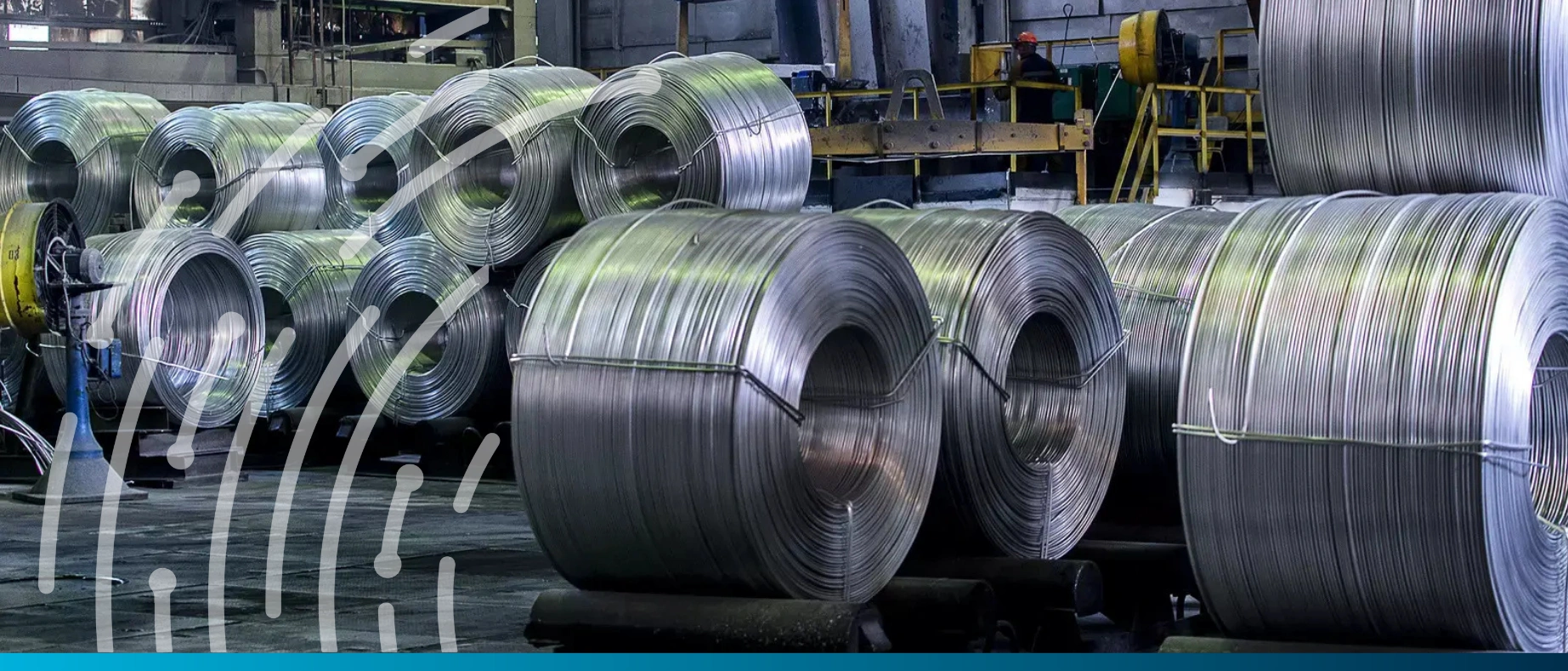

- Canada’s Thor project could transform aluminium supply chains by reducing reliance on bauxite mining and offering a more sustainable, lower-carbon production method.
- By using polymetallic black shale and Canada’s hydroelectric-powered infrastructure, the project has the potential to cut greenhouse gas emissions and minimise harmful mining by-products.
- If successful, the Thor project could strengthen North American aluminium supply and reduce dependence on China and Australia, while boosting greener production.
Aluminium is considered a critical mineral, and not for its use in kitchen foil. The metal is vital for the global transfer of goods, power transmission, and energy storage.
But its market is dependent on production from China and Australia – production which requires a notoriously energy-intensive smelting process, posing a significant challenge for the transition to net-zero aluminium production.
The search for a greener alternative, one which spreads market concentration, has resulted in a new project funded by Canadian Energy Metals (CEM), which may offer a solution and model for the future of a more sustainable approach to mining and aluminium production in North America and worldwide.
Aluminium production: Too dirty, too dependent
Globally, the overall quality of aluminium ore grades is decreasing, the need is increasing, and the push towards sustainably obtaining materials is ever growing. Traditional aluminium production relies on two primary processes: the extraction of bauxite ore and the subsequent production using coal-powered smelters.
Bauxite is found in tropical and sub-tropical regions, and is extracted by stripping the top layer of soil, using explosives when the overlying rock is too compacted, and removing the material with heavy machinery.
Australia is the largest bauxite producer, producing 110 million tonnes annually, generating over $10.5 billion in exports per year. Bauxite ore extraction is a land-intensive process, and has become one of the leading causes of deforestation in the country – the root of 62% of all deforestation in South-West Australia alone.
As in many mineral supply chains, China’s role lies in the processing and production of aluminium, dominating the market with 60% of global production and producing over 40 million tonnes in 2025 alone. While these levels of production are in response to global demand, concerns over China’s long-term approach towards sustainability have grown in recent years.
Coal-powered smelting is the predominant method of choice, emitting high quantities of greenhouse gases (GHGs). Transition Asia, a non-profit think tank, estimates that 5% of China’s overall GHG emissions stem from aluminium production, for which 70 to 80% of power generation is fuelled by coal.
In part, China’s preference for coal stems from its limited ability to harness clean energy, demonstrated in the realm of hydroelectric power: a drought in Sichuan between May 2022 and 2023 led to a 25% drop in aluminium production volumes.
This critical mineral supply chain is concentrated largely in two countries for extraction and processing, with environmental repercussions for both – and for the world. The time is ripe for an alternative.
A new approach: The Thor project
The Canadian Energy Metals (CEM) Thor project aims to position itself as a ‘‘clear path to development’’ towards higher quality, sustainably produced aluminium-ore grades.
The project is located in the western Canadian province of Saskatchewan and covers 1,111 square miles of land. The site sits on an estimated 49.5 billion tonnes of resource, including scandium, vanadium, and 6.8 billion tonnes of aluminium: approximately one third of the global known supply of aluminium.
Unlike traditional mining – with its reliance on bauxite and the environmental externalities that come with it – this project aims to excavate polymetallic black shale as its feedstock, yielding both 3N (‘three nines’, or 99.9% pure aluminium oxide) chemical grade alumina and 4N (‘four nines’, 99.99% pure) high-purity alumina.
Processing of black shale for aluminium avoids the creation of the ‘red mud’ – a highly corrosive, toxic alkaline by-product created during the process of refining bauxite into aluminium.
Additionally, Canada’s abundant use of hydroelectric dams and smelters means production processes can sidestep coal.
It’s important to note that the black shale method also has environmental implications, primarily through acid rock drainage, where rocks containing sulphur are exposed to water and air, generating sulphuric acid and degrading water quality. However, the level of harm is much lower when compared to processing bauxite.
A preliminary economic assessment (PEA) projects an annual 1.8 million tonnes of aluminium, representing roughly 2.4% of global primary output, but with potential for strong global significance. According to the Canadian Mining Journal, at $5,000 per tonne of 3N chemical grade alumina and $25,000 per tonne of 4N high-purity alumina, the project boasts an estimated internal rate of return of 72% with a $72.3 billion net value, attracting mining investment.
Can the Thor project set a precedent for the future of ‘green’ aluminium?
Supply chain dependency on imported bauxite, and the geopolitical and logistical exposure which that entails, does not need to be something which commodity markets have to live with. As countries like the US increasingly opt for nearshoring and friendshoring when it comes to raw materials, a North American aluminium hub could bring processes closer to home.
Beyond freedom from bauxite, in the environmental domain, the prospect of Canadian mining would allow the North American market to decrease GHG emissions through transport, saving on costs and supporting progress towards net-zero production.
—
In Norse mythology, Thor’s hammer both destroys and builds; the CEM Thor project carries a similar duality, posing a credible challenge to one of the most carbon-intensive and geopolitically concentrated supply chains in commodities. With the right investment, it can serve as a blueprint for economies around the world.