












- The Asian Development Bank launched a scheme to boost Asia-Pacific mineral processing and manufacturing, crucial for clean energy and defence.
- Japan, the UK, and Korean partners pledged funding to support projects and attract investment.
- The move aims to secure critical minerals supply chains across the region and reduce reliance on China.
On Sunday, 3 May, the Asian Development Bank (ADB) launched a financing facility aimed at helping Asia-Pacific (APAC) countries develop critical minerals supply chains.
The ADB facility, named the Critical Minerals-to-Manufacturing Financing Partnership, seeks to move APAC beyond mining of critical minerals and into processing, manufacturing, and recycling. The facility is split into two parts: the grant window and a catalytic finance window.
The grant window is designed to fund early project work, such as conducting feasibility studies, environmental and social assessments, and technical and information assistance. The Japanese and UK governments have committed to providing $20 million and $1.6 million to the grant window, respectively.
The catalytic finance portion will then bring in cofinancing and risk-sharing from other financiers. Korea’s Eximbank and the Korean Trade Insurance Corporation (K-SURE) are the facility’s first financing partners, each having signed a $500 million memorandum.
According to the ADB, the facility intends to meet growing demand for renewable energy and digital technologies, while also supporting economic growth and job creation for the region.
What are critical minerals?
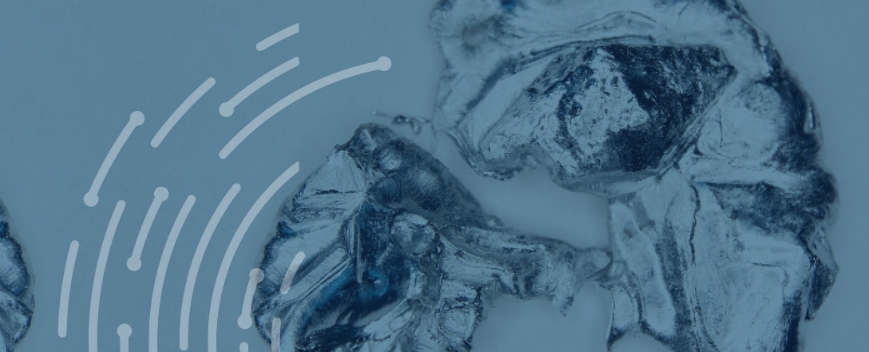
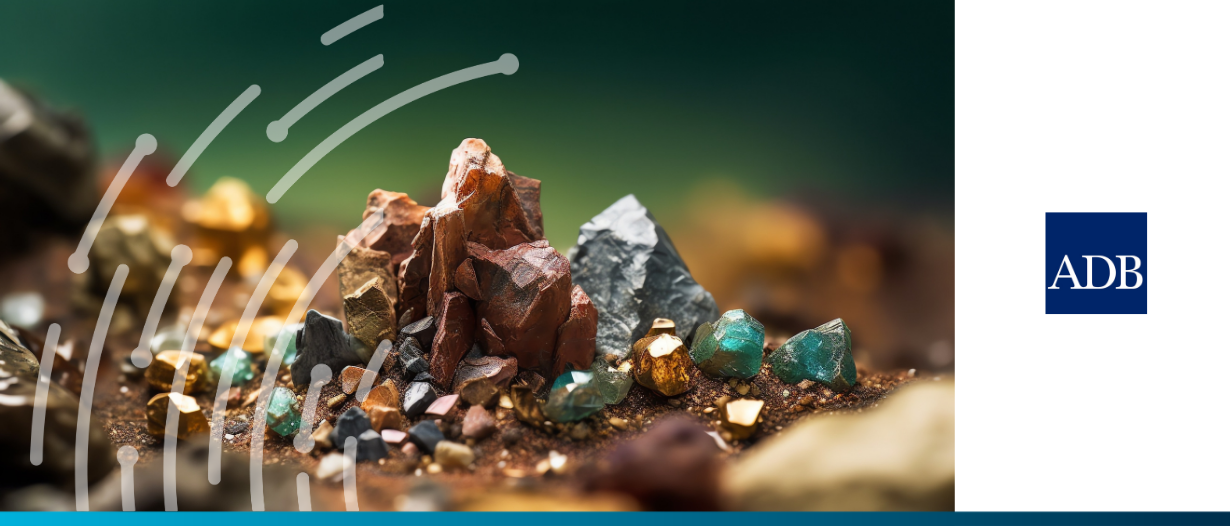
Raw minerals, naturally occurring elements and minerals in Earth, are described as ‘critical’ when they provide some strategic importance to the global supply chain. Critical minerals include lithium, cobalt, copper, and nickel and are indispensable to everyday items (batteries or wiring) and high-tech products (military technologies or clean energy) alike.
Rare earth elements are a subset of critical minerals, crucial for electric motors, wind turbines, and aircraft engines. They are notoriously expensive to extract and refine.
In 2025, APAC was home to around 56.5% of the world’s rare earth reserves, with a particular abundance in nickel, lead, zinc, and manganese. However, China controls over 85% to 90% of the global rare earth processing capacity and accounts for 91% of the refined rare earth supply.
Critical minerals in renewables and defence
Critical minerals are crucial for the energy transition. Offshore wind power generation uses over 15,000 kilograms per megawatt (kg/mg) of critical minerals; non-renewable energy sources need significantly less, such as coal, which uses less than 3,000 kg/mg.
Critical minerals are also vital for defence supply chains, as guided weapons use 18 different critical minerals, combat aircrafts 15, and naval warships 14. Growing efforts among Asian countries to bolster critical mineral supply chains signal a move towards self-sufficiency and away from China, amidst increased geopolitical instability.
Just yesterday, 4 May, Japan and Australia signed an agreement to increase their cooperation on energy and critical minerals, framing the deal as safeguarding against economic shocks and uncertainty.
Japan and the Association of Southeast Asian Nations (ASEAN) are also in talks to expand their critical minerals relations. On Friday, 2 May, Japanese Prime Minister Sanae Takaichi pledged to deepen ties with Vietnam for energy and critical minerals and encouraged other South-East Asian countries to boost their supply chains.
—
“Critical minerals will shape the next industrial era,” said ADB President Masato Kanda at the 59th annual ADB meeting, taking place in Samarkand, Uzbekistan. “Asia and the Pacific should be more than a source of raw materials. The region should also capture the jobs, technology, and value these minerals provide.”
“We will work closely with ADB to support Korean companies’ entry into resource-rich developing markets in the Asia-Pacific that lack commercial infrastructure,” said Eximbank President and CEO Hwang Ki-yeon.