













- Bangladesh’s shrimp industry, a major export earner, faces mounting pressure from the impending loss of duty-free access after its Least Developed Country status ends in 2026.
- The domestic supply chain is fragile and exploitative, with small-scale farmers trapped in debt through informal systems like ‘dadni’ and struggling against stronger regional competitors.
- Declining export volumes, weak financing, and underused processing capacity highlight the sector’s downturn, despite ongoing innovation and efforts to secure new trade agreements.
Fish is a national delicacy in Bangladesh, embedded into the fabric of Bangla society. The story of this cultural staple involves a vulnerable supply chain, despite efforts to foster stability.
After the ready-made garment (RMG) and textiles industry, frozen seafood is the next most valuable export. In 2024, the highest-value export within Bangladesh’s seafood sector was crustaceans, primarily shrimp, worth $282 million.
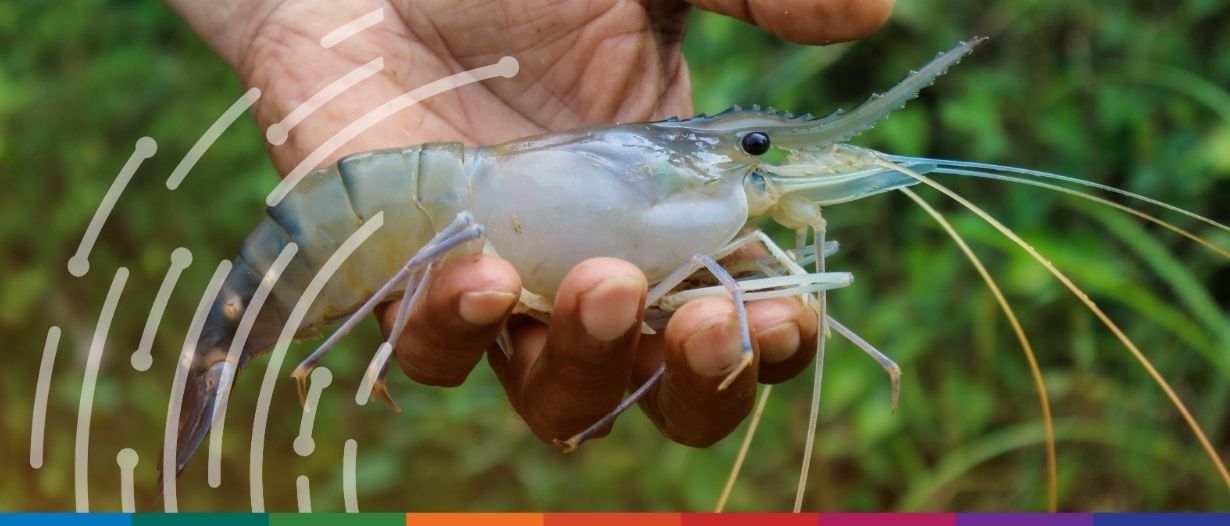
Known locally as ‘shada sona’ (white gold), shrimp accounts for around 80% of their national seafood exports, making Bangladesh relatively more competitive than the global average in this category. Its main export market is the European Union (EU), followed by Canada, China, Norway, Australia, New Zealand, and Japan.
For now, Bangladesh benefits from zero preferential tariffs because of its least developed country (LDC) status. But once it graduates in November 2026, the loss of duty-free access will place this export sector under pressure.
The domestic supply chain
The aquaculture sector in Bangladesh depends on small-scale farmers, who are vulnerable, often exploited, and tend to face significant debt.
The domestic seafood supply chain operates through a series of informal networks before reaching officially recognised depots and processing facilities.
The historical ‘dadni’ system – an advance-payment contract system – which dates back to the era of the East India Company, continues to play a significant role in the Bangladeshi seafood industry.
Financiers, known as ‘mahajans’, offer advance loans for anticipated fish catches, supposedly to assist with capital expenses. In return, fishermen are compelled to sell their catches at prices below the market rate. This arrangement creates a self-perpetuating cycle of debt for the fishing community.
As the seafood travels from hatcheries, it reaches coastal farms in the southwest, predominantly Khulna, Satkhira, and Bagherat. Yields are suffering in the region, and Bangladesh is being out-competed by its Southeast Asian neighbours, such as Vietnam. As a result of increased investment in the industry, Vietnam’s methods of shrimp production have resulted in increased output year-on-year.
Once shrimp is harvested, it reaches processing plants in the Khulna and Chattogram regions. As Bangladesh’s biggest export market, the EU has a stake in the country’s shrimp business. There are currently 59 processing facilities that have received EU approval, and it is encouraging to see licenses being issued as recently as 2025.
The EU has carried out extensive work for over three decades to improve the traceability of Bangladesh’s shrimp. In the 2000s, supply chain documentation was paper-based; in the 2010s, e-traceability technologies were adopted. Nonetheless, traceability is flawed, with masses of shrimp needing to be disposed of as a result of subpar quality.
The majority of the frozen crustaceans are sent via Chattogram Port, which is currently undergoing expansion. The Bay Terminal Marine Infrastructure Development Project will add another port, supporting larger vessels and shipping containers. In April 2025, the World Bank committed $850 million to support the project’s completion by 2030.
The ebbs and flows of trade finance
The sector’s trade finance infrastructure is built on letters of credit and government subsidies. The central bank, Bangladesh Bank, established its export development fund (EDF) in 1989 to facilitate pre-shipment financing. Until December 2026, the fund is capped at $2 billion, a substantial reduction from when it was once just over $7 billion.
There is a four-month wait for post-shipment invoices to be paid. One of the ways Bangladesh Bank is trying to mitigate this delay is by allowing exporters to use a global invoice-discounting platform.
Exporters can upload their invoices, and international financiers bid based on the buyer’s credit strength. The exporter receives most of the payment upfront, while the financier collects the full amount from the buyer later.
Domestic efforts are clear. The central bank is working to keep up some dynamism in shrimp exports to ensure the survival of millions of farmers whose livelihoods are tied to the shrimp industry. Additionally, cash incentives are given to exporters part of the Bangladesh Frozen Food Exporters Association (BFFEA) or the Bangladesh Marine Fisheries Association (BMFA), ranging from 4-8%.
In truth, shrimp exporters are struggling for liquidity. The EDF is faced with a 1.74 billion Bangladeshi taka debt ($14.5 million). The Bangladesh Frozen Foods Exporters Association (BFFEA) is pressing the government for support to pay their outstanding arrears, but grants are running slim.
Resilience in decline
Ultimately, the Bangladeshi shrimp industry’s heyday is a distant memory. Export volumes have plummeted from 55,000 metric tonnes at their peak in 2016, falling to 23,238 metric tonnes in 2024-2025.
The depression in the shrimp trade is exacerbated by processing centres only working at 7% capacity due to production constraints. Its peak performance is trailing a decade behind.
However, despite the troubling times, the innovative spirit of the industry remains. In October 2025, Rancon Sea Fishing exported 8.5 tonnes of shrimp that were frozen on board rather than at Bangladesh’s land-based factories. It was carried by five EU-certified deep-sea vessels. This shipment was received in Belgium and was celebrated as a benchmark for freshness standards and quality assurance.
—
In light of November 2026, Bangladesh is pre-empting further downturns in trade. Current negotiations with Canada, the USA, China, and Malaysia are more geared towards securing free trade agreements (FTAs) and comprehensive economic partnership agreements (CEPAs) to placate what graduation could mean for market access.
Shrimp may be a modest export, but its richness in cultural and local economic value means that, for the well-being of rural communities across the Bangladeshi coast, it must survive.
Joy Bangla.