














-
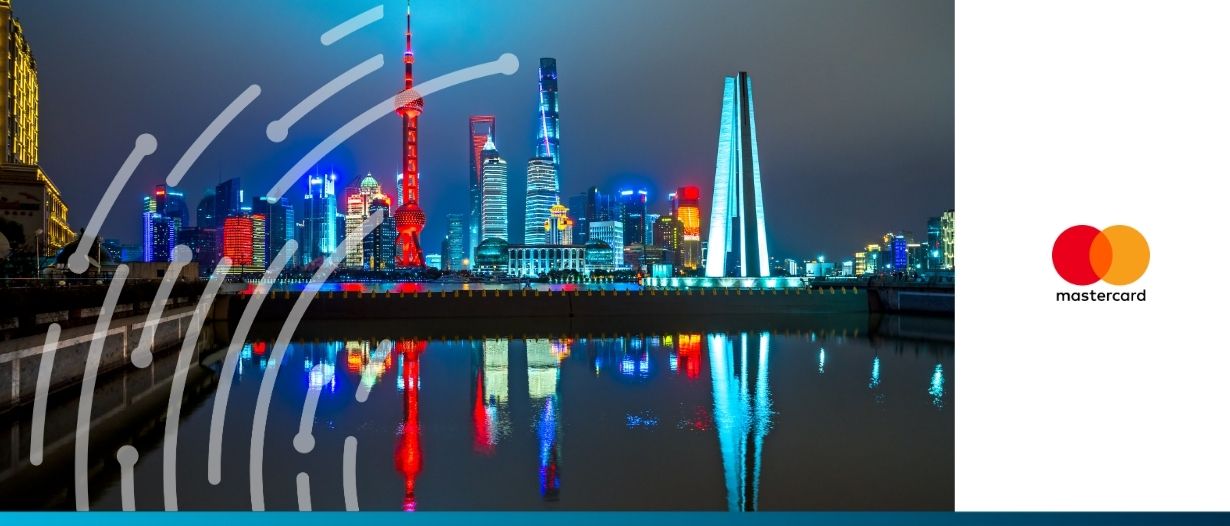
Mastercard and Bank of Shanghai have partnered to integrate the bank into Mastercard Move.
-
The integration allows international firms to pay Chinese suppliers directly into local bank accounts via domestic clearing systems such as Cross-Border Interbank Payment System, while Chinese businesses gain access to Mastercard’s network across 200+ countries.
-
The partnership aims to reduce late-payment risk and support high-volume cross-border B2B trade for Chinese SMEs.
Mastercard will be collaborating with Bank of Shanghai to enable faster cross-border payments between China and global markets, seeking to capitalise on demand from small and medium-sized enterprises (SMEs).
The deal, announced today, Thursday, 12 March, integrates Bank of Shanghai into Mastercard Move, the American card network’s money movement platform, adding bank account connectivity to its existing links with Alipay, WeChat Pay, and UnionPay in China.
“The integration with Bank of Shanghai builds on this foundation by adding direct delivery into local bank accounts – an essential capability for SME trade payments and a critical step in strengthening cross‑border money movement into one of the world’s most important markets,” Pratik Khowala, Global Head of Transfer Solutions at Mastercard, told Trade Finance Global (TFG).
International companies will now be able to pay Chinese suppliers directly into local bank accounts using domestic clearing infrastructure, including the Cross-Border Interbank Payment System; while Chinese exporters and individuals will gain access to Mastercard’s network spanning more than 200 countries.
In spite of US tariffs, China’s exports surged by 21.8% in January-February 2026, and are valued at over $3 trillion annually. Businesses of all sizes seek frictionless cross-border supplier payments.
“Integrating China’s bank account network into Mastercard Move is fundamentally about enabling cross‑border trade,” Khowala explained. “It becomes faster and easier for global businesses to buy from and pay Chinese SMEs, while Chinese SMEs can send payments to suppliers across major global markets with greater predictability and transparency.”
SMEs make up an approximated 93.6% (2021) of Chinese exporting businesses, but their late payment has been a persistent problem that Beijing has been trying to address. In March last year, for instance, a law was passed requiring SMEs to be paid within 60 days of the delivery of cargo, projects, or services.
The new integration with Mastercard Move should mitigate late payment risk, particularly for SMEs in manufacturing, export trade, e‑commerce, logistics and professional services – “sectors that rely heavily on frequent, high‑volume cross‑border business-to-business (B2B) payments,” Khowala said.
“These companies require speed, transparency, predictable settlement and simpler workflows to maintain supply chain continuity and manage cash flow effectively.”
Bank of Shanghai, a mid-sized commercial lender headquartered in Shanghai, said the deal would help domestic companies join global supply chains. Yu Minhua, the bank’s deputy president, described it as supporting “China’s deeper integration with the global economy.”
The Bank of Shanghai partnership is part of a recent push from Mastercard to expand its regional market presence. Yesterday, it introduced the Global Commerce Suite, “giving SMEs in Asia Pacific the ability to collect, hold, convert, and pay globally through a single platform,” said Khowala.