













-
Despite strong female representation in trade finance overall, women remain significantly underrepresented in senior leadership and revenue-generating roles, highlighting ongoing systemic barriers in the industry.
-
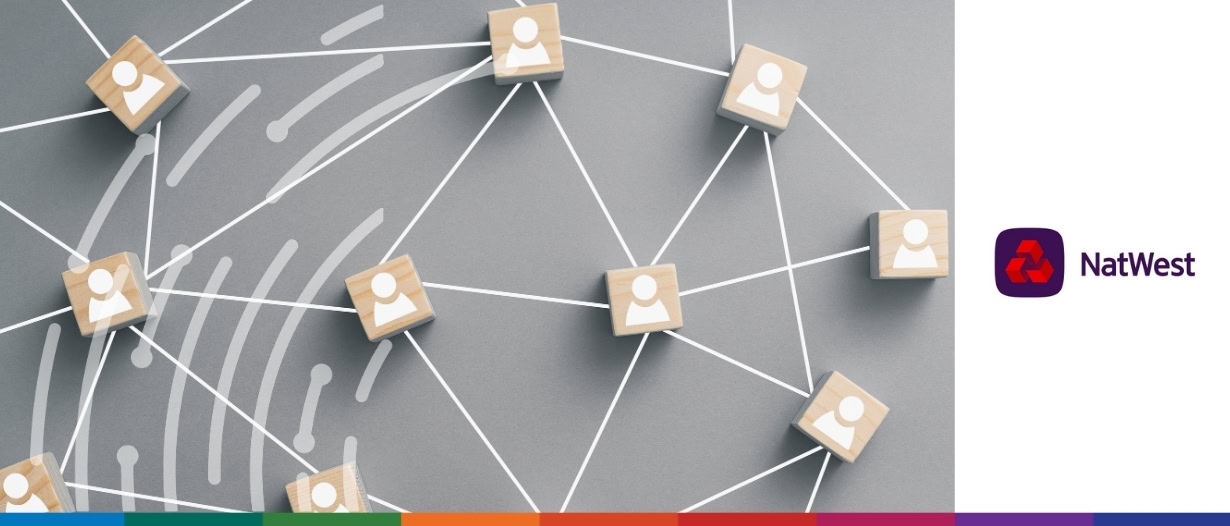
Inclusive networks and employee-led communities play a crucial role in fostering belonging, encouraging open conversations, and driving meaningful cultural change within financial organisations.
-
True progress in inclusion requires active allyship, mentorship, and sponsorship, ensuring that diverse talent is not only supported but also given tangible opportunities to advance.
The challenge in front of us
Women are well represented in trade finance overall, but are still underrepresented in strategic leadership and revenue-generating client roles. An alarming report published in 2024 by S&P Global revealed that the number of women in C-Suite positions actually fell, from 12.2% to 11.8% in the prior year, marking the first instance of negative growth in two decades.
Men are 2.5 times more likely than women to be executives in the surveyed 100 top leadership teams; they are 10.2 times more likely to be CEO.
Qualitative data across the industry also reinforces that while many organisations feel they have adequate gender diversity, systemic barriers still exist, and our industry is behind the curve of other areas of banking in attracting diverse talent and the next generation.
What this demonstrates is that policies, frameworks and targets are not enough when it comes to ensuring people feel included in trade finance, and there’s more to be done.
Why networks matter
When I stepped into the role of Global Co‑Chair of the NatWest Gender Network – now more than 8,000 members strong – in 2023, I gained an even broader perspective on how essential communities are to driving inclusivity. Employee-led networks are exactly as they sound – groups of employees at all levels in an organisation connected by a particular interest or, more commonly, a pillar of diversity.
These networks raise awareness of issues and challenges and spark conversations that might otherwise never be had in a psychologically safe way, making it easier for colleagues to speak about the barriers that still exist and to deepen the understanding of those who don’t face the same. In this way, they are a true celebration of diversity, equity, and inclusion (DEI) in practice, and they drive meaningful culture change in organisations.
But beyond their strategic value, networks do something more human: they provide belonging.
Belonging matters in trade finance, a sector where many women continue to navigate spaces in which they are the ‘first’, the ‘only’, or the ‘youngest’ in the room. These networks create a space, not just to connect, but to unmask – to acknowledge challenges, celebrate milestones, and be reminded that ambition does not need to come at the cost of wellbeing. It doesn’t take much resource to create a space like this; it only requires will.
Hera: A case study on community built on courage and conversation
Co‑founding Hera with my long‑time friend and fractional GC, Natalie Salunke, was born out of a simple need: a safe, honest space for women who work in the legal profession. A space where vulnerability is not just welcomed, it’s celebrated.
It started three years ago with what was meant as a standalone event for one woman to share her story of how she had been mistreated within a fintech in a bid to raise awareness and support others who may have faced similar challenges.
When, at the end of the open conversation, the guests asked when the next one was, we knew this was deeply needed. It now has 130 members in the LinkedIn group and it has grown organically, without hard sell or targets.
We now meet four to five times a year in intimate events with c. 30 women, passing the metaphorical torch as one woman shares her story. Time and again it proves something I now firmly believe: women supporting women isn’t a slogan; it’s a strategy.
However, whilst gender specific spaces can generate powerful connections and conversations, without allyship, it’s just an echo chamber.
Allyship as a key to unlocking inclusion
The word ally comes from the Latin verb alligare, meaning ‘to bind to’ or ‘tie together’. Allyship connects us at a human level, it brings people together through values of kindness and fairness and is grounded in the foundations of awareness, action and accountability. Allyship not only demonstrates care but also brings unique and different perspectives to the table. Diversity of thought drives innovation, a requirement in this industry given the rise of digital platforms, tech solutions, artificial intelligence (AI), and digital assets.
There are many ways to be an active ally, from speaking up and advocating for another, connecting a colleague to an opportunity or simply listening to deepen your own understanding.
Mentoring, coaching, and sponsorship
One of the greatest privileges in my career is supporting students, colleagues, and business owners from underrepresented backgrounds through coaching and mentoring. An important distinction to make is that mentoring is advisory, whereas coaching is non-directive; it’s about asking powerful questions to help someone unlock their own solutions and can drive truly sustainable behaviour change.
Mentorship offers perspective, encouragement, challenge, and visibility. It can provide a guiding light, nudge individuals out of their comfort zone, and connect them to networks they didn’t realise were accessible.
Mentorship need not follow a traditional, hierarchical model. Peer mentoring, reverse mentoring, and community‑based mentoring are equally valuable. Some organisations have formal mentoring programmes, but some of the best mentoring relationships start informally and grow organically. At NatWest, some of the most impactful mentoring happens over virtual coffees, internal community events, or through our coach‑led leadership programmes.
But how can this move beyond conversations, and go against the trend of women being over-mentored and undersponsored?
Opening doors through sponsorship
Unlike mentoring, which focuses on giving guidance, sponsorship involves taking real action: putting a person forward for high‑profile assignments, opening doors to opportunities, and championing them in rooms they’re not in. Because the sponsor’s own reputation is on the line, sponsorship must be intentional, visible, and often decisive in helping talented people progress in complex organisations.
Whilst you can find formal sponsorship programmes, due to the risk involved, sponsorship usually evolves from an existing relationship. It tends to be rooted in a deep understanding of an individual’s goals and, importantly, the barriers in front of them, so that the sponsor can help remove or steer around them.
—
As an industry, we are making progress. The digitisation of trade, regulatory innovation, and the future of legal services offer new opportunities for diverse thinkers and inclusive leadership. But our momentum depends on more than tools and technology.
As an industry that is at its core about people, it requires us to put our humanity firmly in the loop, changing processes for the betterment of society and not just the industry.
This requires us to…
- Show up for one another.
- Ask better questions.
- Create environments where people from underrepresented backgrounds feel both safe and stretched.
- Build networks that don’t just exist – but thrive.
Inclusion isn’t a project, it’s a practice. And allyship is integral to creating a more inclusive, innovative and impactful industry.