








Turkmenistan’s crypto gambit: Central Asia’s newest digital asset regime
- Turkmenistan has introduced a comprehensive, highly centralised crypto regime from January 2026, placing all digital asset activity under a single law and the direct supervision of the Central Bank.
- Cryptocurrencies are treated strictly as civil property rather than legal tender, with tightly controlled licensing, advertising restrictions, and strong state oversight of mining, exchanges and service providers.
- Compared with Kazakhstan’s dual-track model and the more fragmented UK and US approaches, Turkmenistan’s framework prioritises administrative clarity and state control over flexibility or market-led experimentation.
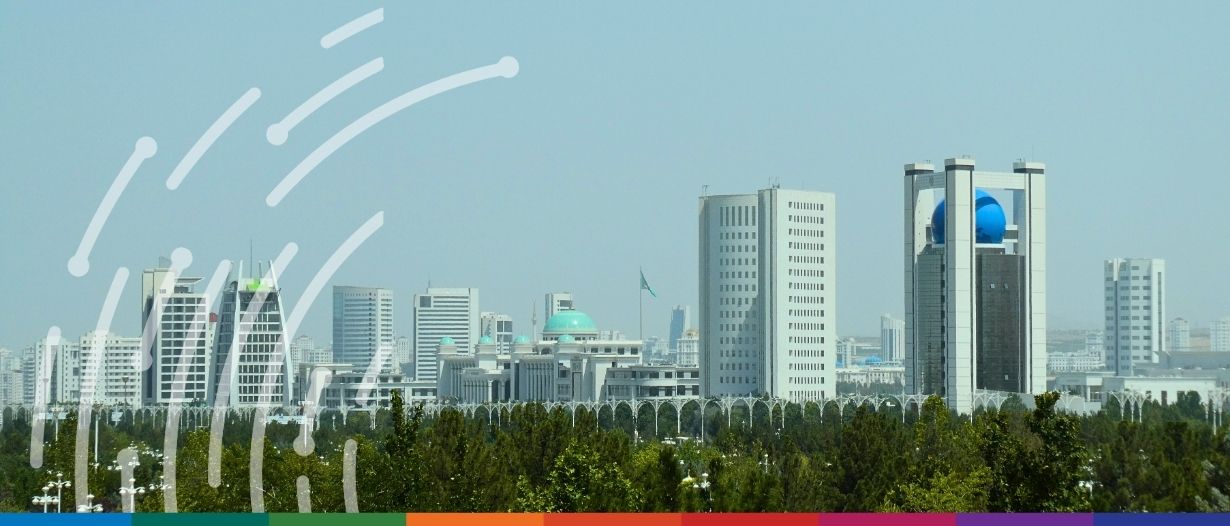
On the first day of 2026, while most of the financial world was easing back into work mode, Turkmenistan enacted one of the region’s most comprehensive cryptocurrency frameworks. The Law on Virtual Assets, signed by President Serdar Berdimuhamedov in late November, marks a significant policy development from Ashgabat that caught many observers off guard.
For those tracking regulatory frameworks and emerging market developments in trade finance, Turkmenistan’s move is worth paying attention to. Not necessarily because of immediate market opportunities, but because of what it signals about how Central Asia is approaching digital assets, and what that might mean for the broader regulatory landscape.
A framework built for centralised oversight
What stands out about Turkmenistan’s approach is its institutional clarity. Where other countries are juggling multiple regulators and overlapping jurisdictions, Ashgabat has gone for simplicity: one law, one regulator, clearly defined parameters. There’s something almost refreshing about that, even if it raises other questions.
Turkmenistan’s legal framework for digital assets establishes a ‘property without power’ dynamic, treating cryptocurrencies strictly as objects of civil law rather than legal tender. This critical distinction means that while virtual assets are ownable, transferable, and taxable, they are stripped of monetary authority. They cannot replace the Turkmenistani manat, settle legal obligations, or be used for everyday transactions like buying bread.
To maintain this bounded legal space, the legislation implements a rigorous licensing architecture, overseen by the Central Bank of Turkmenistan. Both individual and corporate mining operations require mandatory electronic registration and must meet strict criteria, including verified equipment ownership, valid wallets, and compliance with fire and technical safety standards.
While certificates are issued indefinitely, the law explicitly criminalizes ‘hidden’ or unauthorised mining, where computing power is hijacked without permission. Virtual asset service providers and exchanges function as state-supervised gatekeepers, mandated to enforce know our customer (KYC) and anti-money laundering (AML) protocols.
This state control extends to a ‘linguistic firewall’ that prohibits crypto entities from using terms like ‘state,’ ‘Turkmenistan,’ or ‘national’ in their branding, a move designed to protect symbolic sovereignty and prevent any false implication of government backing.
Advertising is also heavily regulated, requiring clear disclosures regarding the unbacked nature of assets and the potential for total loss. The involvement of minors and the portrayal of trading as a guaranteed path to wealth are strictly prohibited.
Ultimately, the message is straightforward: the crypto economy is permitted to exist, but only within the precise boundaries drawn and enforced by the Central Bank of Turkmenistan.
The Kazakh comparison: Neighbours with different blueprints
Any discussion of Turkmenistan’s crypto framework naturally invites comparison with Kazakhstan next door. Both countries have legalised mining and exchange activity, but they’ve built very different regulatory architectures to manage it.
Kazakhstan has taken what you might call a dual-track approach. Mining is legal nationwide under license from the Ministry of Digital Development, which makes sense given Kazakhstan’s energy resources and cool climate; ideal for crypto mining operations. But exchanges? Those have to operate through the Astana International Financial Centre, which runs under English common law principles and maintains its own regulatory authority.
So you’ve got this geographic and jurisdictional split: miners can set up shop anywhere in the country, but if you want to run an exchange, you’re heading to Astana.
Turkmenistan has gone the other direction entirely. Everything sits under the Central Bank. No special economic zones, no regulatory carve-outs, no jurisdictional gymnastics. The whole digital asset sector answers to a single supervisor with nationwide authority.
The Kazakh model reflects a governance approach that compartmentalises digital asset activity: a regulatory sandbox that can experiment with international standards without disrupting domestic financial controls. It’s clever, in a way, as you get the benefits of international alignment while maintaining separation from your broader financial system.
However, Turkmenistan’s approach is more integrated, which means it’s both simpler and more restrictive. There’s clarity in having one set of rules and one licensing authority. But there’s also less room to maneuver, less flexibility for experimentation.
For firms actually looking at Central Asian market entry, the choice is instructive. Kazakhstan offers an internationally aligned environment within the Astana International Financial Centre (AIFC), though you’ll need to concentrate operations geographically. Turkmenistan provides administrative clarity through centralised licensing, but you’re playing entirely by the Central Bank’s rules. Different value propositions for different strategic priorities.
Looking West: How the UK and the US stack up
The contrast with Western markets becomes even sharper when you look across the Atlantic and the Channel.
In the UK, crypto regulation is being woven into the Financial Services and Markets Act 2023, which basically folds digital assets into existing financial services law. The Financial Conduct Authority is building out a comprehensive authorisation regime covering exchanges, custodians, brokers, intermediaries; the whole ecosystem, but full implementation won’t arrive until October 2027. That’s still a year and a half away.
In the meantime, firms have to navigate an interim financial promotions regime introduced in 2023, complete with advertising restrictions and mandatory risk disclosures. That being said, Britain’s strategy is methodical and comprehensive, almost to a fault. It’s not building something new from scratch; it’s retrofitting crypto into decades of financial services precedent designed for traditional assets. That takes time.
The upside is institutional continuity and robust consumer protection. The downside? Speed isn’t exactly the UK’s strong suit here.
The US presents a different kind of challenge altogether. Oversight is distributed between the Securities and Exchange Commission and the Commodity Futures Trading Commission. Jurisdiction hinges on whether a digital asset qualifies as a security or a commodity; a question that’s still being litigated in courtrooms coast to coast. It’s a bit like watching two regulatory bodies play tug-of-war, while market participants try to figure out which side of the rope they’re supposed to stand on.
The GENIUS Act, signed in July 2025, did establish a federal framework for stablecoins with reserve and redemption requirements, which is progress. But broader crypto regulation continues to evolve through agency rulemaking, enforcement actions, congressional processes, and judicial decisions. The result is what you might generously call distributed oversight, or what critics might call regulatory fragmentation. Certainty emerges case by case, settlement by settlement, court decision by court decision.
For exchanges, issuers, and institutional players, this creates an environment where regulatory outcomes remain subject to ongoing legal development, even as US crypto markets remain the deepest and most liquid in the world. There’s a certain irony there: the most mature crypto markets operating under some of the least settled regulatory conditions.
Regulatory strategy in a digital age
What makes Turkmenistan’s approach genuinely notable isn’t market size or investor appeal – it’s the structural clarity. While the UK is carefully integrating crypto into decades of financial precedent and the US is coordinating across multiple agencies, Turkmenistan has simply laid down a straightforward framework: digital assets require prior authorisation, and one institution manages the entire process.
This is regulatory strategy as an expression of governance priorities. By establishing a licensing regime under central bank control and explicitly denying legal tender status to cryptocurrencies, Turkmenistan has carved out defined space for crypto activity, while maintaining full state authority over monetary policy.
For other state-directed economies watching this space, it provides a case study in centralised oversight that doesn’t require creating special jurisdictions or navigating multi-agency coordination.
Kazakhstan’s dual-track model offers a different reference point, one that compartmentalises crypto within a specialised jurisdiction to maintain institutional separation. There are arguments for both approaches. Turkmenistan’s fully integrated model may prove more applicable for governments that prefer unified regulatory structures and aren’t inclined to delegate authority to autonomous financial zones.
Turkmenistan also recently launched a new phase of digital transformation, intended to be implemented through 2028. The strategy encompasses the adoption of artificial intelligence (AI) at scale, as well as the further expansion of cloud technologies, fintech solutions, and e-government services.
This push for digital transformation is driven both by state-led initiatives, including the new city of Arkadag, which is a futuristic smart city, inaugurated in 2023, and by wider economic imperatives. Turkmenistan’s need to diversify beyond natural gas exports and reduce reliance on external pipeline routes plays a particularly important role. At present, China accounts for roughly 80–90% of Turkmen gas exports, while alternative export routes and pipelines have been slower to materialize.
Digital transformation offers a strategic workaround: monetising surplus natural gas through a more robust domestic power infrastructure. Given that Turkmenistan’s electricity generation is almost entirely powered by natural gas-fired thermal plants, this opens the door to ‘virtual exports’ via computational and data-processing capacity. In effect, it allows Turkmenistan to bypass traditional pipeline geopolitics, while maintaining full state sovereignty over its digital and industrial infrastructure.
What this means for trade finance
For trade finance professionals, Turkmenistan’s law on digital assets matters less for immediate market access (licensing procedures are still being clarified, and detailed operational requirements haven’t been fully disclosed), than for what it reveals about broader regulatory development patterns.
Governments across very different economic systems are defining legal parameters for digital assets, rather than simply prohibiting them. And some are establishing these frameworks considerably faster than major Western financial centres.
Regulatory clarity increasingly influences where crypto activity concentrates. Jurisdictions that establish predictable frameworks, even restrictive ones, can attract activity away from markets where regulatory structures remain uncertain or contested.
Will Turkmenistan become a crypto hub? Ultimately, the answer lies in how events unfold over time. But its unified regulatory approach does offer something that’s in surprisingly short supply globally: administrative clarity.
The broader observation here is that digital assets have become objects of regulatory strategy across economies with fundamentally different governance models, financial market structures, and geopolitical positions.
Turkmenistan’s entry into regulated digital asset space represents an approach characterised by centralised oversight, clearly defined legal boundaries, and the integration of crypto activity within state-supervised financial infrastructure.
Whether this model attracts sustained international participation remains an open question. Implementation matters enormously, and transparency around licensing will be crucial. But the framework itself demonstrates that even countries operating with highly centralised governance models are finding ways to accommodate digital assets within their regulatory perimeters, rather than exclude them entirely.
That’s the real story here. Not that Turkmenistan is revolutionising crypto regulation, but that the conversation about digital assets has moved beyond whether to regulate them and how best to do so. That conversation is happening in more places, and producing more varied answers, than many anticipated even a year ago.