













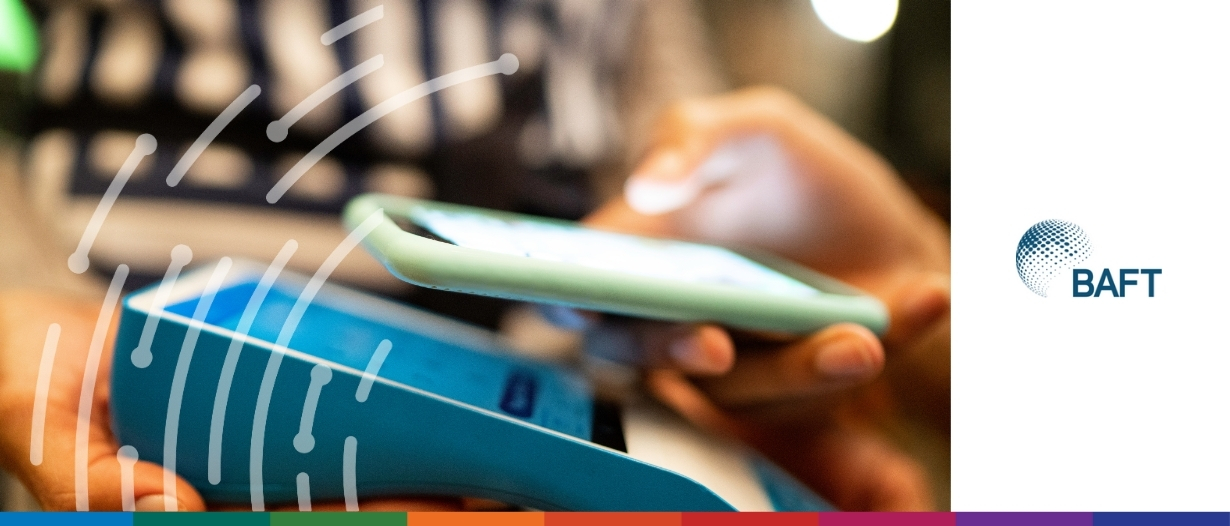

- Instant payments are transforming transaction banking by compressing settlement cycles.
- Banks face mounting pressures to overhaul liquidity management, shift to 24/7 continuous settlement, and balance seamless payments with safeguards against fraud and bank runs.
- Stricter regulation, real-time FX risk and rising fraud threats mean more is demanded within instant payments demand advanced technology.
Instant payments are being hailed far and wide as the new frontier in transaction banking, making transaction fees and processing times as much a relic of the past as travellers’ cheques and bank tellers.
However, things are not quite so frictionless as they seem behind the scenes, with banks having to grapple with the risks associated with instant payments – from fraud to bank runs – while adapting to a brand new settlement regime and evolving regulatory standards.
A new whitepaper by BAFT (Bankers Association for Finance and Trade) explores the key issues faced by banks in the era of instant payments and what they can do to adapt while still keeping up with the markets.
The death of factoring?
With ever-higher transaction limits for instant payments, payments between businesses are becoming as real-time as those between retail consumers. Besides the effect on companies’ cash flows, this could spell trouble for the invoice factoring industry, a $4 trillion sector that relies on payment lags to give businesses cash at a discount.
Instant payments are going to compress settlement cycles, which will improve liquidity for corporates, but also reduce the traditional demand for invoice financing and factoring. Historically, invoice financing firms would fill the gap between invoice issuance and payment receipt by buying invoices at a discount before they were due, providing liquidity for firms that would have otherwise had to wait far longer to get paid by suppliers.
With 24-hour real-time settlement, however, the gap between payment and receipt is going to shrink substantially.
Liquidity management overhaul
This is better for corporates that are issuing invoices, who will be able to get paid immediately or wait until the very last minute when an invoice is due and still be sure the money gets there on time. For most businesses, this means completely overhauling their cash flow forecasting models and preparing for much faster changes in levels of liquidity.
From banks’ perspective, instant payments will fundamentally change forecasting and settlement needs. In the past, banks could take deposits, lend money, and keep a 10% fractional reserve to be in compliance with regulations.
Institutions used to be able to rely on slight delays built into the system – like paper cheques or friends waiting to see each other next to settle a bill in cash – to ensure they had as much liquidity as was needed. Now, as instant payments become more common and orders of magnitude larger, liquidity management pressures for banks are rising too.
Race to adapt
To respond to these pressures, banks will need to change a range of aspects in their operation, finds the whitepaper. The most important change will involve banks shifting from end-of-day batch reconciliation – which instant payments have rendered obsolete – to a continuous settlement model. Banks will need to monitor and fund their positions continuously and across time zones, including after business hours, which is likely to culminate in a 24/7, 365 days a year model.
In the distant past of wire transfers, banks could cover the occasional multi-million dollar wire by buying money from another bank. Now, continuous pressures brought by instant payments will mean that banks need to keep enough money in their own reserves to cover large transfers, as well as relying on always-operating intraday credit lines and central bank liquidity bridges.
In the worst-case scenarios, though, even this won’t be enough. Circuit breaker mechanisms and transaction caps will still be necessary to prevent liquidity leakages and fraud. This can mean foregoing an absolutely seamless experience in favour of security, for example, by double-checking the largest transactions with the recipient banks, even if that means slightly delaying the payment.
Raising the regulation bar
As banks are asking themselves how to cope with worst-case scenarios, so are regulators. Instant payments will almost certainly bring higher capital requirements with them as regulators try to protect markets from liquidity crunches through stricter oversight.
Despite regulators and governments being the ones pushing the hardest for instant payments, the attached strings – stringent oversight, higher reserve requirements, and enhanced stress testing – are making life harder for banks. This comes on top of the challenges faced by institutions scrambling to adapt their processes to comply with ever-nearing instant payment deadlines.
By raising reserve requirements and forcing banks to tie up capital in non-interest-bearing bank accounts, regulators are removing many of the benefits of the new technology. This isn’t intended to penalise banks, however, but to ensure financial stability under the continuous settlement model demanded by instant payment regimes.
Currency currents
Cross-border instant payments also introduce FX volatility and timing mismatches to a level that has never been seen before.
Most corporates have a spread agreement with their banks to protect them against short-term currency volatility. On their part, banks use hedges and foreign exchange contracts to lock in exchange rates at settlement to minimise their conversion exposure, especially when they offer multi-currency payment systems.
Now that payments occur and are settled in real time, banks are starting to use real-time micro-hedging tools, providing banks with automated pre-trade FX risk modelling before an instant transfer is executed. On the collaboration side, liquidity bridges between jurisdictions – which are increasingly being mandated by central banks anyway – can help ease the strain on foreign exchange liquidity.
Vanishing money: The risk of instant fraud
A major concern around instant payments remains the risk of fraud and financial crime. This risk is borne disproportionately by the most vulnerable, such as the elderly or those with a lack of financial literacy. Instant payments mean funds can be transferred instantaneously, giving victims no time to think, and funds take weeks to be recovered, if they are at all.
AI tools can help banks protect customers – and themselves – against this. For example, network linkages can detect social engineering fraud, like that occurring when a business email has been compromised. AI can also detect unusual behaviour by customers, even when this would not otherwise raise red flags or surpass a legal limit.
From a sanctions perspective, banks can enable automated compliance and sanctions databases which enact real-time checks on a transaction without delaying the settlements. Overall, instant payments are driving a shift from static rules-based detection to adaptive real-time risk intelligence, in fraud detection as much as liquidity management.
Seeing the gaps
It’s not just fraud that leaves the most vulnerable most exposed. An increasing reliance on instant payments and on online banking as a whole, can contribute to structural inequality and widen financing gaps. Infrastructure inequality, for example, is a key challenge for banks hoping to implement instant payments across their regions.
However, an awareness of these challenges and their workarounds can help banks overcome them. Uneven telecommunications coverage, like that seen in Myanmar or Nepal, can be solved by using “lite” instant payments that operate on low-bandwidth mobile networks, which are far more affordable and commonplace in those regions.
Extending response times and enacting fallback mechanisms for real-time alerts and notifications can also help accommodate areas with weaker connectivity without excluding them from the instant payments revolution.
On a broader level, investing in digital infrastructure and literacy programs can help bridge the gap for future generations, too. Financial literacy for both individuals and businesses can help spread awareness of the potential of instant payments and how to use them safely, improving interoperability across regions with an otherwise fragmented banking system.
—
Like them or hate them, instant payments are here to stay. To take advantage of the development’s full potential, banks must stay ahead of the curve, proactively implementing changes and adapting to the new challenges brought by instant payments.