• Trade

        Do you want to know how access to trade finance can increase your cross-border imports and exports? Explore our Trade Finance hub for practical tools.

        Treasury

        Are you a treasury or operations manager looking to mitigate the risks and efficiently manage your business’ cash flow? If so, check out our Treasury Management hub.

        Payments

        Whether you want updates from infrastructure support to cross-border transactions or clearing house operations to processing techniques, you can find all on our Payments hub.

        Letters of credit

        Ready to to increase your imports / exports to guarantee the payment and delivery of goods? Find out more about LCs here.

        Shipping & logistics

        Whether you’re transporting goods, or learning about supply chains, warehousing, transportation and packaging, we’ve got you covered.

        Incoterms

        Need to know which International Commerce Term is right for your needs? Explore our curated guides from shipping expert Bob Ronai.

        Sustainability

        Prioritising sustainable supply chains? Building inclusive trade? Working towards the UN’s 2030 SDGs? Read the latest on global sustainable standards vs green-washing here.

        Customs

        Heading into international markets? From the correct documentation to standardisation, here’s what you need to know for a streamlined customs clearance process.

        TradeTech

        TradeTech is rapidly evolving to help reduce some of the biggest challenges when it comes to trade. Keep up with these innovations here.

      • News

        News

        The latest in Trade, Treasury & Payments - stay up to date on all the changes across the globe.

        Magazines

        The issues feature experts across the industry on the latest developments with specific themed and regional editions.

        Articles

        Insights by the industry, for the industry. These include thought leadership pieces, interview write ups and Q&As.

        Guides

        Working closely with industry experts and trade practitioners we provide inclusive educational guides to improve your technical knowledge and expertise in global trade.

        Research & data

        We undertake qualitative and quantitative research across various verticals in trade, as well as create reports with industry association partners to provide in-depth analysis.

        Trade finance talks

        Subscribe to our market-leading updates on trade, treasury & payments. Join the TFG community of 160k+ monthly readers for unrivalled access in your inbox.

      • Media

        Podcasts

        Welcome to Trade Finance Talks! On our series we hear from global experts in trade, treasury & payments.

        Shorts

        Enjoy our bite-sized video content for insights on-the-go with our short VoxPop & summary series.

        Webinars

        Experience the true nature of the TFG community through panel discussions on the latest developments - engage with questions.

        Videos

        Join us as we interview leaders in international trade, treasury, payments and more! Watch and learn.

      • Events

        Partner conferences

        We partner with industry conferences around the world to ensure that you don’t miss out on any event; in person or online, add to your calendar now.

        Women in trade, treasury & payments

        Get involved in our most important campaign of the year, celebrating the achievements of women in our industry and promoting gender equity and equality.

        TFG Geneva 2026

        Following the success of our inaugural Geneva conference in 2025, Trade Finance Global is proud to announce the continuation of our Commodity Trade Finance series: TFG Geneva, taking place on 5 November 2026!

        TFG Trade Finance Forum 2025

        Trade Finance Global (TFG) is excited to bring you the TFG Trade Finance Forum 2025, which will take place in London on 9 December 2025!

        TFG Singapore

        Trade Finance Global is excited to announce the launch of the latest event in the TFG Commodity Finance series: TFG Singapore, which will take place in May 2026!

        Awards

        Our excellence awards in trade, treasury, and payments are like no other. You can't sponsor them, and they're independently judged. They are the most sought-after industry accolades.

        Online Events

        Join our virtual webinars and community events. Catch up on-demand, right here on TFG.

    • Editions
      • Trade finance

        Trade finance is a tool that can be used to unlock capital from a company’s existing stock, receivables, or purchase orders. Explore our hub for more.

        Invoice finance

        A common form of business finance where funds are advanced against unpaid invoices prior to customer payment

        Supply chain finance

        Also known as SCF, this is a cash flow solution which helps businesses free up working capital trapped in global supply chains.

        Bills of lading

        BoL, BL or B/L, is a legal document that provides multiple functions to make shipping more secure.

        Letters of credit

        A payment instrument where the issuing bank guarantees payment to the seller on behalf of the buyer, provided the seller meets the specified terms and conditions.

        Stock finance

        The release of working capital from stock, through lenders purchasing stock from a seller on behalf of the buyer.

        Factoring

        This allows a business to grow and unlock cash that is tied up in future income

        Receivables finance

        A tool that businesses can use to free up working capital which is tied up in unpaid invoices.

        Purchase order finance

        This is commonly used for trading businesses that buy and sell; having suppliers and end buyers

      • Informing today's market

        Financing tomorrow's trade

        Soft commodities trader

        Due to increased sales, a soft commodity trader required a receivables purchase facility for one of their large customers - purchased from Africa and sold to the US.

        Metals trader

        Purchasing commodities from Africa, the US, and Europe and selling to Europe, a metals trader required a receivables finance facility for a book of their receivables/customers.

        Energy trading group

        An energy group, selling mainly into Europe, desired a receivables purchase facility to discount names, where they had increased sales and concentration.

        Clothing company

        Rather than waiting 90 days until payment was made, the company wanted to pay suppliers on the day that the title to goods transferred to them, meaning it could expand its range of suppliers and receive supplier discounts.

        Get Trade Finance

        Informing Today’s Market, Financing tomorrow’s Trade.

    • Search
    • Get trade finance
  • About us
  • Talk to us
  • News & insights

Home / A complete guide to the Incoterms® 2020 rules (International Commerce Terms) / Ensuring Incoterms compliance: a comprehensive guide [UPDATED 2026]

Ensuring Incoterms compliance: a comprehensive guide [UPDATED 2026]

Last updated on 06 Apr 2026
25 Jul 2024 . 3 min read

Lord Arcamo
Lord is responsible for the TFG Weekly Trade Briefings at Trade Finance Global (TFG). He is curious about the world of payments and macro-economics, with a specific focus on supply chains in Asia.

Access trade, receivables and supply chain finance

We assist companies to access trade and receivables finance through our relationships with 270+ banks, funds and alternative finance houses.

Get Started
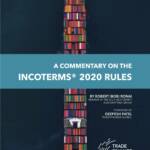
Want to learn more?

Download our free Trade Finance Guides

full-incoterms-commentary-guide
Download

Content

    Ensuring Incoterms compliance: A comprehensive guide [UPDATED 2026]

    Incoterms, short for International Commercial Terms, are standardised trade terms issued by the ICC and used worldwide to define the responsibilities of buyers and sellers in international transactions. They determine who is responsible for transportation, insurance, duties, and other logistics.


    There are 11 Incoterms: four only apply to maritime shipping, and the remaining seven can be used for any mode of transportation. Complying with Incoterms is important as they can affect cost, risk, and logistics management.


    Understanding and implementing the following guidelines can help prevent disputes and streamline trade processes.

    Key components of Incoterms compliance

    To adhere to Incoterms effectively, you should:

    • Understand the Incoterms rules: Familiarise yourself with the latest Incoterms rules (currently, Incoterms 2020) and ensure all relevant staff are trained on the specific Incoterms used in your transactions.
      • Check out TFG’s free Incoterms guide for more information on the meaning of each Incoterm and how to choose the right one for your transaction.
    • Document responsibilities: Clearly outline the responsibilities of buyers and sellers in the sales contract. Make sure to specify the chosen Incoterm and the precise point of delivery or transfer of risk, which will partly be determined by the Incoterm.
    • Communicate with trade partners: Maintain clear and consistent communication to ensure mutual understanding of responsibilities. Regularly update trade partners on any changes in rules or compliance requirements.
    • Monitor and audit compliance: Implement a system for regularly monitoring and auditing compliance with Incoterms and promptly address any discrepancies or non-compliance issues.

    Common challenges in adhering to Incoterms

    The most frequent challenges when dealing with Incoterms include:

    • Lack of understanding: Misunderstanding Incoterms rules and responsibilities can lead to incorrect applications and disputes with trading partners.
    • Miscommunication: Miscommunication between buyers and sellers can result in misunderstandings regarding responsibilities and costs. Clear communication is crucial to ensure both parties are on the same page.
    • Regulatory differences: Differing regulatory requirements in various countries can complicate compliance. Understanding and adhering to the local regulations of both the exporting and importing countries is essential.
    • Documentation errors: Incomplete or incorrect documentation can lead to delays, fines, and non-compliance issues. Ensuring accurate and complete documentation is vital for smooth transactions.

    Best practices for ensuring Incoterms compliance

    To increase your ability to comply with Incoterms, you should follow industry best practices. These include:

    • Training and education: Provide regular training and education for all relevant staff on Incoterms rules and updates. Many trade organisations, including TFG, provide resources such as webinars, workshops, and courses.
    • Clear documentation: Ensure that all contracts and shipping documents specify the chosen Incoterm and related responsibilities. Double-check all documentation for accuracy before finalising transactions.
    • Regular audits: Conduct regular audits of trade transactions to ensure they comply with Incoterms. Implement corrective actions promptly when you identify any non-compliance.
    • Effective communication: Establish clear communication channels with trade partners to discuss Incoterms and compliance expectations. Hold regular meetings to review Incoterms-related issues and updates.
    • Using technology: Use technology and software solutions to manage and track Incoterms compliance. Implement automated systems for document management and compliance monitoring.
    • Understand local regulations: Research the regulatory requirements in exporting and importing countries and ensure that your chosen Incoterm complies with local trade regulations.
    • Comply with customs: Work with customs authorities to ensure all documentation and processes comply with Incoterms and local regulations. Stay updated on changes in customs regulations that might affect Incoterms compliance.
    • Legal considerations: Consult legal experts to ensure your contracts and trade practices adhere to Incoterms and relevant laws. Include clauses in your contracts that address compliance with Incoterms and local regulations.

    Incoterms compliance 2026 update

    The version of Incoterms currently in use, Incoterms 2020, was last updated in 2020 and is unlikely to be changed anytime soon. However, trade restrictions and customs procedures – which can affect the choice of Incoterm – are in constant flux. For example, recent EU sanctions on Russia and Belarus have complicated the use of the EXW Incoterm, which normally places all responsibility for transport on the importer. However, in 2025, the EU clarified that using the EXW Incoterm doesn’t remove the exporter’s responsibility to ensure their goods are not going to a sanctioned country.

    Court cases can also provide more insight into how each Incoterm applies to borderline scenarios and how their application varies between countries. It is important to stay up to date with the latest judgments, as they often affect how Incoterms are interpreted and can change what is needed to remain compliant.

    FAQs

    What are the most common Incoterms compliance issues?

    Common compliance issues include misunderstandings about responsibilities, incomplete documentation, and non-compliance with local regulations.

    These issues often arise from a lack of understanding and miscommunication between trading partners.

    How can companies ensure they are adhering to Incoterms?

    Companies can ensure adherence to Incoterms by providing regular training, maintaining clear and accurate documentation, conducting audits, and using technology for compliance tracking.

    What should be included in a compliance audit?

    A compliance audit should review all aspects of the trade transaction, including documentation, risk transfer points, cost allocation, and adherence to local regulations.

    The audit should also verify that all responsibilities outlined in the Incoterm are met by the appropriate party.

    How often should Incoterms compliance be reviewed?

    Incoterms compliance should be reviewed regularly, at least annually, and whenever trade regulations or Incoterms rules change.

    Regular reviews help identify and correct any non-compliance issues promptly.

    What are the most common Incoterms compliance issues?

    Common compliance issues include misunderstandings about responsibilities, incomplete documentation, and non-compliance with local regulations.

    These issues often arise from a lack of understanding and miscommunication between trading partners.

    • LEARN MORE ABOUT INCOTERMS
    • LATEST INCOTERMS NEWS
    Latest
    A-Z Latest
    Back to Top