














Event Details
Supply Chain 4.0 – Optimising the chain
Presented by Trade Finance Global and Finastra
COVID-19 has shifted global value chains in unprecedented ways which will likely see no new ‘normal’. As behaviours, purchasing trends and trade are completely shifted, this Tradecast will explore how corporates are reacting to new levels of volatility, and ultimately, how technology and innovation could help build an inclusive, resilient global value chain.
This Tradecast analyses the impact of recent events on new behaviours, purchasing trends and trade, as well as the focus on building back recovery and creating sustainable jobs. Be that through public-private partnerships to mobilize finance, creating transparency through marketplaces and B2B platforms or building resilient supply chains, how do we build back a stronger economy which is more inclusive, resilient and sustainable?
The Panel
Brian Edmonson

Susan Starnes
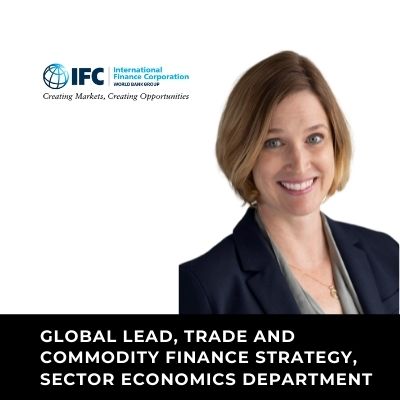
Natasha Condon
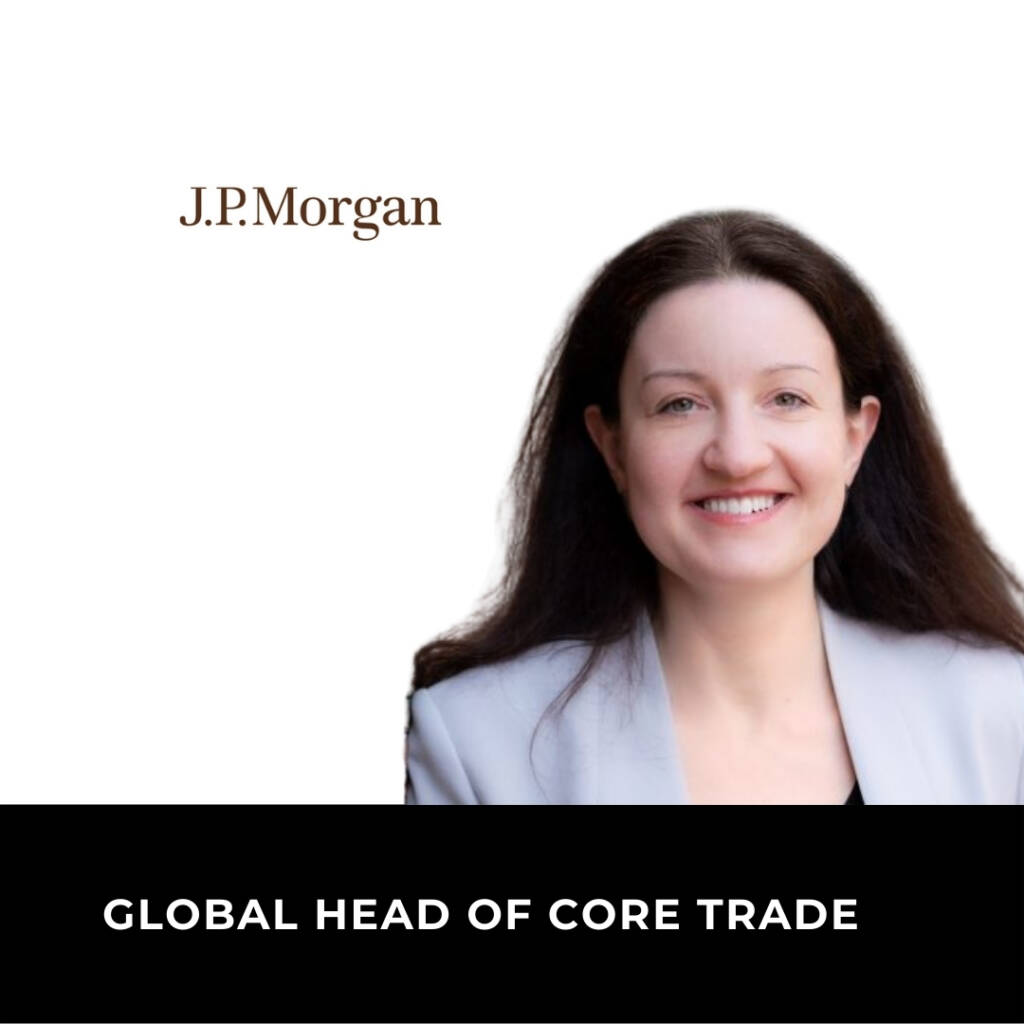
Claire Thompson

Moderated by Deepesh Patel, Editor, Trade Finance Global
425 registered attendees
Live Webinar
60 minutes
Streamed on LinkedIn & YouTube
Sponsors and partners


Introduction and the impact of COVID-19 on global value chains
- Introduction to the panel
- Overview of the impact of COVID fallout on access to trade and supply chain finance
- How does the current shock compare to the global financial crisis?
Access to finance: MSME perspective
- How can the trade industry support financial inclusion to those hardest hit?
- How is supply chain finance evolving to meet the needs of all organizations across the value chain?
- How can we democratise the industry to ensure smaller banks get access to SCF and other types of financing?
- Correspondent banks and access to finance in emerging markets and developing countries
More from our sponsor

Webinar: Networks of Networks: Tomorrow’s trade ecosystem
Finastra invites you to watch this on-demand webinar to hear from our experts who will be exploring what this means for the trade and supply chain industry and how banks can transform their business to be part of tomorrow’s ecosystem.
Technology and using partnerships networks & marketplaces to build resilience
- What role can data play in advancing access to trade finance? (Example)
- Can AI and ML help with credit decision making and risk?
- Is this causing polarisation (large banks versus small banks)?
- What were the main challenges to digitisation during the pandemic?
- Can partnerships, networks and B2B marketplaces build resilience and increase choice without creating digital islands?
- How does this all work from a data-sharing perspective and what are the biggest challenges you see?
More from our sponsor
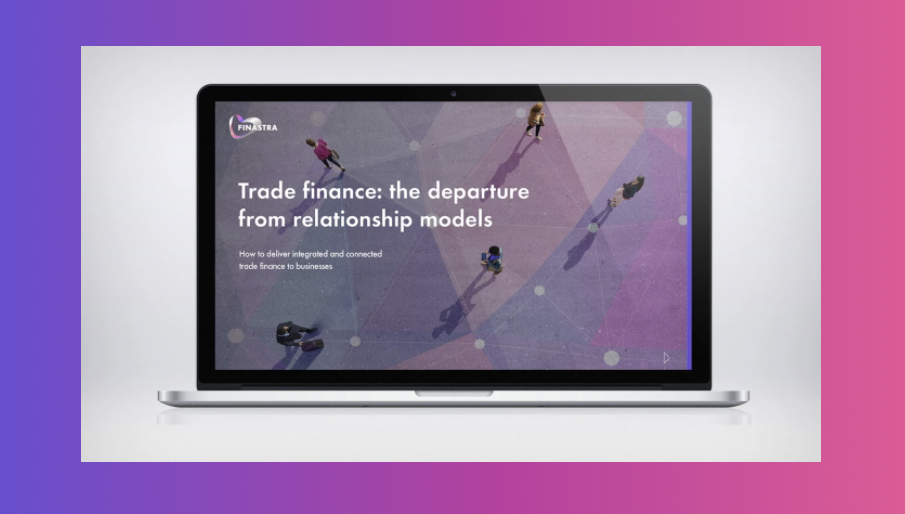
White paper: Trade finance: the departure from relationship models
At a strategic level, Finastra’s research shows that of the three options open to banks – product provider, relationship builder and platform player – corporate banks across the world are set to favour the platform player approach. Finastra’s new research shows how to deliver integrated and connected trade finance to businesses.
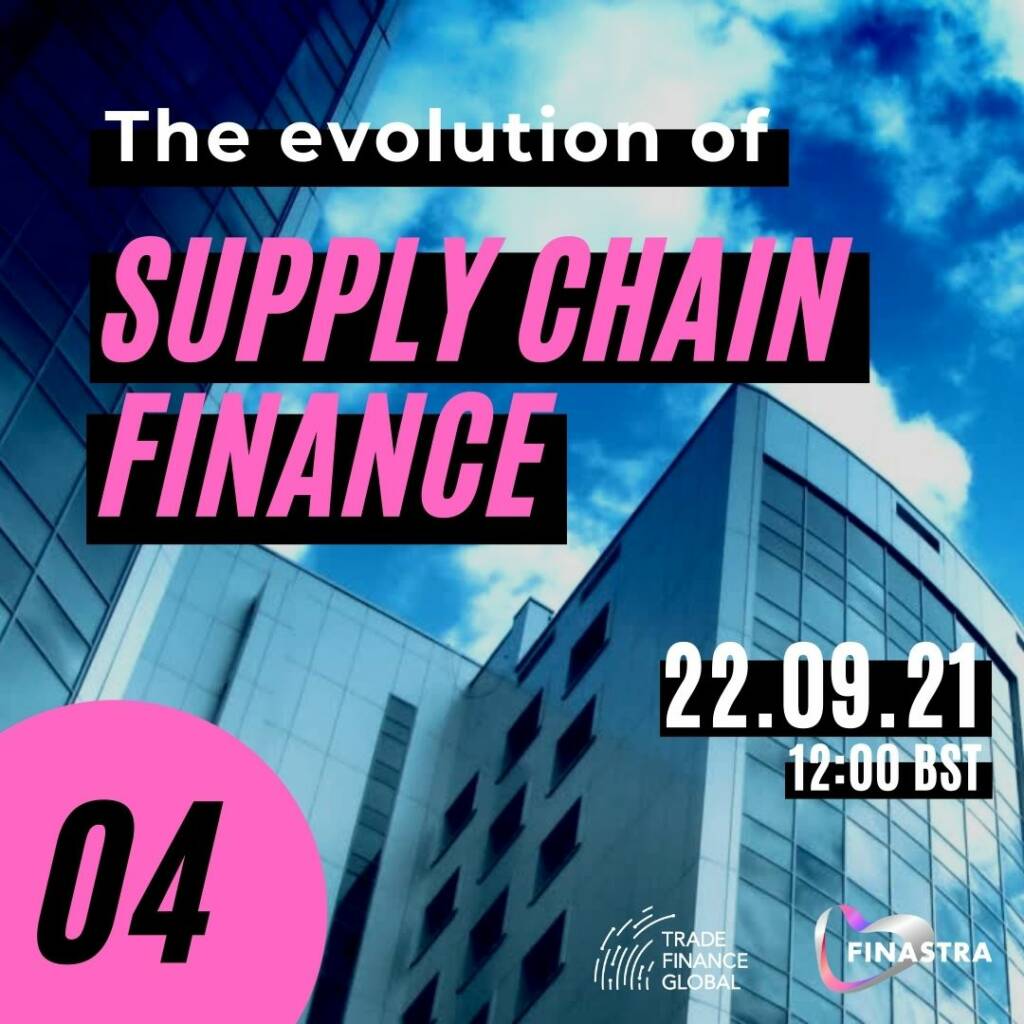
The evolution of Supply Chain Finance
- What role can data play in advancing access to trade finance and what’s the opportunity with open banking?
- What criteria are best to ascertain the level of sustainability of a business?
- What’s your forward-looking future view on digital trade, and what do we need to see happening?
Thank you to our sponsors and partners
More from the TFG’s Supply Chain Hub
- Former financier Lex Greensill gets banned from directing a UK company for nine years
 Lex Greensill, a former financier who fell from grace in 2021 following a high-profile financial… read more →
 - How private credit is keeping trade alive
 Four key pressures shape global trade today: geopolitical fragmentation, unpredictable tariffs, supply-chain realignment, and tighter… read more →
 - The impact of the Iran conflict on SMEs: Rising costs, disrupted trade, and tighter finance
 Geopolitical shocks are now feeding through to small and medium-sized enterprises (SMEs) faster than ever… read more →
 - 9610 vs 0110: Which export model should you use when sourcing from China?
 If you do business with China, sooner or later, you’ll come across the codes 9610… read more →
 - The Italian and European container network update: Congestion, repositioning, and slower rotation
 Operators in Europe are under growing strain. Over the past few months, much of the… read more →
 - Reducing friction in working capital is simple: Stop siloing solutions from ERP workflows
 Enterprise resource planning (ERP) in the trade and working capital space is expected to bring… read more →
 - Coal in Indonesia: Benci tapi rindu (the toxic love affair)
 Looking at Minister Bahlil Lahadalia’s recent statements on the enduring necessity of coal, emphasising that… read more →
 - VIDEO | Banking in EMEA: Always-on finance meets always-on risk
 As the European, Middle East, and African (EMEA) regions continue to be plagued by instability,… read more →
 - Glencore introduces trade receivables securitisation program on FIS platform
 Glencore, the commodity trading giant, has today announced its adoption of global technology provider FIS’… read more →
 - Digitising trade: The next chapter of fintech-enabled lending in South and South-East Asia
 South Asia and South-East Asia have long been viewed as fertile ground for fintech innovation.… read more →
 - UK meat imports surge amid warnings cautioning against food insecurity
 In 2025, UK meat imports surged to £5 billion, revealed HM Revenue & Customs (HMRC)… read more →
 - Inventory finance in the age of AI: What it actually means for South-East Asia’s cross-border SMEs
 A textile exporter in Vietnam ships a container of finished goods to a retail buyer… read more →