














- Nearshoring reduces distance, but it does not remove risk because hidden vulnerabilities often sit deep beyond Tier 1 suppliers.
- Real-time data helps manufacturers detect early disruption signals before supply chains are visibly affected.
- Scenario planning and deep-tier visibility turn supply chains from reactive cost centres into resilient strategic assets.
As geopolitical shocks and trade disruption push resilience to the top of the board agenda, many manufacturers are turning to near-shoring and regionalisation to safeguard their operations. However, physical proximity is not a substitute for digital visibility. Shorter supply chains do not eliminate risk; they simply relocate it, often bringing blind spots closer to home.
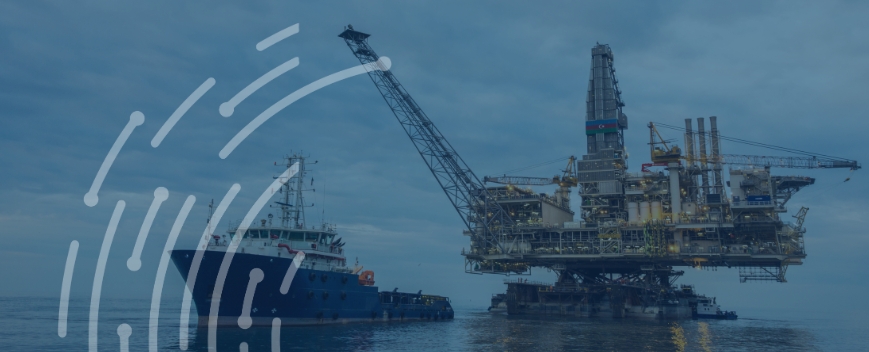
While leaders race to shorten their supply chains, only 18% currently monitor compliance and risk beyond Tier 3 suppliers. Recent disruptions in the Strait of Hormuz – a critical corridor for around 34% of global crude oil and a hub for essential petrochemicals and metals – reflect just how quickly regional instability can paralyse global networks.
The tier 1 trap
Focusing exclusively on direct suppliers creates a false sense of security that ignores where modern disruptions actually strike. The shipping crisis following 28 February 2026 proved that systemic failure rarely begins with a Tier 1 giant. Instead, it starts with the invisible cogs.
In the Strait of Hormuz, 80% of impacted entities were small and micro-enterprises with fewer than 50 employees. These small-scale firms are the deep-tier anchors for essential machinery parts, specialised chemicals, and raw materials. When cancelled import volumes exceeded new bookings by 265% in early March, the shockwaves quickly rippled up the supply chain.
Escaping the Tier 1 trap requires manufacturers to move beyond the direct invoice and understand the sub-tier dependencies that underpin production. Mapping these hidden connections reveals where concentration risk sits and how disruption can travel upward.
Without this granular lens, a manufacturer may not realise that a single micro-enterprise three levels deep has the power to halt an entire global production line.
Real-time data as the ultimate early warning
Nearshoring may reduce transit times, but it is not a shortcut to resilience. Physical proximity cannot decouple a factory from its dependence on volatile upstream sectors like energy and chemicals. The March 2026 disruption showed that even localised supply chains remain tethered to global hubs, with manufacturing still heavily reliant on Gulf petrochemicals.
True agility, therefore, comes from integrating real-time data feeds that serve as an early warning system. By tracking lead indicators such as rolling seven-day booking volumes and shifting port connectivity rankings, manufacturers can spot the smoke before the fire.
For instance, the earliest sign of the recent crisis was a subtle shift in booking-to-cancellation ratios rather than a total halt. This evidence-based approach dramatically reduces decision latency, allowing forward-thinking firms to pivot to alternative hubs – like Jebel Ali in the UAE – while their competitors are still waiting for a status update.
Road-testing resilience through scenario planning and embedded analytics
Scenario planning has become a central pillar of supply chain resilience, giving manufacturers the ability to prepare for shocks by evaluating alternative suppliers, routes, and outcomes before disruption hits.
The Strait of Hormuz crisis highlighted the danger of static risk models, revealing that 45% of impacted entities were previously classified in low-risk stability bands. This suggests that traditional financial health is not a shield against geopolitical volatility.
By embedding scenario planning into core supply chain risk and planning systems, firms can move from reactive firefighting to proactive defence. Stress-testing networks against scenarios such as regional instability, tariff shifts, or logistics bottlenecks helps identify single points of failure in advance.
When a crisis hits, the business is executing a proven, data-backed contingency plan rather than improvising a survival strategy.
—
Building a shock-resistant supply chain requires a fundamental shift from Tier 1 tracking to the complex reality of deep-tier networks. As the current disruptions have shown, agility is built on granular, real-time intelligence, rather than shorter transit times or near-shored factories.
When companies bridge the gap between seeing a risk and simulating its impact, they transform their supply chain from a vulnerable cost centre into a resilient strategic asset. The result is faster, more confident decision-making in the face of volatility.
In an era where disruption is the only constant, the most agile firms will be those that have deep-tier visibility.